
Reviewed · FOOD & DRINK
Cultural Walking Tour in Yerevan with Armenian food Tastings
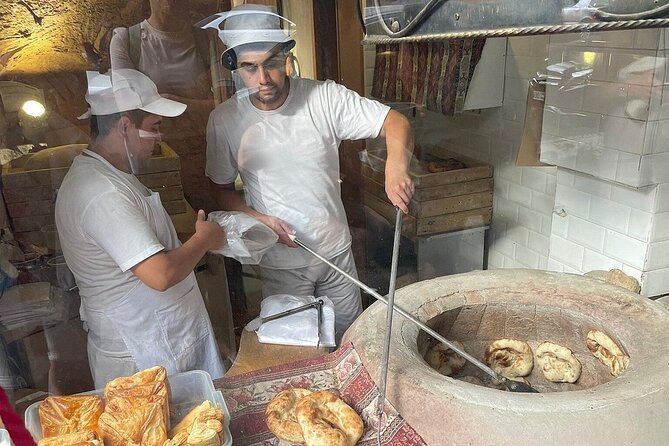
Yerevan rewards a good first walk. This four-hour route links the Singing Fountains, Republic Square, Vernissage, Opera House, and Cascade while adding Armenian food and drink along the way. I especially like the mix of major landmarks and quieter cultural stops, plus the way guides such as Tigran and Ioanna bring personal energy to the stories. The main drawback is length: at about 4 kilometers, four hours may feel slow if you want only a quick city overview.
I also like that the route ends at the Cascade, giving you a useful first look at central Yerevan before you explore on your own. The tasting element adds real value at $55, particularly if the snacks are enough for a light lunch, as one guest found. Still, your experience may depend on the guide’s speaking volume, humor, and ability to keep a group of up to 35 people together.
In This Review
- Key points to know before booking
- Starting beneath the Singing Fountains
- Mirzoyan Library and the quieter side of the city
- Vernissage Market and Armenia’s complicated past
- Charles Aznavour Square and a taste of sea buckthorn
- Khachkars in Missak Manouchian Park
- Opera House and the center of Yerevan life
- Ending at the Cascade and Cafesjian Center
- How the food and storytelling affect the value
- Timing, comfort, and who should book
- Should you book this Yerevan walking tour?
- FAQ
- Where does the cultural walking tour begin?
- Where does the tour end?
- How long does the walking tour last?
- How far do you walk?
- What food or drink is included?
- Is the tour offered in English?
- How large can the group be?
- Is the tour suitable for most people?
- Can you cancel for a refund?
Key points to know before booking
- A four-hour route through central Yerevan: You begin at Republic Square and finish beside the Alexander Tamanyan statue at the Cascade.
- History with a local focus: The tour covers Soviet Yerevan, Armenian cross-stones, national figures, architecture, and important political events.
- Food is part of the experience: Tastings include local snacks and sea buckthorn juice, a traditional drink with medicinal uses in several regions.
- A useful first-day activity: The route gives you a broad introduction without the worry of finding every stop yourself.
- Walking is steady but manageable: The route covers roughly 4 kilometers, with several pauses for explanations and sightseeing.
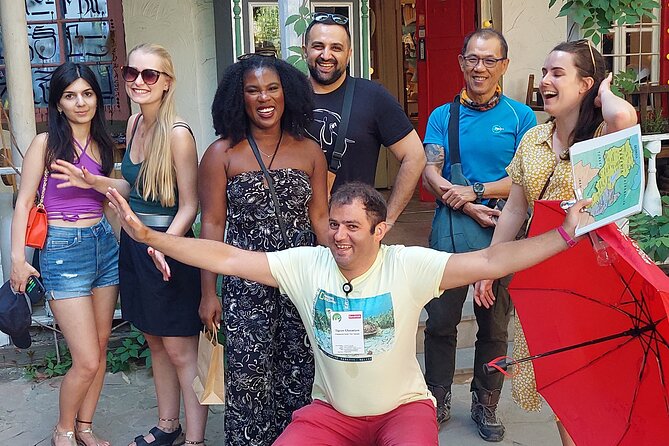
- Guide quality matters: Tigran and Ioanna receive especially warm praise for humor, flexibility, and clear explanations, though one person found the commentary too quiet and the route too long.
Starting beneath the Singing Fountains
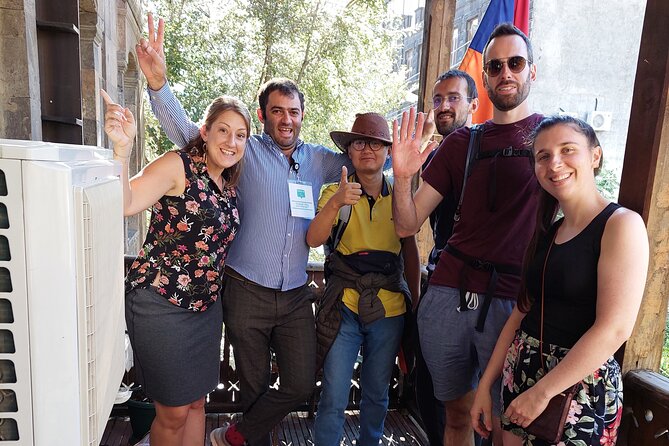
The tour begins at the Singing Fountains on Republic Square, one of Yerevan’s most recognizable public spaces. This is a sensible meeting point because the square gives you an immediate sense of the city’s scale, stonework, and central layout.
Allow about 30 minutes here. The oval square has a patterned stone center designed to resemble a traditional Armenian rug. That detail is easy to miss if you are rushing between sights, but it helps explain how Armenian visual traditions appear even in large civic spaces.
From here, your guide sets the tone for the day. The aim is not just to point out buildings. You hear a condensed account of Armenian history and Yerevan’s development, with the city itself acting as the classroom.
The next stop is the statue of Stepan Shahumyan, about a 15-minute visit. It was the first officially installed monument in Yerevan, created by sculptor Sergey Merkurov and architect Ivan Zholtovsky. This is a short stop, but it offers a useful entry into the Soviet period and the political figures honored in the city.
I like this early pairing of Republic Square and Shahumyan’s statue. One shows the formal heart of the capital, while the other opens the door to the political story behind many of Yerevan’s public spaces.
Other Yerevan outings people add on:
- Group Tour: Garni, Symphony of Stones, Geghard, Lavash Baking
★ 5.0 · 1,042 reviews - Group Tour: Lake Sevan (Sevanavank), Dilijan (Goshavank, Haghartsin)
★ 5.0 · 1,036 reviews - Khor Virap, Noravank and Birds’ Cave Trip with Wine Tasting
★ 4.8 · 845 reviews
Mirzoyan Library and the quieter side of the city
The Mirzoyan Library is scheduled for about 30 minutes. It contains books and journals connected with design and photography, along with a bar and gallery. The setting is described as peaceful, which makes it a welcome change from broad squares and busy roads.
This stop adds texture to the tour. You are not only looking at monuments. You are also seeing how Yerevan supports photography, design, books, and creative work.
The exact balance between browsing, conversation, and explanation may vary with the group and guide. If you prefer a tour made entirely of major sights, this stop could feel less essential. If you enjoy cultural spaces with a more local feel, it is one of the route’s better choices.
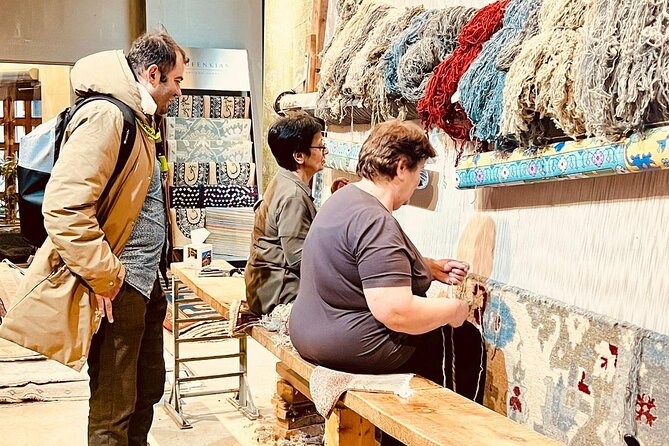
Next comes Tufenkian Heritage Hotels, with around 30 minutes devoted to Armenian carpet traditions. Tufenkian is associated with designer carpets and hand-crafted rugs in several styles. The stop gives your guide a chance to discuss workmanship, patterns, and the place of rugs in Armenian culture.
This is also a useful point to remember your shopping limits. The tour does not promise a purchase or a shopping discount. Think of the visit as a cultural introduction, not as a required buying stop.
Vernissage Market and Armenia’s complicated past
The Vernissage section is one of the most information-heavy parts of the route. The stop includes the statue of Garegin Nzhdeh, an Armenian national hero, and a discussion of Armenia’s geopolitical situation and major events beginning in the 19th century.
You also walk through Cultural Genocide Park, where you can see khachkars, or Armenian cross-stones. These carved memorial stones often carry crosses, rosettes, interlaced designs, and plant forms. They are among the clearest examples of Armenian medieval stone art.
The itinerary also includes a look at Republic Square Metro station and an explanation of the Armenian metro system. That may sound like a minor detail, but it helps you see how daily life, Soviet planning, and public transport fit into the city’s wider story.
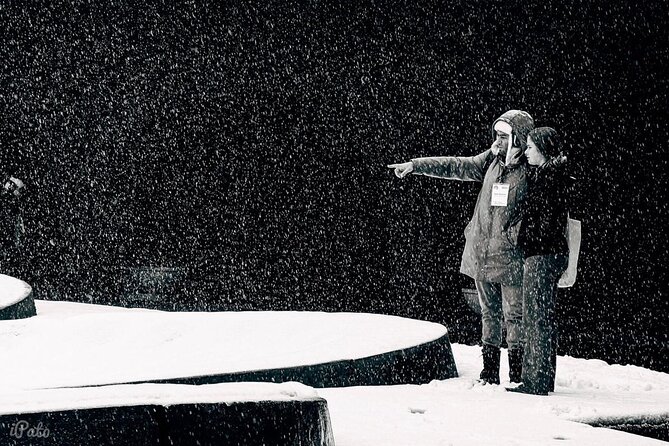
Vernissage can be a demanding stop because several subjects arrive close together: national identity, geopolitics, memorial art, the 19th century, and Soviet infrastructure. I would pay attention to how your guide handles the pace. Tigran is praised for using pictures and maps, which can make this section easier to follow.
One criticism of the tour was that the guide spent too long in alleyways looking at walls and speaking about subjects that did not feel relevant. That concern is worth taking seriously. A good guide can make an ordinary street meaningful, but the explanation needs to stay connected to what you can actually see.
Charles Aznavour Square and a taste of sea buckthorn
Charles Aznavour Square is a shorter 15-minute stop. Here, you see the Grand Hotel Yerevan, opened in 1926. Its facade uses black Armenian tuff stone and carries the formal decoration associated with the period.
The building offers a compact lesson in Yerevan’s architectural changes. Armenian tuff is a defining local material, and the hotel helps you notice how stone color and surface detail shape the city center.
This is also where you try sea buckthorn juice. The orange-colored berry has been used as food and traditional medicine in China, Russia, and northern Europe, and it has also been used in skin treatments. Its sharp, fruity taste gives the tour a small but memorable food discovery.
The food is not simply an add-on. It breaks up the history and keeps the walking comfortable. Several people found the tasting delicious, and one person said the snacks were enough for a light lunch. You should not assume the tasting replaces a full meal, though. If you arrive hungry, plan another meal later.
The exact food selection is not fully specified, apart from the sea buckthorn juice and local snacks. That is useful to know if you have allergies, dietary restrictions, or strong food preferences. Ask the provider ahead of time if the contents matter to you.
Two or three more Yerevan days worth reading about
- Khor Virap, Noravank & Birds’ Cave Day Trip with Wine Tasting
★ 5.0 · 320 reviews - Tatev & Shaki Waterfall Guided Group Tour with Wine Tasting
★ 5.0 · 266 reviews - Yerevan: Tatev Day Trip with Shaki Waterfall & Wine Tasting
★ 4.9 · 193 reviews - Yerevan: Armenian Wine Tasting at In Vino
★ 5.0 · 52 reviews
Khachkars in Missak Manouchian Park
The next 15-minute stop is Missak Manouchian Park, where the focus returns to khachkars. These cross-stones are not just decorative objects. They are memorial markers and examples of early medieval Armenian art.
This is the kind of stop that benefits from a guide. Without context, a khachkar can look like a carved stone with repeating patterns. With an explanation, the cross, rosettes, woven designs, and botanical shapes become easier to read.
The short timing works well here. You get enough background to recognize the forms later in Armenia, without spending half an afternoon on one category of monument.
The park also adds a human scale to the route. After the broad political material at Vernissage, you have time to look closely at carved stone and consider how memory is preserved in public places.
Opera House and the center of Yerevan life
The Armenian National Academic Theater of Opera and Ballet, named for Alexander Spendiaryan, receives about 30 minutes. Construction began on November 28, 1930, during celebrations marking the tenth anniversary of Soviet Armenia. The building opened officially on January 20, 1933.
This stop is valuable because it links culture and politics. Opera houses often serve as symbols of national ambition, and this building also reflects the priorities of the Soviet period.
Your guide may place the building within Yerevan’s urban design and explain how public architecture changed over time. One person specifically wanted more detail on changes before and after 1920, including older stone buildings with wooden balconies. That is a fair expectation if architecture is your main interest, so you may want to ask questions during this section.
The Opera House is also a practical orientation point. From here, central Yerevan feels less like a collection of separate monuments and more like a connected walking district.
Ending at the Cascade and Cafesjian Center
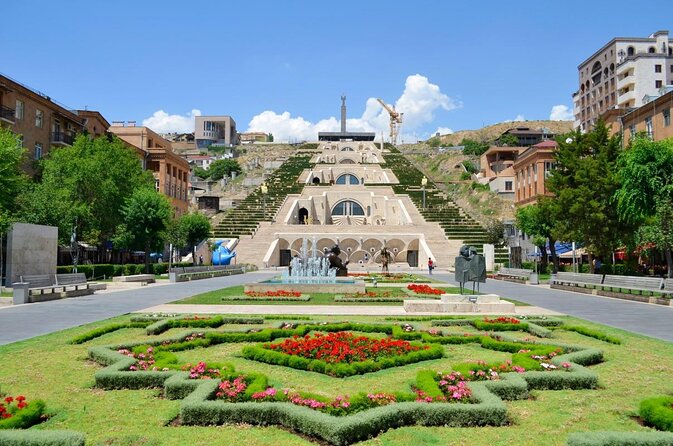
The route finishes at the Cascade, about 15 minutes from the final stop. This huge stairway complex includes fountains and forms one of Yerevan’s best-known public spaces.
At the Cascade, you also encounter the Cafesjian Center for the Arts. Its purpose is to present contemporary art in Armenia and Armenian culture to an international audience. The center gives the tour a modern finish after several stops focused on memorials, Soviet architecture, and earlier traditions.
The meeting point at the end is near the Alexander Tamanyan statue on Moskovyan Street. This is convenient because you can continue exploring the Cascade area after the tour, return to central streets, or make your own plans nearby.
The ending is one of the route’s strongest features. Starting at Republic Square and finishing at the Cascade creates a clear line through the city rather than sending you back to where you began. If you are visiting Yerevan for the first time, that matters.
You should also be ready for stairs and a good amount of walking around the Cascade area. The tour is designed for active participation, although the information provided says most people can take part.
How the food and storytelling affect the value
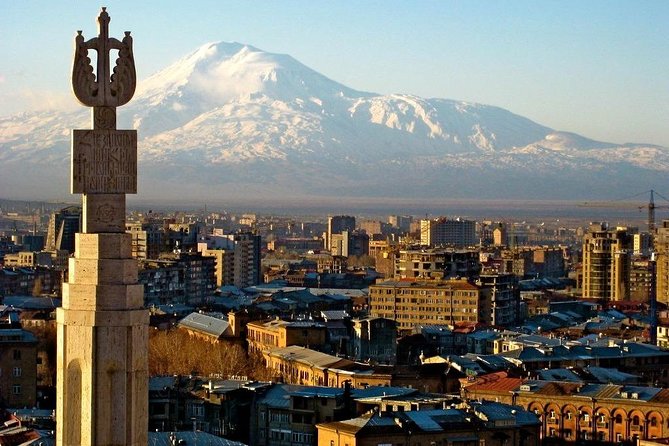
At $55 per person, this is not the cheapest way to walk around Yerevan. You can see Republic Square, the Opera House, and the Cascade without paying admission. The value comes from the route planning, historical explanation, food tasting, and the time saved by having someone connect the stops.
I think the price is fair if you want a structured first introduction. It is especially useful if you have only a short stay and want to understand what you are seeing rather than collect photographs with no context.
The price is less compelling if you already know central Yerevan, prefer to set your own pace, or want a tour focused only on architecture. One dissatisfied person felt that four hours was too long and that walking alone would have been better. That person also wanted a clearer general overview and found some commentary too quiet in traffic.
Guide style is the main variable. Tigran receives repeated praise for his energy, humor, maps, punctuality, and command of Armenian history. Ioanna is described as charming, flexible, friendly, and well informed. Several people valued the guides’ warmth as much as the information.
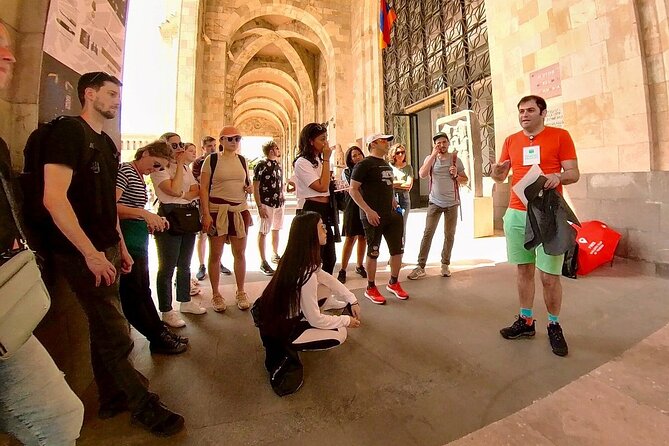
A group of up to 35 is allowed. That is large enough to affect sound and personal attention, especially near traffic or construction. If you join a full departure, stay close to the guide and ask for repetition if you miss a point.
The tour is offered in English. The strongest feedback describes excellent English and clear explanations, but one account found some jokes confusing or poorly judged. That does not mean every departure will feel the same, but it does show why guide communication matters on a history-heavy walk.
Timing, comfort, and who should book
The route is listed at about four hours, with visits ranging from 15 to 30 minutes. The schedule is not a nonstop march. You stop often, listen, inspect buildings, and taste food. The roughly 4-kilometer distance is manageable for most people who are comfortable walking through a city.
Wear practical shoes. The route includes streets, parks, market areas, and the Cascade. Bring water, even though the tasting offers a drink, and keep your schedule open after the tour in case a discussion runs longer than expected.
The tour suits you best if:
- You are visiting Yerevan for the first time.
- You want a city orientation without arranging every stop yourself.
- You enjoy history explained through monuments and streets.
- You like trying local food in small portions.
- You have about half a day available.
- You want to finish near the Cascade for further exploring.
It may not suit you if you want a quick two-hour highlights walk, dislike group tours, or need a tightly controlled schedule. It may also disappoint if you expect a full meal, extensive museum time, or a tour devoted only to architectural detail.
The tour is mobile-ticket based, available in English, and near public transport. Service animals are allowed, and the information provided says most people can participate. Free cancellation is available up to 24 hours before the start time. The activity needs good weather and a minimum number of people, so a cancellation for either reason can result in another date or a full refund.
Should you book this Yerevan walking tour?
I would book it as a first activity in Yerevan, especially if you have limited time and want food, landmarks, and context in one outing. The route covers the city’s major central sights while adding less obvious stops such as Mirzoyan Library, Tufenkian carpets, khachkars, and the metro.
Go in expecting a steady four-hour walk, not a rapid checklist. If you want the strongest experience, join early in your stay, stay near the guide in noisy areas, and ask questions about architecture and the food. At $55, it offers good value for a first look, but independent walkers may prefer to spend the same four hours choosing their own cafés, markets, and museums.
FAQ
Where does the cultural walking tour begin?
It begins at the Singing Fountains on Republic Square in Yerevan, Armenia.
Where does the tour end?
The tour ends at the Cascade on Moskovyan Street, next to the Alexander Tamanyan statue.
How long does the walking tour last?
The tour lasts approximately four hours.
How far do you walk?
The route covers about 4 kilometers, according to information included in the tour details and guest feedback.
What food or drink is included?
The experience includes local food tastings and sea buckthorn juice. The exact full tasting menu is not specified.
Is the tour offered in English?
Yes. English is the listed language for the experience.
How large can the group be?
The maximum group size is 35 people.
Is the tour suitable for most people?
The activity information says most people can participate. It also allows service animals and operates near public transportation.
Can you cancel for a refund?
Yes. You can cancel at least 24 hours before the start time for a full refund. Poor weather or failure to meet the minimum number of participants may also lead to another date or a full refund.
More Walking Tours in Yerevan
- Private sightseeing and walking tour in Yerevan
★ 5.0 · 78 reviews - Yerevan: Highlights and Culture Walking Tour with tastings
★ 4.8 · 28 reviews - Evening walking tour in Yerevan
★ 5.0 · 19 reviews - Walking Yerevan City Tour with 5 Wine & 10 years-old brandy
★ 5.0 · 17 reviews
More Food in Yerevan
- Yerevan Private Walking Food Tour
★ 5.0 · 31 reviews
Latest write-ups from Yerevan
- Armenia: Amberd Fortress and Lake Kari, Aragats Mountain★ 5.0 · 2 reviews
- Armenian South day: Khor Virap, Areni, Karahunj and Tatev★ 5.0 · 3 reviews
- Brandy Tasting Experience Yerevan’s Renowned Ararat factory★ 4.9 · 13 reviews
- Group Tour: Amberd, Aragats, Saghmosavank, Alphabet Alley★ 4.8 · 62 reviews
- Group Tour: Hin Areni Wine factory, Tatev, Khndzoresk Caves★ 4.8 · 8 reviews
- Garni, Geghard, Sevanavank, Noravank, Tatev, Karahunj/ 2 day tours from Yerevan★ 5.0 · 4 reviews
- Tsitsernakaber-Hripsime-Echmiatsin-Noy brandy factory★ 4.5 · 3 reviews
- Private Tour: Khor Virap, Noravank Monasteries, Areni, Jermuk★ 5.0 · 6 reviews
Food & Drink, compared.
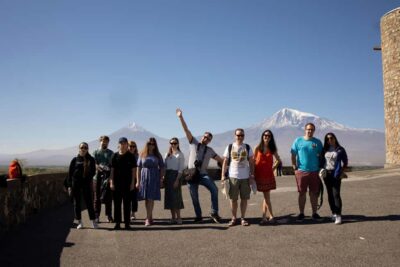
Khor Virap, Noravank and Birds’ Cave Trip with Wine Tasting
Read our review →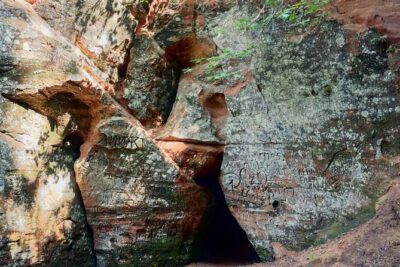
Khor Virap, Noravank & Birds’ Cave Day Trip with Wine Tasting
Read our review →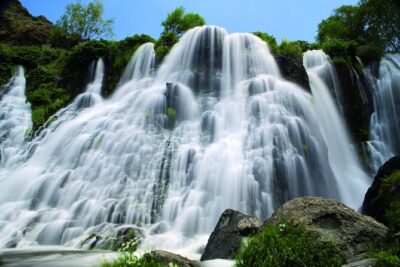
Tatev & Shaki Waterfall Guided Group Tour with Wine Tasting
Read our review →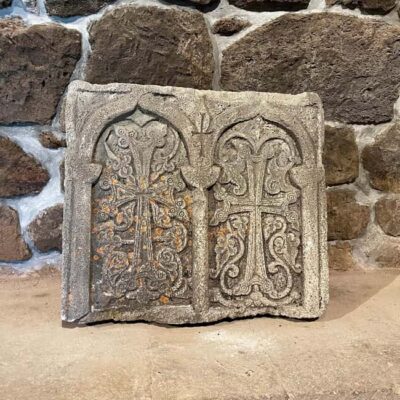
Tatev Day Trip with Shaki Waterfall & Wine Tasting
Read our review →
Khor Virap, Noravank, Jermuk, Areni wine tasting
Read our review →
Tour Transfer to/from Tbilisi with Lake Sevan & Wine tasting
Read our review →
Browse the lists this tour appears in