
Reviewed · MUSEUMS
Yerevan: Museum of Illusions Entry Ticket
Your senses will not get an easy day here. The Yerevan Museum of Illusions turns science, art, local culture, and playful trickery into more than 70 hands-on displays. I especially like the friendly guided explanations and the chance to take unusual photos with figures such as Einstein, Zeus, Gorgona, Tesla, and Charles Aznavour. The main consideration is that the museum is an indoor attraction built around visual and physical interaction, so visitors hoping for a traditional museum of Armenian art or history should choose something else.
I also like the family-friendly design. Children can test what they see, adults can laugh at their own confused eyes, and guides can use your phone to capture the moment without charging extra. The ticket costs $20 per person, which is fair if you take part in the exhibits and use the explanations, though it may feel high for anyone planning only a quick walk-through.
In This Review
- Key points to know before you go
- What the Yerevan Museum of Illusions is really like
- Starting at the front desk in Yerevan
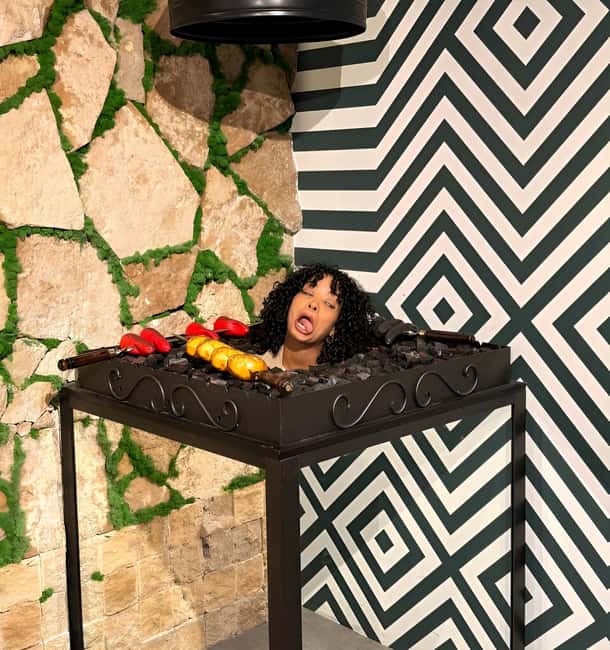
- Meeting Einstein, Zeus, Gorgona, and Aznavour
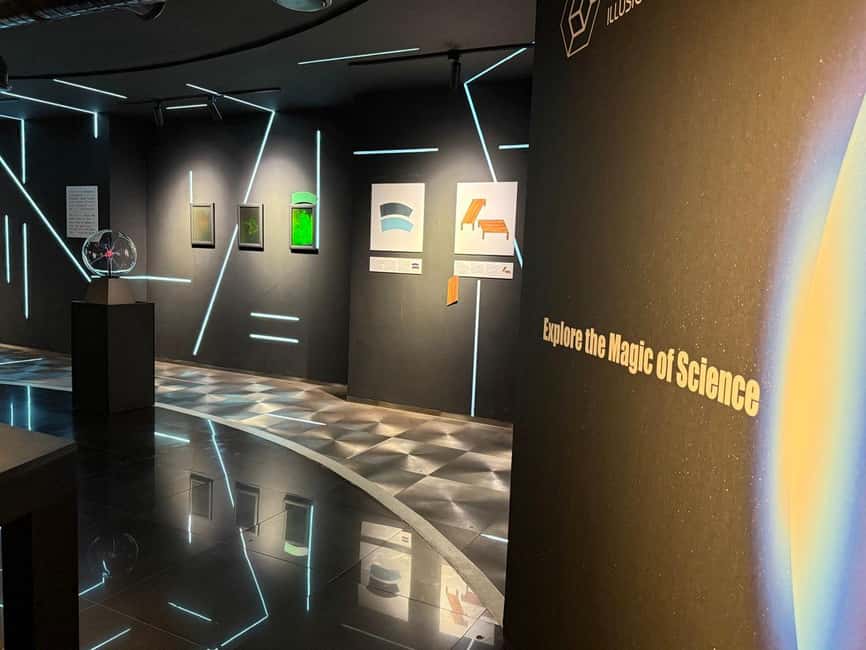
- Tesla, electricity, and the science behind the fun
- The Armenia image and the local connection
- How the photo experience works
- Everyday phenomena explained in surprising ways
- How much value do you get for $20?
- Who will enjoy this most?
- Planning your visit without overcomplicating it
- My verdict on the Yerevan Museum of Illusions
- FAQ
- Where is the Museum of Illusions located?
- How much does entry cost?
- What languages are available for the guided tour?
- Are photos allowed inside?
- Is the museum suitable for children?
- Is transportation included?
- Can I cancel my booking?
Key points to know before you go
- More than 70 interactive illusions: Expect hands-on displays that challenge balance, scale, light, perspective, and ordinary assumptions.
- Guided explanations included: Local guides explain the science and psychology behind the tricks in Armenian, Russian, or English.
- Strong photo opportunities: Bring a charged phone because the museum is designed for funny, unusual, and shareable pictures.
- A distinctly Armenian touch: Displays featuring Armenia in one extraordinary image and Charles Aznavour give the visit a local flavor.
- Good for families: The activity works across age groups, although it is not suitable for babies under one year or people over 95.
- Central and easy to arrange: Transportation is not included, but check-in begins at the front desk, where uniformed staff assign your guide.
What the Yerevan Museum of Illusions is really like
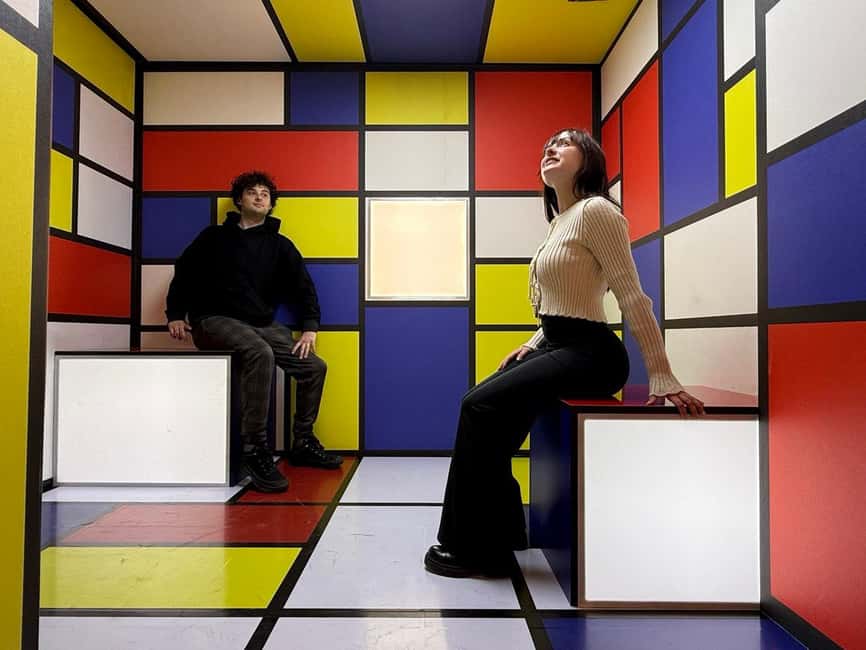
This is not a quiet museum where you move from case to case and read long panels. You are expected to participate. You look, touch, pose, test, and then try to work out why your eyes or brain reached the wrong conclusion.
That physical involvement is the reason the visit can appeal to a wide age range. Children get an activity rather than a lecture. Adults get the pleasure of being fooled in a safe setting. Older children and teenagers may enjoy the photo side as much as the science.
The museum presents more than 70 separate illusions, so the experience has enough variety to keep the visit from feeling like one repeated trick. Some displays focus on perspective. Others explain familiar effects that you have probably seen in daily life without ever stopping to ask why they happen.
I appreciate that the museum does not treat the illusions as magic with no explanation. The guide adds the useful part: why your eyes interpret an image in a certain way, how the mind fills in missing information, and why an ordinary phenomenon can seem strange when placed in a new setting.
Other Yerevan outings people add on:
- Group Tour: Garni, Symphony of Stones, Geghard, Lavash Baking
★ 5.0 · 1,042 reviews - Group Tour: Lake Sevan (Sevanavank), Dilijan (Goshavank, Haghartsin)
★ 5.0 · 1,036 reviews - Khor Virap, Noravank and Birds’ Cave Trip with Wine Tasting
★ 4.8 · 845 reviews
Starting at the front desk in Yerevan
Your visit begins with check-in at the front desk. A staff member assigns a guide, and the uniform with the Museum of Illusions logo makes the team easy to identify.
That small detail matters. Interactive museums can feel confusing at first because you may not know which displays are meant to be touched, where to stand, or how to get the best result from a trick. The guide gives the visit some order and helps you avoid simply wandering past the best parts.
Guides speak Armenian, Russian, and English. If you need explanations in English, select that language when checking availability. The guide is there not only to explain the displays but also to help with photos using your phone.
The staff are described as friendly and welcoming, and that matches the nature of the attraction. A stiff, formal guide would be a poor fit here. You want someone willing to demonstrate a trick, explain the result, and help you laugh when the illusion wins.
Meeting Einstein, Zeus, Gorgona, and Aznavour
Several exhibits give the museum a theatrical quality by placing you beside famous or legendary figures. Einstein brings a science association, Zeus connects the display to mythology, and Gorgona adds a mythical edge.
These are not simply statues to admire. The point is to see how the figure is placed within an illusion and how your position changes the result. You may find yourself looking twice, moving around, or posing as part of the scene.
The Charles Aznavour display gives the visit a more local and human connection. Aznavour was one of the best-known Armenian-born performers of the modern era, so seeing him represented here makes the museum feel less like a copy of an attraction found anywhere in the world.
The exhibit does not replace a visit to an Armenian cultural museum, but it adds a playful nod to the country. If you are taking pictures, this is one of the displays where the local connection makes the image more meaningful than a standard optical trick.
Tesla, electricity, and the science behind the fun
The Tesla-inspired installations focus on electricity and make science visible. Instead of treating electricity as something hidden inside wires and machines, the exhibit presents its power as part of the spectacle.
You should expect this section to be a visual and interactive highlight rather than a full technical lesson. The guide supplies the context, helping you understand what you are seeing and why the effect works.
I like this approach because the museum uses a striking display to lead into a real question. You do not need an advanced science background to enjoy it, but the explanation gives curious children and adults something to take away after the photo is taken.
The value of a guided visit is clearest here. Without an explanation, an electricity display may be impressive for a moment. With one, it becomes a short lesson about a force you use every day but rarely see directly.
More Yerevan museums worth an hour:
- Group Tour: Gyumri (Urban Life museum, Black fortress, old town), Harichavank
★ 5.0 · 280 reviews - Yerevan Card Including Free 30+ Museums, 5+ Tours & Discounts
★ 5.0 · 91 reviews - Group Tour: Sightseeing in Yerevan, Erebuni Museum and Fortress
★ 5.0 · 42 reviews - Private Yerevan City Tour: Erebuni, Matenadaran & Tsitsernakaberd Museums
★ 5.0 · 34 reviews
The Armenia image and the local connection
One exhibit presents Armenia’s beauty in a single extraordinary image. The supplied details do not identify the exact format or viewpoint, so you should think of it as a visual representation rather than a substitute for seeing the country itself.
Still, it gives the museum a welcome local identity. Many illusion museums use international themes that could be placed in almost any city. A display focused on Armenia helps connect the attraction to Yerevan instead of making it feel entirely imported.
For someone beginning a trip in Armenia, this can be a light introduction to the country’s visual character. For someone already touring the country, it is a playful reminder of the scenery and places you have seen outside the museum.
This is also one of the reasons to carry a camera or phone. The museum has been planned with photo locations in mind, and the unusual settings are part of the admission rather than an extra paid service.
How the photo experience works
Bring a charged smartphone. Photography without flash is allowed, and guides can take pictures for you using your own phone at no extra cost.
That last point is useful for couples, families, and solo visitors. You do not have to choose between being behind the camera and missing the best pose. A staff member can help capture the moment, though there is no professional photo package included.
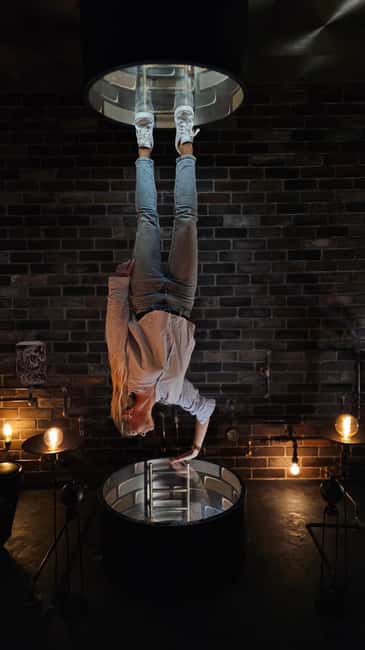
You should expect the images to be playful rather than polished. The appeal is the odd angle, forced perspective, impossible scale, or strange setting. These are memory pictures, not formal portraits.
If you are visiting with children, let them try the displays before rushing to photograph them. The best pictures usually come from taking part in the illusion, not simply standing beside it. Comfortable shoes also help, since you may walk, shift position, and repeat a display to find the right angle.
Everyday phenomena explained in surprising ways
One of the more useful parts of the visit is the attention given to ordinary experiences. The museum explains things you see or feel in daily life but may never have examined closely.
That gives the attraction a purpose beyond entertainment. A good illusion makes you laugh first and think second. Afterward, you may notice how often your brain fills in gaps, trusts familiar patterns, or accepts what appears obvious.
The explanations cover science and psychology behind the exhibits. You do not need to treat every display as a classroom exercise, but the guide helps connect the trick to the way people perceive the world.
I find that balance important. A museum built only around selfies can feel thin after 20 minutes. A museum that explains every effect in a heavy academic style can lose its fun. This experience aims for the middle: enough information to make the illusion interesting, without turning the visit into a formal lesson.
How much value do you get for $20?
At $20 per person, the ticket is not the cheapest short attraction in Yerevan. Its value depends on how actively you use it.
The price includes access to more than 70 interactive illusions, a guided tour, explanations of the science and psychology, help with phone photos, and the chance to take part in the displays. There is no separate charge for the guide taking pictures with your phone.
For a family, the total cost can add up quickly. Yet the family format helps justify the price because adults and children can share the same activity instead of splitting up or finding separate entertainment.
For a couple or solo visitor, the value is strongest if you enjoy visual puzzles, photography, and hands-on exhibits. If you only want to glance at displays, the ticket may feel less worthwhile. Take your time, ask questions, repeat the tricks, and make use of the guide.
Food and drinks are not included. Transportation to and from the museum is also separate, and souvenirs from the gift shop cost extra. Since the museum is in the heart of Yerevan, you can plan food nearby, but the details of nearby restaurants are not part of this ticket.
Who will enjoy this most?
I would recommend the museum to families, groups of friends, couples, and solo visitors who like playful activities. It is especially useful on a day when you want something different from churches, monuments, and formal cultural sites.
The family appeal is clear. One published assessment described it as a great family activity, and another praised the interesting illusions and welcoming team. The perfect overall rating from three assessments supports the idea that the staff and the fun factor are central strengths.
It can also suit visitors who want easy photo material for a trip album or social media. The displays are made for memorable pictures, and staff help remove the problem of asking a stranger to take the shot.
I would be more cautious about booking it for a very young child. Babies under one year are not considered suitable. Wheelchair access may also be limited, so anyone with mobility concerns should confirm the practical details before paying.
The attraction is not suitable for people over 95, according to the stated restrictions. Food, alcohol, drugs, and nudity are not allowed, and photography must be without flash.
Planning your visit without overcomplicating it
The booking is flexible. You can cancel up to 24 hours in advance for a full refund, and the reserve-now, pay-later option lets you keep your plans open. The ticket is listed as valid for seven days, but that refers to the booking validity rather than a seven-day museum visit.
Check availability for the starting times that work with your Yerevan plans. The exact visit length is not provided, so do not build an entire day around the museum unless you also plan other activities nearby.
Wear comfortable shoes and bring your camera or charged phone. Flash photography is not allowed. Avoid arriving with food or drinks, since those are not permitted inside.
The skip-the-line feature can make arrival simpler, but you still need to check in at the front desk before meeting your guide. Give yourself enough time to find the entrance and get organized rather than arriving at the last second.
My verdict on the Yerevan Museum of Illusions
Book this experience if you want a cheerful, interactive break from standard sightseeing. The combination of more than 70 illusions, clear explanations, local references, and free help with phone photos gives the $20 ticket a reasonable value for an active visit.
I would choose it for a family afternoon, a rainy-day plan, or a short stop with friends who enjoy taking pictures and testing strange visual effects. I would skip it if your priority is Armenian history, fine art, or a long guided cultural tour.
The strongest reasons to go are the friendly team, the family appeal, and the way science is made easy to enjoy. Just remember that the ticket rewards participation. Look closely, ask questions, try the displays more than once, and let the museum fool you for a while.
FAQ
Where is the Museum of Illusions located?
The museum is located in the heart of Yerevan, Armenia.
How much does entry cost?
The listed price is $20 per person.
What languages are available for the guided tour?
Guided tours are available in Armenian, Russian, and English.
Are photos allowed inside?
Yes. Photography without flash is allowed. Guides can also use your phone to take pictures at no extra cost, but professional photography is not included.
Is the museum suitable for children?
Yes. The experience is family-friendly and designed for all ages, but it is not suitable for babies under one year.
Is transportation included?
No. Transportation to and from the museum is not included in the ticket price.
Can I cancel my booking?
Yes. You can cancel up to 24 hours in advance for a full refund. You can also reserve now and pay later.
Latest write-ups from Yerevan
- Yerevan to Tbilisi Day Tour: Unveiling Transcultural Wonders★ 4.8 · 2 reviews
- Yerevan City Tour: Discover an Old and New Yerevan★ 5.0 · 2 reviews
- Tsaghkadzor & Lake Sevan։ Winter Day Tour from Yerevan★ 4.7 · 3 reviews
- Wine, Jazz and Magic: A Night at Malkhaz Jazz Club★ 5.0 · 2 reviews
- The Stalin car Yerevan city tour Armenia★ 5.0 · 2 reviews
- Private Yerevan City Tour with museums★ 5.0 · 5 reviews
- Wine Trip in Yerevan★ 5.0 · 3 reviews
- 7 day semi hiking tour in Armenia★ 4.5 · 2 reviews
Museums, compared.

Gyumri (Urban Life museum, Black fortress, old town), Harichavank
Read our review →
Yerevan Card Including Free 30+ Museums, 5+ Tours & Discounts
Read our review →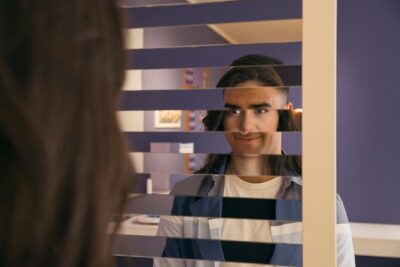
Sightseeing in Yerevan, Erebuni Museum and Fortress
Read our review →
Private Yerevan City Tour: Erebuni, Matenadaran & Tsitsernakaberd Museums
Read our review →
Private tour to Gyumri, Dzitoghtsyan Museum, Black Fortress
Read our review →Browse the lists this tour appears in