
Reviewed · HISTORICAL TOURS
Private Day Trip to UNESCO World Heritage Sites
Mount Ararat is the unforgettable backdrop. This six-hour private trip links Khor Virap, Etchmiadzin Cathedral, Saint Hripsime Church, and Zvartnots Cathedral in one well-planned loop from Yerevan. I like the mix of major religious sites and open-air ruins, plus the comfort of hotel pickup, air-conditioning, Wi-Fi, and a private vehicle.
I also like the steady pace. You get a full hour at Khor Virap and Etchmiadzin, with shorter but worthwhile stops at Hripsime and Zvartnots. The main consideration is the guide setup: if you book the driver-only option, you may receive transport and a printed plan rather than a full spoken tour. Confirm your language and guide choice before paying.
In This Review
- Five things to know before you book
- Why this six-hour route works from Yerevan
- Lusarat and the first Mount Ararat photo stop
- Khor Virap, a monastery with a serious story
- Etchmiadzin Cathedral and Armenia’s church center
- Saint Hripsime Church and the story of a martyr
- Zvartnots, where a cathedral survives as ruins
- Driver or guide, the choice that changes the experience
- Transport, comfort, and the private advantage
- Is $88 per person good value?
- Who should book this Armenia day trip?
- Should you book it?
- FAQ
- How long does the private day trip last?
- Where does the tour begin?
- Is a guide included?
- What sites does the tour visit?
- Is the entrance fee to Zvartnots included?
- What should I bring?
- Can wheelchair users join the tour?
Five things to know before you book
- The best Mount Ararat view comes from Khor Virap: The monastery sits near the Turkish border, with the biblical mountain forming the great visual prize on a clear day.
- You visit four important religious and historic sites: Khor Virap, Etchmiadzin Cathedral, Saint Hripsime Church, and Zvartnots Cathedral each offers a different look at Armenian Christianity.
- Etchmiadzin is Armenia’s religious center: It is closely tied to the Armenian Apostolic Church and was listed by UNESCO in 2000.
- Zvartnots is an archaeological stop: You see the remains of a seventh-century cathedral, with a separate entrance fee of 1,500 AMD.
- The private format gives you control: You travel with your own family or friends in a car, minivan, or minibus, depending on group size.
Why this six-hour route works from Yerevan
This trip covers a lot without asking you to spend a full day on the road. Pickup and drop-off are included at your Yerevan hotel, and the route is arranged as a private outing rather than a shared bus tour.
That matters in Armenia, where the sites are spread across Armavir Province and the nearby Ararat region. You do not need to plan separate taxis, compare local transport, or work out the order of the stops. Your driver handles the movement while you focus on the churches, views, and ruins.
The listed visits add up to about three hours and 25 minutes, including the short photo stop at Lusarat. The remaining time covers driving between locations, hotel pickup, and return. That is a sensible balance for a half-day trip. You see the key sites, but you are not locked into a dawn-to-evening schedule.
The tour costs $88 per person. For one person, that is not the cheapest way to see these places. For a couple or small private group, the price becomes easier to justify because it includes transport, pickup, a bottle of water, Wi-Fi, air-conditioning, and a vehicle matched to your party. A guide is available with the appropriate booking option, but you should check exactly what you are selecting.
Other history-led days around Armenia:
- Private tour to UNESCO heritage Haghpat and Sanahin monasteries and Odzun church
★ 5.0 · 15 reviews - Private tour to UNESCO heritage Echmiadzin churches, Zvartnots and Sardarapat
★ 5.0 · 13 reviews - 3 Day UNESCO Heritage Private Tour in Armenia from Yerevan
★ 5.0 · 11 reviews
Lusarat and the first Mount Ararat photo stop
The route begins with a 10-minute stop at Lusarat for photos and sightseeing. It is brief, so think of it as a chance to get your first clear look at the area rather than a full attraction.
This pause helps set the scene for Khor Virap. The monastery lies near the foot of Mount Ararat, one of Armenia’s strongest national symbols. On a clear day, the mountain gives the entire morning a sense of scale. Weather will affect the view, so do not treat the mountain panorama as guaranteed.
You will want your camera ready, but keep the stop in proportion. The main experience comes at Khor Virap itself, where you have a full hour.
Khor Virap, a monastery with a serious story
Khor Virap means deep dungeon, and its name points to the site’s most famous story. Saint Gregory the Illuminator was held here in an underground pit for years before helping bring Christianity to Armenia.
The monastery is one of the most important sanctuaries in the country. Its religious importance is tied to Armenia’s conversion to Christianity, while its setting gives you the most direct connection to the Mount Ararat story. According to the Old Testament, Noah’s Ark came to rest on the mountain after the Universal Flood.
I would give this stop your full attention. The view is not just a pretty background for a church visit. Mount Ararat is a major symbol for Armenia and for Armenian communities around the world, and Khor Virap is one of the clearest places to understand that connection.
You have about an hour here, enough time to look around, take photographs, and consider the site without being pushed through in a few minutes. Comfortable shoes are a good idea, since this is a historic religious site rather than a polished modern attraction.
Khor Virap is not the same kind of UNESCO stop as Etchmiadzin or Zvartnots. It is included because of its central place in Armenian faith and identity. That difference makes the route more interesting: you are not simply checking off monuments, but seeing how pilgrimage, national memory, and architecture overlap.
Etchmiadzin Cathedral and Armenia’s church center
The next major stop is Etchmiadzin Cathedral, with about an hour for sightseeing. This is the religious center of the Armenian Apostolic Church and one of the essential places to visit if you want to understand Armenia’s Christian tradition.
Armenia adopted Christianity as a state religion in 301, making it the first country in the world to do so. That fact gives Etchmiadzin more weight than its role as another old church. It is a living center of Armenian religious life, not only a historic building on a sightseeing route.
The cathedral was added to the UNESCO World Heritage list in 2000. You will find the stop especially useful if you have already seen Khor Virap, because the two places connect the early Christian story with the church’s continuing role.
There is one practical warning. A September visit found Etchmiadzin Cathedral closed for restoration, while the museum was also closed on a Monday. This is the sort of schedule problem that can affect the value of the tour, since the route includes only four main stops. Check current opening conditions before you go, particularly if your date falls on a Monday or during building work.
The tour description does not promise a replacement attraction if the cathedral is closed. I would ask the provider in advance how the schedule will be handled. A private tour gives you more room to discuss changes, but it does not guarantee that an unavailable site can be replaced.
More Day Trips in Armenia:
- From Tbilisi: Day Trip to Armenia Including Homemade Lunch
★ 4.9 · 1,084 reviews - From Yerevan: Garni, Geghard, & Symphony of Stones Day Trip
★ 4.8 · 687 reviews - Khor Virap, Noravank & Birds’ Cave Day Trip with Wine Tasting
★ 5.0 · 320 reviews - Garni, Geghard & Symphony Small-Group Day Trip with Lavash Baking
★ 5.0 · 263 reviews
Saint Hripsime Church and the story of a martyr
Saint Hripsime Church receives about 30 minutes. That may sound short, but it suits a compact church visit and gives the route a needed change of pace after the larger Etchmiadzin stop.
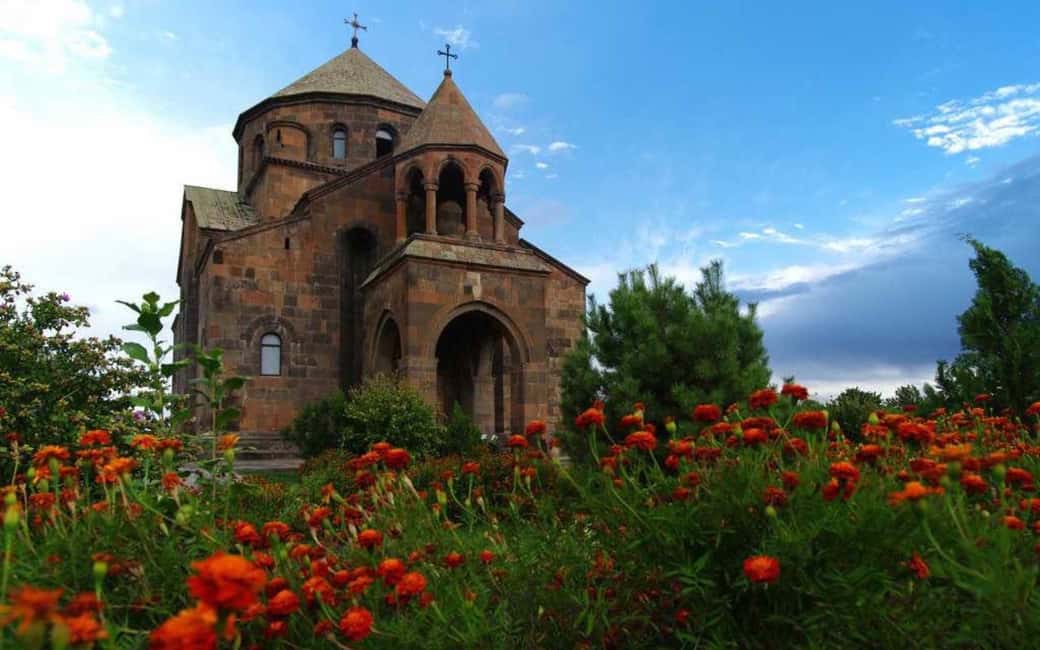
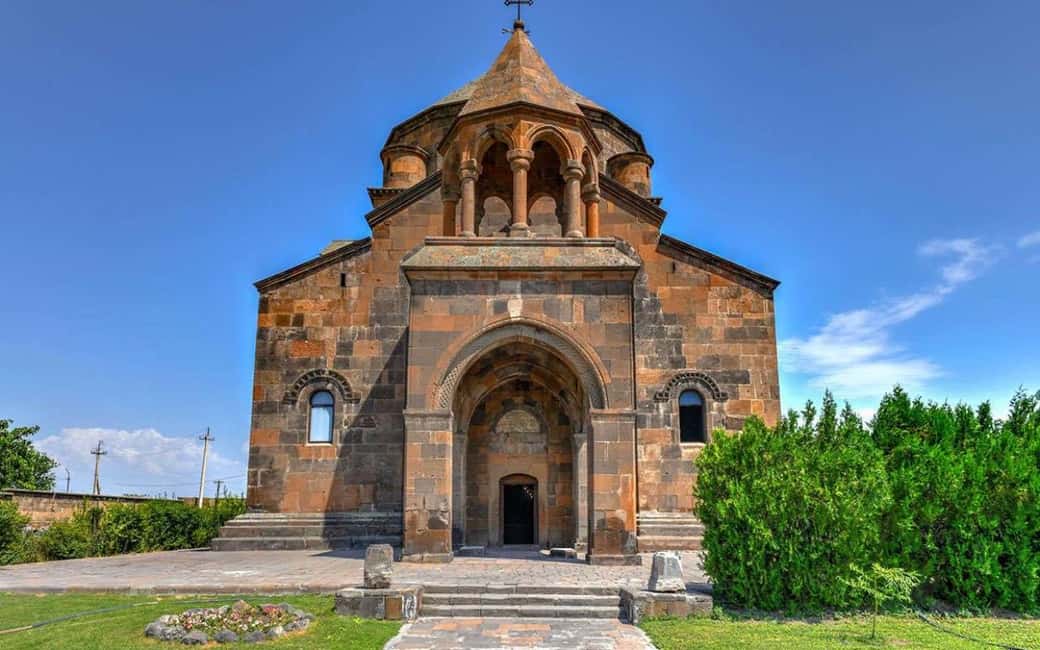
The church was built in 618 by order of Catholicos Komitas. Its design is regarded as a major work of Armenian architecture, and it is included in the UNESCO World Heritage designation connected with the religious sites around Etchmiadzin.
The story behind the church is stark. Hripsime fled to Armenia to escape persecution under the Roman Emperor Diocletian. She refused to marry the pagan Armenian King Trdat III because of her Christian faith and was killed as a martyr. A small chapel first marked the place, followed in the seventh century by the church you visit today.
You do not need a long stop to understand why Saint Hripsime matters. The building gives you a direct link to the early days of Christianity in Armenia, while its restrained form shows how Armenian church architecture developed around a strong central structure.
If your guide is included, this is a good place to ask for context about the church’s design and the Hripsime legend. If you choose driver-only transport, you may need to read about the site beforehand. One person found the driver courteous and helpful but noted that his English was limited. Another said the driver prepared a printed itinerary, which made communication easier. That is useful, but it is not the same as having a guide explain the building as you walk through it.
Zvartnots, where a cathedral survives as ruins
The final major stop is Zvartnots Cathedral, with around 45 minutes for sightseeing. Here you visit the remains of a seventh-century Armenian cathedral rather than a complete working church.
Zvartnots is a UNESCO World Heritage site, and the ruins show the scale and ambition of medieval Armenian architecture. The fallen columns and surviving stonework invite you to picture the original structure, while the open setting gives you a different experience from the enclosed churches at Etchmiadzin and Hripsime.
The entrance fee is not included and costs 1,500 AMD. It is a small extra charge, but you should carry local currency or confirm accepted payment methods before setting out. Since this is one of the route’s central sites, the fee is worth factoring into the advertised price.
I like the order of this stop. After Khor Virap’s mountain view and the active religious importance of Etchmiadzin, Zvartnots closes the route with archaeology. You finish by looking at what remains, not just what has been preserved intact.
Forty-five minutes should allow time for the ruins and photographs. Do not expect a long museum visit or a large amount of free time here. The schedule is built around a focused visit before returning to Yerevan.
Driver or guide, the choice that changes the experience
This is the most important booking detail. The experience can include a professional English-speaking driver, and a guide is available if you choose the option with guide. If you want a guided visit, specify the language in your message.
Do not assume that a private vehicle automatically means a private guided tour. The driver-only version may get you efficiently from site to site, but the driver may not provide detailed explanations inside the churches and ruins. One driver prepared a printed itinerary, which was a thoughtful solution, but spoken commentary can make a major difference at sites with complex religious stories.
I would choose the guide option if you want help understanding Armenian Christianity, UNESCO designations, architecture, and the stories of Gregory and Hripsime. I would consider the driver-only option if you mainly want reliable transport, photographs, and the freedom to explore at your own pace.
English ability may vary. The driver is described as English-speaking, but direct communication was difficult for at least one person, while another noted that the driver could not speak English and used a printed plan. If language is important to you, confirm both the guide and the language before departure.
Transport, comfort, and the private advantage
Pickup takes place in your hotel lobby in Yerevan. The vehicle may be a car, minivan, or minibus, depending on the number of people in your party.
Air-conditioning matters during warmer months, especially when the route includes several outdoor stops. Wi-Fi on board is useful for checking maps, translating short phrases, or sending a quick photo, although the data connection itself is not described. A bottle of water per person is included.
The private group format is a real benefit. You are traveling with your own family or friends, so the driver does not need to wait for unrelated passengers at each stop. The schedule also feels less rigid than a large group outing. You can ask for a little more time at Khor Virap or Zvartnots, although the total six-hour duration still limits how much the day can expand.
The tour is not suitable for wheelchair users. Comfortable shoes and clothing suited to the weather are recommended. Pets are not allowed.
Is $88 per person good value?
The price makes the most sense when you value convenience and privacy. You are paying for a private vehicle, hotel pickup and return, air-conditioning, Wi-Fi, a driver, water, and assistance during the trip. With a guide added, the experience becomes more useful for anyone who wants historical explanation rather than simple transportation.
The value is weaker if you book expecting a fully guided tour but receive only a driver. That is the main issue to settle before booking. The provider should confirm whether your selected price includes a guide, what language the guide speaks, and what happens if Etchmiadzin is closed.
Lunch and drinks are not included, so plan for those separately. The route lasts six hours, which may leave time to eat in Yerevan afterward, but the schedule does not specify a meal stop.
Free cancellation up to 24 hours before departure and the reserve-now, pay-later option add useful flexibility. They are especially helpful if your plans depend on opening conditions or weather around Mount Ararat.
Who should book this Armenia day trip?
I would recommend it for first-time visitors based in Yerevan who want to see several major religious sites without arranging transport themselves. It also suits families and small groups that value a private car and a straightforward schedule.
It is a good match for anyone interested in Armenian Christianity, early church architecture, national symbols, and archaeological ruins. Photographers will appreciate the chance to see Mount Ararat from Khor Virap and the stone remains at Zvartnots.
I would be more cautious if you need guaranteed access to every interior, especially at Etchmiadzin. I would also hesitate if you want a rich, continuous history lesson but are considering the driver-only option. In that case, pay for the guide or prepare your own background notes.
Should you book it?
Book this trip if you want an efficient private route from Yerevan to Khor Virap, Etchmiadzin, Saint Hripsime, and Zvartnots, with the freedom of your own vehicle. The strongest parts are the Mount Ararat setting, the careful pacing, and the chance to connect Armenia’s living church tradition with its medieval ruins.
Before booking, confirm three things: the guide language, whether a guide is included, and the opening status of Etchmiadzin on your date. If those points are clear, $88 per person is a fair price for a comfortable private half-day that reaches several of Armenia’s most important sacred sites.
FAQ
How long does the private day trip last?
The trip lasts six hours, including pickup from and return to your Yerevan hotel.
Where does the tour begin?
Pickup is included from your hotel in Yerevan. Your guide or driver will wait in the hotel lobby.
Is a guide included?
A professional guide is available if you choose the option with guide. You should specify your preferred language in your message. The driver-only option may not include detailed guided commentary.
What sites does the tour visit?
The route includes a short photo stop in Lusarat, then Khor Virap, Etchmiadzin Cathedral, Saint Hripsime Church, and Zvartnots Cathedral.
Is the entrance fee to Zvartnots included?
No. Entrance to Zvartnots costs 1,500 AMD and is paid separately. Lunch and drinks are also not included.
What should I bring?
Bring comfortable shoes and clothing suitable for the weather. One bottle of water per person is provided.
Can wheelchair users join the tour?
No. The activity is not suitable for wheelchair users. Pets are also not allowed.
Latest write-ups from Armenia
- Yerevan to Tbilisi Day Tour: Unveiling Transcultural Wonders★ 4.8 · 2 reviews
- Yerevan City Tour: Discover an Old and New Yerevan★ 5.0 · 2 reviews
- Yerevan: Museum of Illusions Entry Ticket★ 5.0 · 3 reviews
- Private Day Trip: Garni, Geghard, Symphony of Stones & Sevan★ 5.0 · 3 reviews
- Wine tour Areni Noravank Khor Virap Areni cave★ 5.0 · 3 reviews
- Private Day Trip to Symphony of Stones, Garni & Khor Virap★ 5.0 · 3 reviews
- Tsaghkadzor & Lake Sevan։ Winter Day Tour from Yerevan★ 4.7 · 3 reviews
- Wine, Jazz and Magic: A Night at Malkhaz Jazz Club★ 5.0 · 2 reviews
Historical Tours, compared.
Private tour to UNESCO heritage Haghpat and Sanahin monasteries and Odzun church
Read our review →
Private tour to UNESCO heritage Echmiadzin churches, Zvartnots and Sardarapat
Read our review →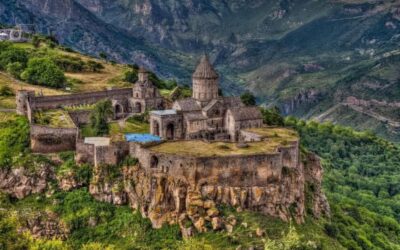
3 Day UNESCO Heritage Private Tour in Armenia from Yerevan
Read our review →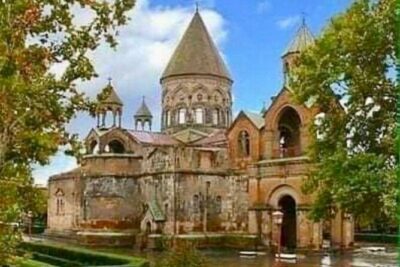
Private Day Trip from Yerevan to UNESCO World Heritage Sites
Read our review →
Garni, Geghard & Symphony of Stones: A Scenic Cultural Tour
Read our review →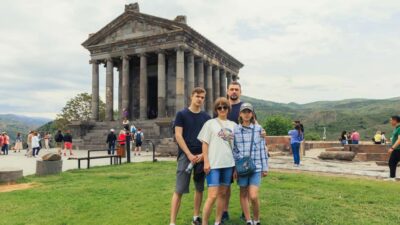
Browse the lists this tour appears in