
Reviewed · PHOTOGRAPHY SESSIONS
Urbex photo tour in Armenia
Abandoned Armenia rewards curious photographers. This seven-day journey pairs secret urbex sites with famous monasteries, mountain roads, local meals, and old Soviet buildings. I like the unusual mix of factory photography and major sights, and I like that accommodation, transport, breakfast, lunch, and dinner are covered. The main caution is the price, $2,301.32 per person, plus the fact that the exact abandoned sites are kept secret until the tour.
The route is a strong first look at Armenia, especially if you want someone else to handle long drives and meals. Guide Nvard receives especially warm praise for her English, patience, humor, and grasp of Armenian history. Still, this is not a cheap city break, and the long days may feel demanding if photography is not your main reason for coming.
In This Review
- Key points before you book
- Why this Armenia tour feels different
- Day 1: A simple arrival in Yerevan
- Day 2: Khor Virap, Noravank, and a Vayots Dzor factory
- Day 3: The Silk Road, Lake Sevan, and Haghpat
- Day 4: Sanahin and the Mikoyan brothers
- Day 5: Vanadzor and Soviet pioneer-camp photography
- Day 6: Amberd Fortress and Tegher Monastery
- Day 7: Garni, Geghard, and the Symphony of the Stones
- What the $2,301.32 price includes
- Food, transport, and group size
- Who should book this tour?
- Should you book the Armenia urbex photo tour?
- FAQ
- How long does the Armenia urbex photo tour last?
- Where does the tour begin?
- What time is the meeting?
- Is airport pickup included?
- How many people can join the tour?
- Are meals included?
- Is hotel accommodation included?
- Are the urbex locations announced in advance?
- What happens if the tour does not reach its minimum group size?
Key points before you book
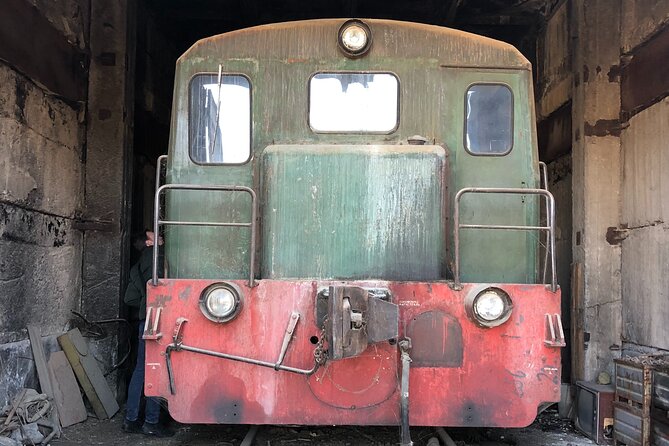
- Secret urbex locations: Abandoned factories, hospitals, sanatoriums, and Soviet pioneer camps form the photographic core, but the precise sites are not disclosed in advance.
- Armenia beyond the postcard: You visit Khor Virap, Noravank, Sevanavank, Haghpat, Sanahin, Amberd, Garni, and Geghard.
- A small group of up to 10: This size should make it easier to manage camera equipment and spend useful time at each site.
- Nearly all costs are bundled: Six breakfasts, six lunches, six dinners, hotel accommodation, and an air-conditioned vehicle are included.
- A strong guide element: Nvard is praised for clear English, patience, humor, and explanations that connect Soviet sites with Armenia’s older past.
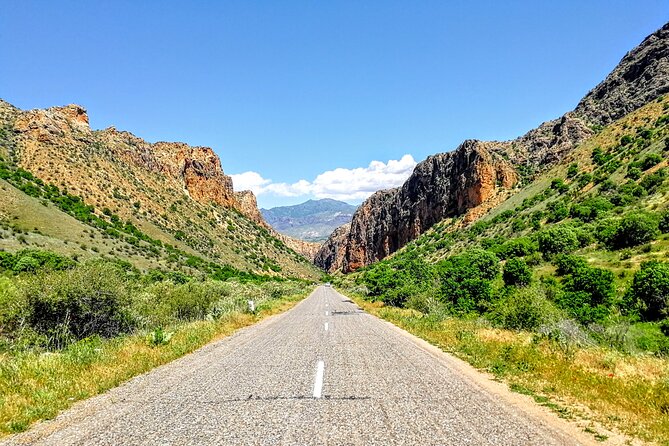
- Long-distance touring: The route crosses several provinces, so expect substantial time on the road between photo stops.
Why this Armenia tour feels different
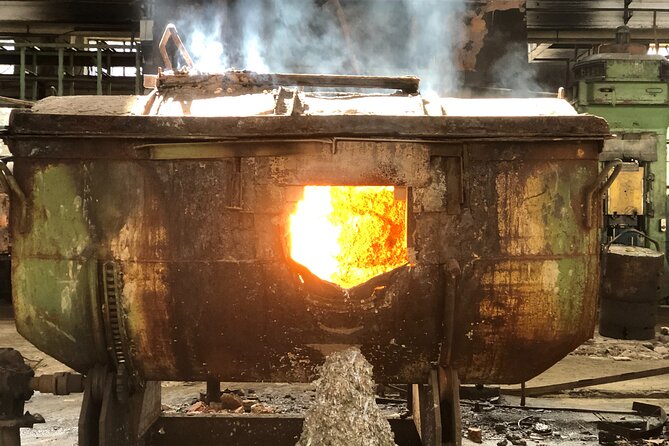
Many Armenia tours follow the familiar church-and-monastery circuit. This one adds a second story: the remains of Soviet industry and public life. You might photograph a deserted factory one day, then stand before a medieval monastery or pagan temple the next.
That contrast is the real appeal. Armenia’s stone churches are carefully preserved and still active as cultural sites. The abandoned buildings are less tidy. Their cracked walls, empty rooms, and faded purpose give you a visual record of the 20th century that ordinary sightseeing often misses.
The tour is also built for people who want to photograph rather than simply pass through. The schedule allows dedicated time at the urbex locations, including a factory near Yeghegnadzor, another site before Haghpat, and a Soviet pioneer camp near Vanadzor.
The exact locations remain private. That is normal in urbex circles, where publicizing a site can bring vandalism, theft, or crowds. It does mean you cannot judge every photo stop before paying. You need to trust the operator and accept some mystery.
Other Yerevan outings people add on:
- Group Tour: Garni, Symphony of Stones, Geghard, Lavash Baking
★ 5.0 · 1,042 reviews - Group Tour: Lake Sevan (Sevanavank), Dilijan (Goshavank, Haghartsin)
★ 5.0 · 1,036 reviews - Khor Virap, Noravank and Birds’ Cave Trip with Wine Tasting
★ 4.8 · 845 reviews
Day 1: A simple arrival in Yerevan
Your tour begins with a 9 a.m. meeting at Zvartnots International Airport. An airport transfer takes you to your three-star hotel, which removes one of the first hassles of arriving in a new country.
The evening meal is optional and is not included. That small detail matters because the rest of the trip is built around included meals. Plan for your own dinner on arrival unless you choose to join the optional restaurant meeting.
This first day is short, with about an hour and a half listed for the airport transfer and initial arrangements. It gives you time to settle in rather than launching straight into a long road trip.
Day 2: Khor Virap, Noravank, and a Vayots Dzor factory
The first full day begins with roughly an hour’s drive to Khor Virap. The monastery sits in the Ararat plain near the Turkish border, with one of Armenia’s most recognizable views: Mount Ararat rising beyond the complex.
Khor Virap is important for more than its setting. According to Armenian church tradition, Saint Gregory the Illuminator was imprisoned in a pit here for 13 years before helping cure King Tiridates III. You have about 45 minutes, enough to see the chapel, courtyard, and religious setting, though not enough for a slow photographic study of every corner.
The next stop is Noravank, a 13th-century monastery tucked into a narrow gorge along the Amaghu River. Its carved stone decoration gives you a different visual mood from Khor Virap. The red-rock surroundings and detailed exterior work deserve your camera, but the listed 45-minute visit keeps the stop fairly brisk.
After lunch in Yeghegnadzor, you visit a gastro yard with wine tasting before heading to an abandoned factory. This is where the tour’s two halves meet: local food and drink on one side, industrial decay on the other.
You receive about three hours for the Yeghegnadzor portion, including lunch and photography. That is useful time, especially if you carry a tripod or several lenses. The factory’s exact location is withheld, so you should ask the guide about access conditions and the amount of walking before setting up your equipment.
Day 3: The Silk Road, Lake Sevan, and Haghpat
The day begins at Vardenyats Pass, also called Selim Pass. The Orbelian Caravanserai here dates from the 14th century and once served traders and their animals on the Silk Road. Its rectangular courtyard, small rooms, chapel, and well give you a compact look at medieval travel infrastructure.
You have about 30 minutes at the caravanserai. That is enough for a quick architectural stop, but photographers may wish they had more time for interior details and careful compositions.
Next comes Sevanavank on the shore of Lake Sevan. The ninth-century complex includes two churches, a courtyard, and khachkars, the carved Armenian cross-stones found throughout the country. The monastery’s position above the lake gives the stop its force. You get about 45 minutes for the site and views.
The day then turns back toward urbex. A photo stop at an undisclosed location comes before Haghpat village and monastery. Haghpat was built between the 10th and 13th centuries and is known for its church, bell tower, library, chapels, carvings, and UNESCO status.
The contrast is excellent for photographers. You can frame an abandoned structure earlier in the day, then study the precision and endurance of medieval stonework at Haghpat. The schedule lists about an hour for the monastery, followed by an overnight stay and dinner in the village.
This is one of the more appealing nights of the route. Staying in the village places you closer to the northern monastery country instead of returning to Yerevan after every outing. It also breaks up the driving.
Two or three more Yerevan days worth reading about
- Yerevan city tour with drinks in a classic car with photography
★ 5.0 · 41 reviews - Retro KGB Tour: A Volga 21 Adventure in Yerevan’s Soviet Past with photography
★ 5.0 · 29 reviews - Photoshoot on the streets of Yerevan
★ 5.0 · 9 reviews - Photo tour in Yerevan
★ 5.0 · 6 reviews
Day 4: Sanahin and the Mikoyan brothers
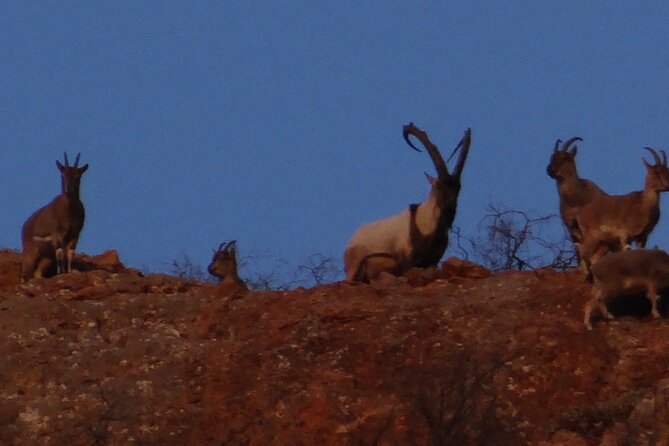
Sanahin Monastery is another major medieval complex in Lori Province. Founded in the 10th century, it became a center of learning and culture. The complex includes churches, chapels, a gavit, and buildings made from local tuff stone.
You have about 45 minutes here. Sanahin and Haghpat are often discussed together because both are UNESCO-listed monastic sites in the same broad region. They are worth seeing as separate places, but the quick timing means you should decide in advance whether you care most about architecture, inscriptions, religious details, or broad views.
The day also includes four hours at the Mikoyan Brothers Museum in Sanahin village. The museum covers Anastas Mikoyan, a major Soviet politician, and Artem Mikoyan, the aircraft designer associated with Soviet aviation. Exhibits include personal belongings, photographs, documents, and material about their careers.
Four hours is generous compared with the short monastery visits. For anyone interested in Soviet history, politics, engineering, or aviation, this may be one of the most substantial indoor stops on the route. If that subject does not interest you, the length could feel out of balance.
Day 5: Vanadzor and Soviet pioneer-camp photography
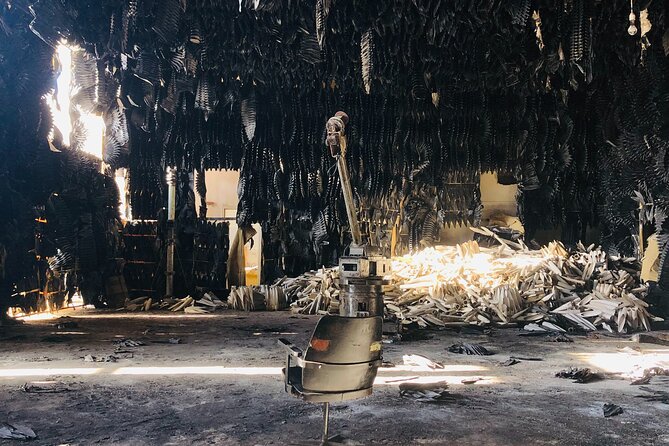
Vanadzor is the northern city where the Soviet side of the tour comes into focus. It is Armenia’s third-largest city, set along the Pambak River and surrounded by the Lesser Caucasus Mountains. The program gives you about three hours in the city, with time for urbex photography.
Vanadzor is known for Soviet-era sites, museums, parks, and galleries. The appeal here is not a single famous monument. It is the chance to look at an active Armenian city alongside the traces of its Soviet industrial past.
A second Vanadzor stop takes you to an old Soviet pioneer camp for about two hours of photography. Pioneer camps were state-supported summer camps for children aged 9 to 15. They promoted sports, arts, outdoor activities, education, and Soviet ideals.
That background gives the buildings a human story. A dining hall, dormitory, or activity room is not just an empty structure. It once served a carefully planned social purpose. The abandoned setting lets you photograph the gap between that original aim and the site’s later condition.
The schedule allows a good amount of time, but conditions at abandoned places can vary. Since the tour does not provide a detailed gear list, bring equipment you can manage comfortably and follow the guide’s instructions around damaged structures.
Day 6: Amberd Fortress and Tegher Monastery
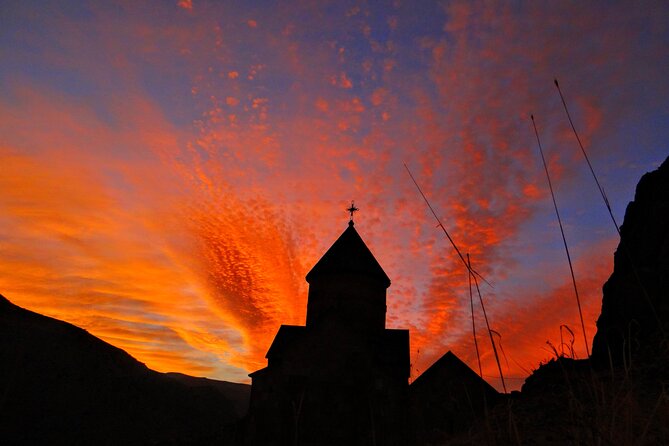
Amberd sits at about 2,300 meters in Aragatsotn Province. The fortress began in the seventh century and later served as a military stronghold during invasions by Arab, Seljuk, and Mongol forces. Its church and high mountain position make it one of the most dramatic historical stops on the trip.
The visit lasts about 45 minutes. You can see the fortress, church, and mountain views, but the high elevation may make a brisk schedule feel short if you want detailed photographs.
Tegher Monastery follows, also for about 45 minutes. This 13th-century hilltop complex includes a church, chapel, and khachkars. It suffered damage over time, yet several structures remain well preserved.
The two stops work well together. Amberd gives you defensive architecture and high mountain views. Tegher gives you a quieter religious site with carved stonework and a different scale. Neither is an urbex stop, but both add historical context to the abandoned buildings elsewhere.
Day 7: Garni, Geghard, and the Symphony of the Stones
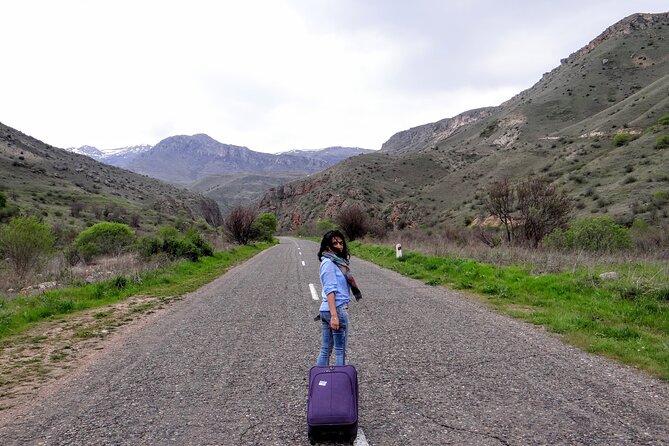
The final day turns to pre-Christian and medieval Armenia. Garni Temple is a pagan monument often described as a symbol of pre-Christian Armenia. It was later adapted as a royal summer residence, and its classical form looks very different from the country’s churches.
You have about 45 minutes at the temple. That is enough to see the main structure and understand its place in Armenian history, though the site and gorge together deserve more time if you prefer slow photography.
Next comes the UNESCO-listed Geghard Monastery. Several churches are cut into caves or built against the surrounding rock. The setting makes Geghard feel unlike the open hilltop monasteries elsewhere on the route.
The last stop is Garni Gorge and the Symphony of the Stones, a formation of basalt columns arranged like organ pipes. The columns can produce a musical sound when struck, giving the site a simple but memorable natural feature. You have about 30 minutes here before the transfer back to Yerevan.
This final day is well chosen. It closes the trip with three distinct subjects: pagan architecture, cave-carved Christianity, and unusual geology.
What the $2,301.32 price includes
The cost is high for Armenia, but it covers most of the expenses that can quietly add up on a private or specialist tour. You receive:
- Three-star accommodation as set out in the route
- Six breakfasts
- Six lunches
- Six dinners
- An air-conditioned vehicle
- Airport pickup
- Admission fees where stated
- Urbex photography stops
- A group capped at 10 people
The value depends on how much you would otherwise spend arranging transport between Yerevan, Vayots Dzor, Lake Sevan, Lori, Vanadzor, and Aragatsotn. Armenia’s sights are spread across the country, and the urbex sites are not public attractions with simple directions.
For a photographer, the included planning is a major part of the price. The operator handles the route, meals, accommodation, and access to undisclosed sites. Group discounts may improve the cost for friends traveling together.
There are limits. The first evening’s dinner is not included, and the accommodation is three-star rather than luxury. Also, the seven-day schedule includes many short stops, so you are paying for breadth and access rather than long stays at each famous monument.
Food, transport, and group size
Six lunches and six dinners are included, with meals arranged along the route. The Yeghegnadzor gastro yard and wine tasting add a local food stop rather than relying only on standard hotel meals.
You should provide dietary requirements when booking. The vehicle is air-conditioned, which matters on long drives through several provinces. Airport pickup is offered from Zvartnots International Airport, with a stated 9 a.m. start.
The group limit is 10 people. That is small enough to keep the trip personal, but not so small that every photo stop becomes a private tour. If several people are carrying serious camera gear, space and timing could matter, so ask how equipment is handled before paying.
Nvard is an important part of the experience. Her strong English, patience, humor, and grasp of Armenian and regional history are repeatedly praised. Another name connected with the trip is Hanzebeeld, associated with the urbex photography organization. The combination of a local guide and a photography-focused organizer appears to be one of the tour’s strengths.
Who should book this tour?
I would recommend it to photographers who want access to unusual abandoned sites without giving up Armenia’s major cultural sights. It also suits first-time visitors who prefer a planned route, included meals, and a small group over arranging intercity transport themselves.
It is a good match if you enjoy Soviet history, industrial buildings, monasteries, mountain roads, and changing subjects from one day to the next. You do not need to be an expert photographer, since the tour includes ordinary sightseeing as well as urbex work.
I would hesitate if you want a slow holiday based in Yerevan, upscale hotels, or long free periods. The route is spread out, several visits last only 30 to 45 minutes, and the price requires a real interest in the specialist access.
The cancellation terms also deserve attention. The booking is non-refundable and cannot be changed for any reason. The operator may cancel if the minimum number is not reached, in which case a different date or experience, or a full refund, is offered.
Should you book the Armenia urbex photo tour?
Book it if the combination of secret abandoned places and Armenia’s famous monuments is exactly what you want. The strongest features are the unusual access, the careful route across several regions, included meals and transport, and Nvard’s warm, capable guiding.
Think twice if you are mainly seeking low-cost sightseeing. At $2,301.32 per person, this is a specialist tour, not a bargain bus trip. For the right photographer, though, the chance to spend real time in factories, hospitals, sanatoriums, and pioneer camps, while also seeing Khor Virap, Haghpat, Garni, and Geghard, gives the price a reasonable purpose.
FAQ
How long does the Armenia urbex photo tour last?
The experience is described as approximately seven days, with activities arranged across Day 1 through Day 7.
Where does the tour begin?
It begins at Zvartnots International Airport in Yerevan, Armenia.
What time is the meeting?
The stated start time is 9:00 a.m.
Is airport pickup included?
Yes. The first activity includes meeting at the airport and transfer to the hotel.
How many people can join the tour?
The maximum group size is 10 people.
Are meals included?
Yes. Six breakfasts, six lunches, and six dinners are included. Dinner on the first evening is not included, although an optional restaurant meeting is offered.
Is hotel accommodation included?
Yes. Accommodation is included according to the route, with three-star hotel accommodation specified.
Are the urbex locations announced in advance?
No. The exact locations are kept secret to help preserve the abandoned sites.
What happens if the tour does not reach its minimum group size?
If the operator cancels because the minimum number is not reached, you are offered another date or experience, or a full refund.
Latest write-ups from Yerevan
- Yerevan to Tbilisi Day Tour: Unveiling Transcultural Wonders★ 4.8 · 2 reviews
- Yerevan City Tour: Discover an Old and New Yerevan★ 5.0 · 2 reviews
- Yerevan: Museum of Illusions Entry Ticket★ 5.0 · 3 reviews
- Tsaghkadzor & Lake Sevan։ Winter Day Tour from Yerevan★ 4.7 · 3 reviews
- Wine, Jazz and Magic: A Night at Malkhaz Jazz Club★ 5.0 · 2 reviews
- The Stalin car Yerevan city tour Armenia★ 5.0 · 2 reviews
- Private Yerevan City Tour with museums★ 5.0 · 5 reviews
- Wine Trip in Yerevan★ 5.0 · 3 reviews
Photography Sessions, compared.

Yerevan city tour with drinks in a classic car with photography
Read our review →
Retro KGB Tour: A Volga 21 Adventure in Yerevan’s Soviet Past with photography
Read our review →



Browse the lists this tour appears in