Reviewed · YEREVAN TOURS
7 Day Tour through Armenia
Armenia packs centuries into a small country. This seven-day circuit takes you from Yerevan’s grand stairway and brandy cellars to hilltop monasteries, old cities, pagan temples, and high mountain fortresses. I especially like the mix of major sights and lesser-known churches, plus the chance to see both Armenia’s urban culture and its countryside in one organized trip. I also like that admission is included at most stops. The main concern is the pace: several days contain long drives and many one-hour visits, so this suits you best if you prefer broad coverage over lingering in one place.
The tour costs $885.13 per person, lasts about seven days, and is offered in English with pickup available. A maximum group size of 30 keeps the price lower than a private trip, but it also means less flexibility. The past feedback is unusually warm, praising the helpful guides, careful organization, family appeal, food, hospitality, and sense of safety.
In This Review
- Quick points to know before booking
- What $885.13 covers in practical terms
- Yerevan starts with views, brandy, and street life
- Day two traces Armenia’s early Christian center
- Lake Sevan and Dilijan monasteries bring the best scenery
- Gyumri shows Armenia’s artistic and earthquake-scarred side
- Garni and Geghard explain two different Armenias
- Day six is a church-lover’s marathon
- Yerevan’s final day shifts from film to markets
- Who will get the most from this Armenia itinerary
- Cancellation and group details worth checking
- Should you book this seven-day tour?
- FAQ
- How long is the Armenia tour?
- Where does the tour take place?
- Is pickup offered?
- Is the tour available in English?
- What is the price per person?
- How many people can join the tour?
- Are admission tickets included?
- What is the cancellation policy?
Quick points to know before booking
- Yerevan begins and ends the week: You see the Cascade, the ARARAT Museum, central streets, the Parajanov Museum, Erebuni Museum, and Vernissage Market.
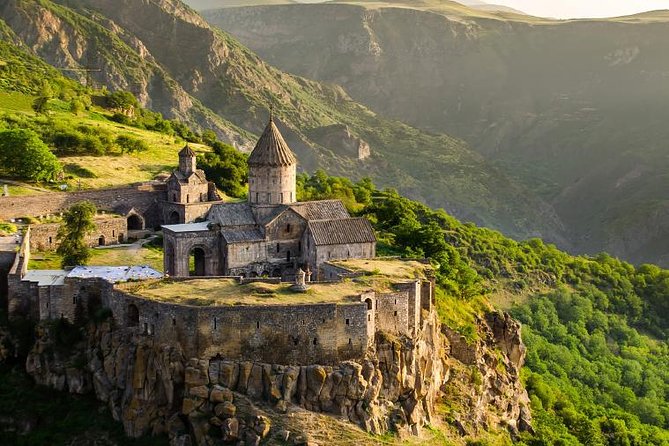
- The monastery days are the heart of the trip: Sevanavank, Haghartsin, Goshavank, Geghard, Saghmosavank, Amberd, and several smaller churches cover many periods of Armenian religious architecture.
- Day six is exceptionally full: Eight stops include five churches, a historic bridge, Saghmosavank, Oshakan, and Amberd Fortress.
- The tour mixes pagan and Christian Armenia: Garni Temple gives you a rare look at the country before Christianity, while Geghard and Echmiadzin-area sites show its later religious traditions.
- You taste Armenian brandy: The ARARAT Museum includes different aged cognacs, making it more than a standard city walk.
- The group can reach 30 people: That helps explain the price, but it may make stops feel timed rather than leisurely.
What $885.13 covers in practical terms
At $885.13 per person, this is not a budget day trip repeated seven times. It is a full country circuit with pickup offered, English service, and entry included at the listed paid attractions. You are paying for the convenience of having the major route arranged rather than working out transport between remote monasteries and mountain towns yourself.
The value depends on how you like to travel. If you want to see a lot of Armenia without renting a car or piecing together local transport, the price is easier to justify. Sites such as Amberd Fortress, Marmashen Monastery, and Goshavank are not simply central Yerevan stops. An organized vehicle makes this range of places practical.
The tradeoff is freedom. The itinerary gives each stop about one hour, and day six has eight stops. I would expect a day built around seeing the outline of each place, taking photographs, hearing the main explanation, and moving on. If one monastery captures your imagination, you may wish you had more time.
The group limit is 30 people. That is a reasonable cap for a shared tour, though the experience will feel different with 10 people than with a full vehicle. Pickup is offered, but the supplied details do not specify the exact pickup point, vehicle type, hotel coverage, or meal arrangements. Ask those questions before paying.
Other Yerevan outings people add on:
- Group Tour: Garni, Symphony of Stones, Geghard, Lavash Baking
★ 5.0 · 1,042 reviews - Group Tour: Lake Sevan (Sevanavank), Dilijan (Goshavank, Haghartsin)
★ 5.0 · 1,036 reviews - Khor Virap, Noravank and Birds’ Cave Trip with Wine Tasting
★ 4.8 · 845 reviews
Yerevan starts with views, brandy, and street life
Day one begins at the Cascade Complex, the giant stairway in front of the Opera House. Seven elevators run inside it, so you do not need to treat the site as a test of athletic stamina. The real reward is the view from the top, where Yerevan opens out below you.
The Cascade is also a useful first stop because it gives you a quick sense of the capital’s layout. Allow the hour to include the stairs, elevators, viewpoints, and a look at the public art area. Admission is free.
The ARARAT Museum follows with a tasting of different aged Armenian cognacs. This is one of the tour’s more distinctive inclusions. It connects Yerevan’s modern identity with a product that has long carried the country’s name abroad. If you do not drink alcohol, check with the operator about what alternatives, if any, are available, since the supplied details only describe the cognac tasting.
The day ends with a walk along Mesrop Mashtots Avenue. Rather than another single monument, this stop lets you see central Yerevan’s architecture and street rhythm. It is a sensible contrast to the formal Cascade and museum visit.
Day two traces Armenia’s early Christian center
The second day focuses on religious sites tied to the Armenian Apostolic Church. The Holy Archangels Church is described as a major religious and administrative center. Its setting is linked with the conversion of Armenia, including the site of a former pagan temple and the early foundation associated with Gregory the Illuminator.
The supplied history also refers to Saint Hripsime Monastery, built in 618. Because the description combines several historical references, I would ask the guide to clarify exactly which buildings and traditions you are seeing on the day. That small question can make the visit easier to follow, especially if you are not already familiar with Armenian church history.
Zvartnots Temple gives the day a stronger architectural focus. Construction began in the seventh century under Catholicos Nerses III and continued over roughly two decades. It was connected with Dvin, one of Armenia’s ancient cities, and both places are listed as UNESCO World Heritage sites in the supplied information.
You can expect a site where the remains and historical setting matter as much as the surviving structure. The name is connected with vigilance and heavenly forces, while the scale of the original church helps explain why the ruins remain important. One hour should be enough for an introduction and photographs, but not for a slow archaeological study.
Lake Sevan and Dilijan monasteries bring the best scenery
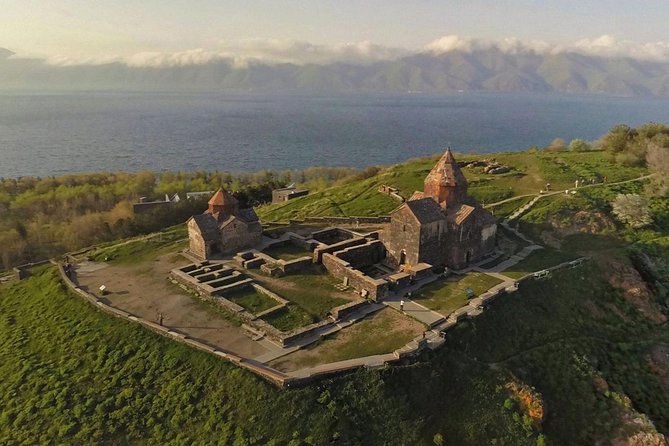
Day three reaches Lake Sevan, called Armenia’s pearl in the itinerary. The lake is noted for its high elevation and sweet, strikingly blue water. Sevanavank Monastery sits at the center of the visit, giving you both a religious site and a broad water view.
The blue lake and open setting make this a welcome change after the dense city architecture of Yerevan. Bring a layer, since the lake’s high setting can feel different from the capital, though the tour information does not promise any particular weather conditions.
The route then continues to Haghartsin Monastery near Dilijan. Haghartsin served as a religious and educational center during the 10th to 13th centuries. Its wooded surroundings are a large part of the appeal, but the one-hour format means you should pay attention to the carved stone details and church forms before simply admiring the setting.
Goshavank completes the day. It became a major scholarly and religious center in the 12th and 13th centuries under Mkhitar Gosh, who was known as a scholar, legal expert, and scientist. This stop gives the itinerary intellectual weight. These monasteries were not only places of worship. They were also centers where Armenian learning, law, and written culture developed.
This is one of the strongest days for anyone who wants nature paired with medieval architecture. It is also a day when drive time matters. The listing does not provide distances or exact travel durations, so ask how much time you will spend on the road.
Two or three more Yerevan days worth reading about
- The Great Beauty of Armenia: 7-Day Culture and Cuisine Tour
★ 5.0 · 35 reviews - Family package for 7 days
★ 5.0 · 10 reviews - 7 Days Armenia Package with Accommodation, Tours and Transfers
★ 5.0 · 5 reviews - 7 day semi hiking tour in Armenia
★ 4.5 · 2 reviews
Gyumri shows Armenia’s artistic and earthquake-scarred side
Day four moves north to Gyumri, Armenia’s second city and a cultural center. The old streets are known for houses built from colorful stone, decorative bas-reliefs, and architectural details that survived the devastating 1988 earthquake.
A walking hour in Gyumri is not just a pretty old-town stroll. It offers a look at how a city preserves its character while carrying visible evidence of disaster. The short visit will give you an introduction, but you may want to note places you would return to if you have extra time in Armenia.
Marmashen Monastery sits beside the Akhurian River. Built between 988 and 1029, it includes five churches and is presented as an excellent surviving example of the Ani school of medieval Armenian architecture. This is a useful stop for comparing regional building styles after seeing Yerevan and Gyumri.
Harichavank Monastery follows on the western slope of Mount Aragats. The complex began in the seventh century, while its main church dates to the 13th century. A small chapel perched on a piece of rock is a particularly unusual feature. An earthquake split the rock from the cape, leaving the chapel above the canyon.
That detail gives Harichavank a memorable physical story, not just a date and a church name. Take care around edges and uneven ground, since the site is described as being on a rocky slope and cape. The supplied information does not provide accessibility details, so ask ahead if steps or rough surfaces are a concern.
Garni and Geghard explain two different Armenias
Day five is one of the clearest highlights. A short stop at Charents Arch provides a view over the Ararat Valley and toward Mount Ararat. The view is weather dependent, so treat it as a bonus rather than a guarantee.
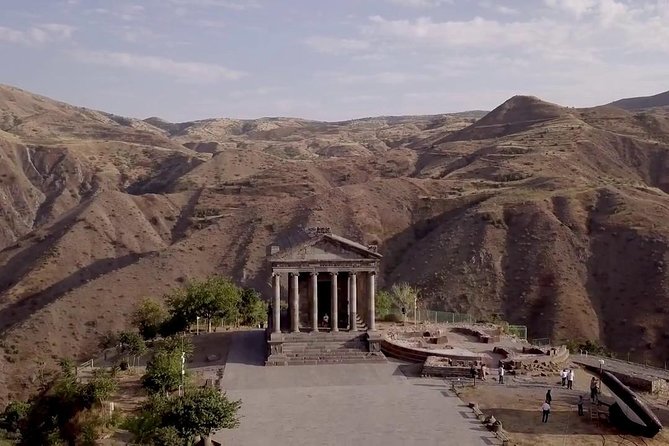
Garni Temple is the only surviving temple in Armenia from the pagan and Hellenistic era, according to the supplied description. Dedicated to the sun god Mithra and built in 76 B.C., it later served as a summer residence for Armenian kings for more than four centuries.
Garni matters because it interrupts the tour’s long run of Christian monuments. Its classical design and pagan origin show that Armenia’s story did not begin with monasteries. Give yourself time to look at the columns and setting, not just take the standard photograph.
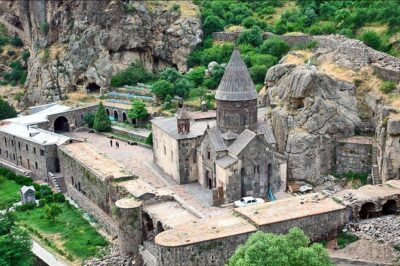
Geghard Monastery is the day’s second major site. The complex includes churches and chambers carved into solid rock. Its earlier name, Ayri Vank, means Cave Monastery, while Geghard refers to the lance associated with the biblical account of Christ’s crucifixion.
The main church was built in 1215, and the Avazan church, dating to 1283, is cut into the rock. Medieval dwellings, caves, and hundreds of cross-stones surround the complex. The combination of carved interiors and cliffside construction is what makes Geghard so different from the freestanding churches elsewhere on the route.
I would place this day high on the list for first-time visitors to Armenia. The main limitation is the one-hour stop. Geghard rewards careful looking, and you may find yourself wishing for more time to examine the stonework and surrounding caves.
Day six is a church-lover’s marathon
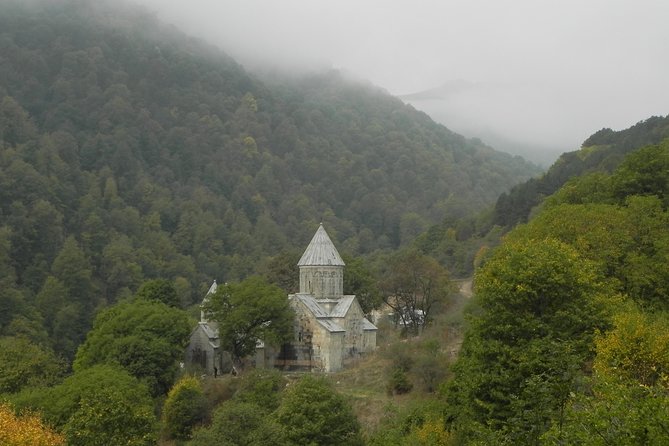
Day six is the most ambitious day of the tour. It includes eight stops, so you should expect a packed schedule. The reward is range: small village churches, a historic bridge, a major monastery, the burial place of the Armenian alphabet’s creator, and a high fortress.
The first three stops are in or around Ashtarak:
- Tsiranavor Church means apricot-colored church in English. It is a partly ruined fifth-century church at the edge of a gorge.
- Karmravor Church means red-colored church and dates to the seventh century.
- Spitakavor Church of Ashtarak means white-colored church. It is a partly ruined 13th-century church beside a gorge.
The color names make these stops easy to remember, and the ruins add a sense of age without requiring a long museum visit. Still, three churches in quick succession can blur together if you are not interested in architecture. Listen for the differences in date, condition, and setting.
Ashtarak Bridge, built in 1664, crosses the Kasagh River with three arches of unequal size. The area below and around it is described as suitable for picnics. You will probably see it as a short historical pause rather than a meal stop, since no meals are specified.
Saint Gevorg Church was built to hold remains associated with Saint George, known as the Slayer of Dragons. Its interior includes numerous 17th-century religious frescoes. This may be one of the more intimate stops of the day, especially after several exterior monuments.
Saghmosavank Monastery dates to the 13th century. Its name connects with spiritual songs, and its acoustics are part of the site’s identity. If the church is open and conditions permit, listen quietly inside. Sound is one of those details you cannot capture in a photograph.
At Oshakan, Saint Mesrop Mashtots Cathedral marks the burial place of Mesrop Mashtots, creator of the Armenian alphabet. This gives the day a strong cultural focus. Armenia’s written language is central to its identity, and the stop connects religious architecture with education and literature.
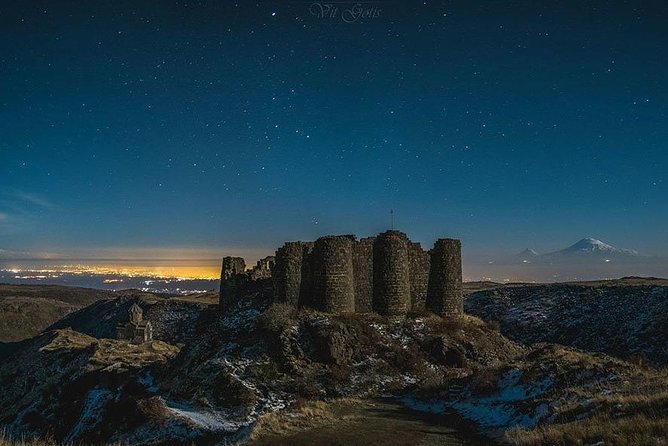
Amberd Fortress finishes the route at 2,300 meters on the slopes of Mount Aragats. Built in the 10th century, it sits where the Arkashen and Amberd rivers meet and served as a refuge for Armenian kings during war. The high setting should produce impressive views, but weather and access conditions can affect what you see.
This is the day I would question most carefully before booking. Eight one-hour visits are a lot, and the high-altitude fortress may make the final stop feel tiring. If you want to explore every church slowly, this schedule will not suit you. If you want a broad sweep of Armenian architecture in one day, it delivers.
Yerevan’s final day shifts from film to markets
The last day returns to the capital with three very different stops. The Parajanov Museum celebrates Sergei Parajanov, described here as Armenia’s greatest filmmaker. His works include assemblages, flat and three-dimensional collages, drawings, dolls, and film sketches.
This is not a conventional history museum. It is better for you if you enjoy unusual visual art and the imagination behind film production. The one-hour visit should give you a clear taste of Parajanov’s style without taking over the day.
The Erebuni Museum explains the foundation of Yerevan and sits at the foot of Arin Berd hill, where the Urartian fortress Erebouni was built. It gives the capital a much older frame than its modern avenues and cafes suggest. The museum is a useful final history stop because it connects the present city to its early foundations.
Vernissage Market closes the tour on a more informal note. Local makers sell handmade work in this open-air market, so it is the natural place to browse for a small reminder of Armenia. Since admission is free, you can look without pressure, though prices and quality will vary by seller.
Who will get the most from this Armenia itinerary
This tour fits you well if you want:
- A first broad look at Armenia without arranging each transfer yourself
- Ancient churches, monasteries, ruins, and fortresses
- A balance of Yerevan museums and rural sites
- English-language service
- Included admission at the listed paid stops
- A family trip with enough variety to keep younger visitors engaged
The feedback describes children enjoying the program rather than finding it dull. That makes sense: the week alternates museums, views, open-air ruins, markets, and unusual rock-cut architecture.
You should think twice if you need a slow pace, long meals, or lots of independent time. The itinerary does not list meals, hotel accommodation, exact driving times, or a daily start and finish schedule. It also does not state accessibility arrangements. Most people can participate, but the rocky slopes, gorges, stairways, and high fortress setting may matter to anyone with mobility limits.
The strongest praise centers on organization, helpful guides, hospitality, and the feeling that the details are handled for you. One Greek-language comment also praised the food, safety, and experienced staff, while another emphasized the cultural program and Armenian cuisine. Those are encouraging signs, but they do not replace asking exactly what is included in your booking.
Cancellation and group details worth checking
Confirmation is provided at booking, and free cancellation is available up to 24 hours before the experience begins. Changes or cancellations made within 24 hours are not accepted for a refund, with cut-off times based on Armenia’s local time.
The tour is near public transportation, offers pickup, and allows a maximum of 30 people. Before booking, ask where pickup occurs, how much time is spent driving each day, and whether meals or hotel arrangements are separate. Those answers will tell you more about the practical value than the headline price alone.
Should you book this seven-day tour?
I would book it if your priority is seeing as much of Armenia as possible in one organized week. The route is unusually broad, the paid entries are included, and the mix of Garni, Geghard, Lake Sevan, Gyumri, Amberd, Yerevan museums, and smaller churches gives you a real sense of the country’s many layers.
I would not book it if your ideal holiday means spending half a day at one monastery or wandering without a schedule. Day six in particular is demanding, and every stop is given roughly an hour. For an active first visit, though, the tour offers strong coverage and a practical way to reach places that would be awkward to connect independently.
FAQ
How long is the Armenia tour?
The experience lasts approximately seven days.
Where does the tour take place?
The tour is based in Yerevan, Armenia, with visits to locations around the country.
Is pickup offered?
Yes, pickup is offered.
Is the tour available in English?
Yes, the tour is offered in English.
What is the price per person?
The listed price is $885.13 per person.
How many people can join the tour?
The maximum group size is 30 people.
Are admission tickets included?
Admission is listed as included at most named attractions. The Cascade Complex, Mesrop Mashtots Avenue, and Vernissage Market are listed as free.
What is the cancellation policy?
You can cancel up to 24 hours before the experience starts for a full refund. Cancellations or changes made less than 24 hours before the start time are not accepted for a refund.
Latest write-ups from Yerevan
- Yerevan to Tbilisi Day Tour: Unveiling Transcultural Wonders★ 4.8 · 2 reviews
- Yerevan: Museum of Illusions Entry Ticket★ 5.0 · 3 reviews
- Yerevan City Tour: Discover an Old and New Yerevan★ 5.0 · 2 reviews
- Tsaghkadzor & Lake Sevan։ Winter Day Tour from Yerevan★ 4.7 · 3 reviews
- Wine, Jazz and Magic: A Night at Malkhaz Jazz Club★ 5.0 · 2 reviews
- Private Yerevan City Tour with museums★ 5.0 · 5 reviews
- Wine Trip in Yerevan★ 5.0 · 3 reviews
- The Stalin car Yerevan city tour Armenia★ 5.0 · 2 reviews
Yerevan Tours, compared.
Garni, Symphony of Stones, Geghard, Lavash Baking
Read our review →
Lake Sevan (Sevanavank), Dilijan (Goshavank, Haghartsin)
Read our review →
Khor Virap, Noravank and Birds’ Cave Trip with Wine Tasting
Read our review →
Garni, Geghard, Symphony of Stones & Lavash Baking
Read our review →
Garni, Geghard, Symphony of Stones & Lavash Baking
Read our review →