
Reviewed · GARNI & GEGHARD TOURS
Yerevan: Garni, Geghard, Symphony of Stones & Lavash Baking
Armenia packs big sights into a small corner. This six-hour trip from Yerevan brings together Garni Temple and Geghard Monastery, then adds the striking Symphony of Stones and a traditional lavash baking stop. I especially like the mix of ancient religion, mountain views, and everyday food culture. At $19 per person, it is also unusually good value, though entrance fees and lunch cost extra, and the advertised baking class may be more of a demonstration than a hands-on lesson.
The route is well paced, with time for photographs and guided visits rather than a quick drive-by. Guides such as Yegor, Hasmik, Ana, Anna, and Igor have received especially warm praise for clear explanations and friendly care. Bring local cash, comfortable shoes, sun protection, and water, since small entrance fees and other expenses are not included.
In This Review
- Six useful things to know before you go
- Why this six-hour route works so well
- Charents Arch and the first view of Mount Ararat
- Garni Temple and Armenia’s pagan past
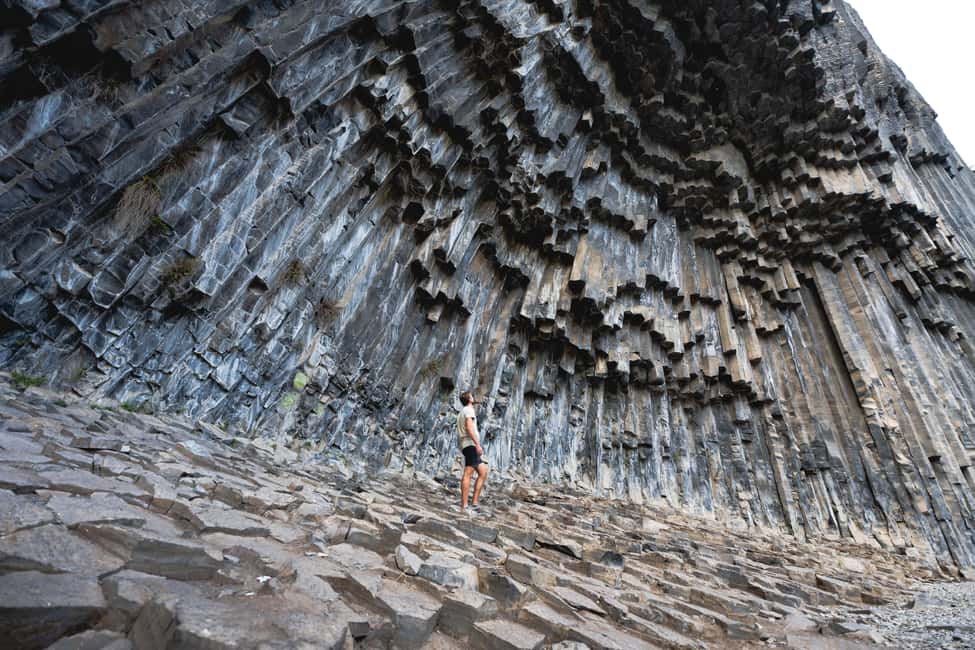
- The Symphony of Stones in the Azat River gorge
- Lavash baking in Garni
- Geghard Monastery, the day’s most powerful stop
- Guides, vehicles, and the rhythm of the day
- What to pack and what to pay
- Who should book this Garni and Geghard trip?
- Should you book it?
- FAQ
- Where does the tour begin and end?
- How long does the experience last?
- What languages are available?
- Are entrance fees included?
- Is lunch included?
- Is the lavash activity hands-on?
- What happens if the weather is severe?
Six useful things to know before you go
- Garni is Armenia’s surviving pagan temple: It is the only preserved structure in Armenia from the pagan period, dedicated to Mihr.
- Charents Arch gives you the big view: On a clear day, Mount Ararat appears beyond the surrounding hills.
- Geghard is the emotional high point: The monastery is partly carved into rock and has a powerful, quiet atmosphere.
- The Symphony of Stones is a short nature stop: Basalt columns line the Azat River gorge in shapes that resemble a giant organ.
- Lavash is cultural, not just culinary: You see traditional bread prepared and taste it fresh at a family-run restaurant.
- Budget beyond the $19 fare: Garni costs 1,500 AMD, the Symphony of Stones costs 200 AMD, and lunch is usually about $5 to $10 per person.
Why this six-hour route works so well
I like this excursion because it does not ask you to choose between Armenia’s monuments and its daily life. In one outing, you move from a pagan temple to a Christian monastery, from volcanic rock formations to a hot sheet of bread pulled from a traditional oven.
The timing also makes sense. The listed duration is six hours, though recent departures have taken roughly five to six hours depending on traffic and conditions. You leave from Komitas Yerevan State Conservatory, ride through Kotayk Province, and return to the same meeting point.
That simplicity matters. You do not need to arrange separate taxis to Garni, Geghard, and the gorge. The guide handles the movement between stops, while you can focus on the views and explanations.
The $19 price is the main reason this trip deserves attention. Transportation, a guide, and the baking experience are included. Add 1,500 AMD for Garni, 200 AMD for the Symphony of Stones, and roughly $5 to $10 for lunch, and the whole day remains modestly priced for the amount covered.
You should still carry more Armenian dram than the listed admission total suggests. One recent account recommended about 7,500 AMD per person for entrances, toilets, food, and small payments. That is not a fixed tour charge, but it is sensible advice if you prefer not to search for an ATM in the countryside.
More Symphony of Stones Trips in Yerevan
- Group Tour: Garni, Symphony of Stones, Geghard, Lavash Baking
★ 5.0 · 1,042 reviews - From Yerevan: Garni, Geghard, & Symphony of Stones Day Trip
★ 4.8 · 687 reviews - Yerevan: Garni, Geghard, Symphony of Stones & Lavash Baking
★ 5.0 · 589 reviews
Charents Arch and the first view of Mount Ararat
The first sightseeing pause is Charents Arch, reached after about 40 minutes in the vehicle. It is a quick stop, but a useful one because it gives you a wide view across the countryside toward Mount Ararat.
The view depends heavily on weather. On clear days, the mountain adds a memorable Armenian symbol to your photographs. In winter, snow can make the scene especially striking, though clouds may hide the peak completely.
Do not treat this as a major walking stop. It is best understood as a scenic introduction to the day, a chance to stretch your legs, take photographs, and hear some background before reaching Garni.
The drive itself is part of the experience. The route leaves the city and heads into Kotayk Province, where the urban setting gives way to hills, ravines, and open views. Your guide may also use the drive to explain Armenian history and culture. Several guides have been praised for making these periods between stops useful rather than empty.
Garni Temple and Armenia’s pagan past
Garni is the most recognizable monument on the route. Its orderly stone columns look very different from Armenia’s medieval churches, and that contrast is exactly what makes the visit worthwhile.
The temple is described as the only structure preserved in Armenia from the pagan period. It was dedicated to Mihr, a god associated with the pre-Christian Armenian religious world. That fact gives Garni unusual importance: it is not simply an attractive old building, but a surviving link to a period often overshadowed by Armenia’s Christian monuments.
You receive about an hour here for guided sightseeing and views. The temple sits above the surrounding gorge, so your attention will shift between the architecture and the setting. This is one of the places where a guide adds real value. Without context, you may notice the columns and the location. With a good explanation, the site becomes part of Armenia’s larger religious story.
The admission fee is not included, so keep 1,500 AMD ready. The small extra cost is easy to justify, particularly if ancient architecture is high on your list.
One practical point: the route later returns to Garni for the meal and lavash stop. That may sound repetitive, but it saves you from adding another long transfer. The temple visit and the food stop serve different purposes, so the second arrival feels more like a change of pace than a repeat visit.
The Symphony of Stones in the Azat River gorge
The next major stop is the Symphony of Stones, reached by van in about 15 minutes from Garni. The site is a natural monument in the Azat River gorge, known for tall basalt formations arranged in regular-looking columns.
The nickname Basalt Organ gives you the right mental picture. The rock faces can look almost engineered, as if someone built a giant musical instrument along the gorge. Their shape comes from natural volcanic processes, but the clean vertical lines make the result seem artificial.
This is mainly a walking and photography stop. You have about an hour for a guided visit, sightseeing, and scenic views. Wear shoes with a good grip, particularly after rain or during winter conditions. The information specifically recommends comfortable shoes, and this is the stop where that advice matters most.
The entry fee is only 200 AMD. It is a small charge, but you need coins or small notes because rural payment points are not always convenient. Do not expect a museum or a long indoor presentation here. The appeal is the rock itself, the gorge, and the chance to see one of Armenia’s more unusual natural sights.
The site can be especially attractive in snowy weather, when the dark basalt contrasts with white ground. At the same time, winter may make paths slippery and daylight shorter. Severe weather can lead to a cancellation or schedule change, so check conditions before setting out.
Swap the monasteries for something else entirely:
- Group Tour: Lake Sevan (Sevanavank), Dilijan (Goshavank, Haghartsin)
★ 5.0 · 1,036 reviews - Khor Virap, Noravank and Birds’ Cave Trip with Wine Tasting
★ 4.8 · 845 reviews - Group tour: Khor Virap, Noravank, Areni Winery and Cave
★ 5.0 · 651 reviews - Group Tour: Tsaghkadzor (Kecharis, Ropeway), Lake Sevan, Trout barbecue treat
★ 5.0 · 511 reviews
Lavash baking in Garni
After the gorge, the vehicle returns to Garni for a break, food tasting, and the lavash portion of the day. This is where the trip becomes more personal and less like a standard monument circuit.
Lavash is a thin Armenian flatbread with an important place in local food traditions. Watching it being prepared gives you a glimpse of work that is still part of ordinary family and restaurant life, not just something placed on a display for visitors.
The experience is presented as a baking class, but you should set your expectations carefully. In some departures, the group mainly watches local women prepare the bread and then tastes it fresh. In others, participants have been allowed to try making lavash themselves. If hands-on participation is important to you, ask for clarification before booking.
Even as a demonstration, the stop adds something the temples cannot. You see how food is made, smell the bread as it cooks, and share a simple local tradition. Fresh lavash also makes a good partner for lunch.
Lunch is not included. The group uses a selected restaurant, often described as family-run, and the usual cost is about $5 to $10 per person. Food quality has generally been considered decent and reasonably priced, but the meal is not the strongest part for everyone.
Vegetarian choices may be limited. One account described a vegetable plate with eggplant, tomato, and bell pepper that cost more than 2,500 AMD and felt small for the price. If you do not eat meat, ask the guide what is available before ordering, since the restaurant is chosen in advance.
Geghard Monastery, the day’s most powerful stop
Geghard comes after the food stop, with about 20 minutes of driving from Garni and roughly an hour for the guided visit. For many people, this is the most memorable part of the route.
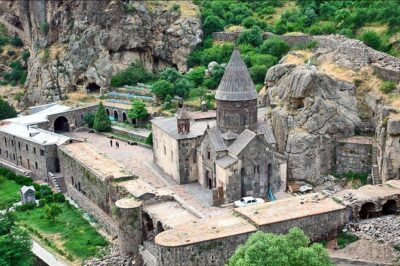
The monastery is also known as Ayrivank, and parts of the complex are carved into the surrounding rock. The stone chambers, dark interiors, and rugged cliff setting create a very different mood from the open, sunlit columns of Garni.
A traditional legend says that the spear used to pierce Christ was kept here from the 13th century. You do not need to accept every part of the legend to appreciate what it tells you about the monastery’s spiritual importance. The site has long been tied to pilgrimage, sacred objects, and Armenia’s Christian identity.
Take time to look inside the carved spaces rather than only photographing the exterior. The details can be easy to miss if you hurry, especially in dim light. A guide can point out architectural features and explain how the monastery fits into the country’s religious past.
The surrounding setting also gives Geghard much of its force. Rock walls rise close around the complex, making the buildings feel connected to the mountain rather than simply placed beside it. Local cats and dogs may be part of the scene, an amusing touch that several visitors have enjoyed, though they are not an organized part of the tour.
The site requires respectful behavior. Stay off old stonework, follow the guide’s directions, and remember that this is an active religious place as well as a historic monument.
Guides, vehicles, and the rhythm of the day
The guide can make or break a history-focused outing, and this operation appears to use a rotating team rather than one fixed person. Names praised across recent departures include Yegor, Hasmik, Ana, Anna, Igor, Arina, Mari, Hayk, and Hunan.
The common strength is clear explanation in English, Armenian, or Russian. Yegor has been praised for enthusiasm and strong English, while Hasmik has been noted for a calm, warm manner. Ana and Anna have also received praise for being attentive and helpful.
That said, guide style can vary. One account described a guide as factually strong but occasionally dismissive toward part of the group. That sounds like an exception rather than the general pattern, but it is a useful reminder that a group tour is a shared experience. The atmosphere depends partly on the guide and partly on how well everyone keeps to meeting times.
The schedule is one of the stronger points. Stops are long enough to see the main sights, and several departures have returned on time. The vehicle transfers are short between Garni, the gorge, and Geghard, although the first and final rides are longer.
The route is bilingual or multilingual when needed. That broadens access, but explanations can feel brisk if the guide must repeat everything in two languages. If you want long, detailed talks at every monument, a private tour would give you more control. If you want a practical overview of the area in half a day, the format works well.
What to pack and what to pay
Pack light, but do not leave the basics behind:
- Comfortable walking shoes
- A sun hat
- Sunscreen
- Water
- Local cash in small denominations
Smoking is not allowed in the vehicle, and food and drinks are also restricted inside. Alcohol and drugs are prohibited. These rules are ordinary, but knowing them beforehand avoids an awkward start.
The tour meets at Komitas Yerevan State Conservatory. Confirm the departure time and keep your phone number active because the operator confirms tours the day before and may contact you about changes. Severe weather can cause a cancellation or rescheduling.
Free cancellation is available up to 24 hours before departure, and you can reserve without paying immediately. Those terms are useful if your Yerevan schedule depends on weather or changing travel plans.
Who should book this Garni and Geghard trip?
I would recommend this experience to a first-time Armenia visitor who wants a strong introduction beyond Yerevan. It covers architecture, religion, nature, food, and local customs without requiring a full day on the road.
It is also a good choice if you are watching your budget. The low base price covers the costly part, transportation and guiding, while the extra fees remain manageable. You get several of Armenia’s best-known sights for less than the cost of arranging separate rides.
History fans will appreciate the contrast between pagan Garni and Christian Geghard. Photographers will like Charents Arch, the gorge, and the winter views. Food-minded visitors should enjoy the lavash stop, provided they understand that the class may be observational rather than practical.
You may want a different arrangement if you need a private schedule, extensive time at each site, or a guaranteed cooking lesson. The multilingual group format is efficient, but it can feel hurried when several languages are being used.
Should you book it?
Yes, if you want an affordable, well-organized introduction to Armenia’s most accessible sights outside Yerevan. Geghard and the Symphony of Stones give the day real variety, while Garni supplies the strongest historical contrast and lavash adds a human touch.
Book it with realistic expectations about the meal and baking activity. Carry extra dram, wear proper shoes, and allow for weather changes. If you do that, this is a smart half-day choice with an impressive amount packed into six hours.
FAQ
Where does the tour begin and end?
The meeting point is Komitas Yerevan State Conservatory in Yerevan. The tour returns to the same location.
How long does the experience last?
The stated duration is six hours. Individual departures may take about five to six hours depending on timing, traffic, and weather.
What languages are available?
Guiding is available in Armenian, Russian, and English.
Are entrance fees included?
No. Garni costs 1,500 AMD, and the Symphony of Stones costs 200 AMD. These fees are paid separately.
Is lunch included?
No. Lunch is extra and usually costs about $5 to $10 per person. The group stops at a selected restaurant in Garni.
Is the lavash activity hands-on?
The experience includes seeing lavash prepared and tasting it. Some departures may allow you to try making it, but it is not guaranteed to be a fully hands-on class.
What happens if the weather is severe?
The tour may be canceled or rescheduled in severe weather. The operator confirms departures the day before and may contact you about updates.
Latest write-ups from Yerevan
- Yerevan to Tbilisi Day Tour: Unveiling Transcultural Wonders★ 4.8 · 2 reviews
- Yerevan City Tour: Discover an Old and New Yerevan★ 5.0 · 2 reviews
- Yerevan: Museum of Illusions Entry Ticket★ 5.0 · 3 reviews
- Tsaghkadzor & Lake Sevan։ Winter Day Tour from Yerevan★ 4.7 · 3 reviews
- Wine, Jazz and Magic: A Night at Malkhaz Jazz Club★ 5.0 · 2 reviews
- The Stalin car Yerevan city tour Armenia★ 5.0 · 2 reviews
- Private Yerevan City Tour with museums★ 5.0 · 5 reviews
- Wine Trip in Yerevan★ 5.0 · 3 reviews
Garni & Geghard Tours, compared.
Garni, Symphony of Stones, Geghard, Lavash Baking
Read our review →
Garni, Geghard, Symphony of Stones & Lavash Baking
Read our review →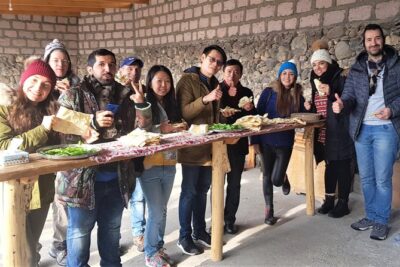
Garni pagan temple, Geghard monastery, Lake Sevan, Sevanavank
Read our review →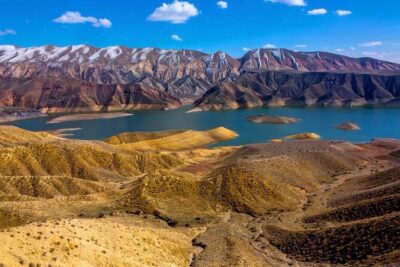
Khor Virap, Garni temple, Geghard, Lavash baking
Read our review →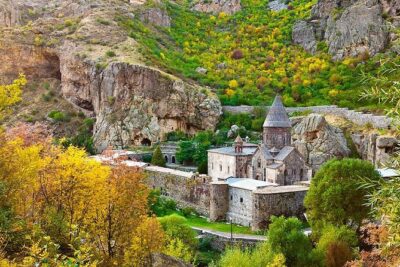
Private 7-8-hour Khor Virap, Garni temple & Geghard monastery trip from Yerevan
Read our review →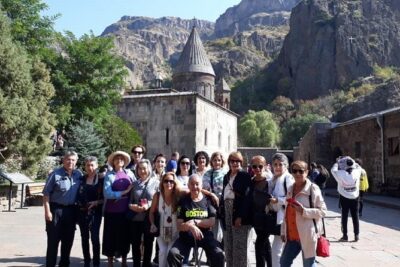
Garni, Geghard & Symphony Small-Group Day Trip with Lavash Baking
Read our review →
Private Half-Day Garni Temple and Geghard Monastery Tour from Yerevan
Read our review →Browse the lists this tour appears in