
Reviewed · GARNI & GEGHARD TOURS
Group Tour: Khor Virap, Garni temple, Geghard, Lavash baking
Armenia packs a lot into one memorable day. This $38 group tour links Khor Virap, Garni Temple, Geghard Monastery, and a lavash baking class, giving you a useful first look at Armenia’s faith, ancient culture, mountain views, and food traditions. I especially like the included admissions and the easy mix of guided visits and free time.
The friendly guides and careful drivers earn strong praise, with guides such as Tigran and Marina handling large groups clearly. On-board Wi-Fi, water, pastries, and air-conditioning are helpful touches. The main drawback is the group size, which can reach 49 people, and the English and Russian commentary may make the day feel slower than a small private tour.
In This Review
- Key points to know before booking
- Why this day trip works well from Yerevan
- Khor Virap and the story beneath the monastery
- The Azat Reservoir photo stop
- Lavash baking at Abelyan’s House
- Geghard Monastery and its carved stone churches
- Garni Temple, Armenia’s pagan survivor
- A large group, bilingual guiding, and time to explore
- What the $38 price really includes
- Who should book this Armenia tour?
- Should you book it?
- FAQ
- Where does the tour start and finish?
- What time does the tour begin?
- How long does the tour last?
- Is lunch included in the tour price?
- Is the tour offered in English?
- Are admission tickets included?
- What happens if I need to cancel?
Key points to know before booking
- Mount Ararat views depend on the weather: Khor Virap offers the famous viewpoint, but clouds and fog can hide the mountain.
- The tour covers four major Armenian sights: You see a Christian pilgrimage site, a pagan temple, a rock-cut monastery, and a traditional bakery.
- Lavash baking includes lunch-style food: You watch the bread being made, taste it with greens and local cheese, and can order a paid meal.
- English and Russian guiding runs consecutively: The guide gives information in both languages, so expect some pauses.
- The group can be large but well managed: Smaller language groups may form at each stop, with time to explore on your own.
- The $38 price is strong value: Transport, guide, entry tickets, bottled water, pastries, Wi-Fi, and insurance are included.
Why this day trip works well from Yerevan
If you have only a short stay in Yerevan, this route gives you a lot of Armenia without arranging several separate excursions. The stops are not all alike. Khor Virap explains Armenia’s Christian identity, Garni takes you back to the country’s pre-Christian past, Geghard shows off medieval stonework, and lavash adds a human, everyday side to the day.
You meet at Hyur Service on 96 Nalbandyan Street at 10:00 am and return there after the final visit. Hotel pickup and drop-off are not included, so you need to reach the meeting point yourself. The office is near public transportation, which makes the start reasonably simple if you are staying in central Yerevan.
The vehicle is air-conditioned, and Wi-Fi is available on board. Bottled water and pastries are included, which matters on an eight to nine-hour outing with several stops. The tour operates in all weather, so bring clothing that suits the forecast and shoes that can handle uneven stone surfaces.
The maximum group size is 49. That is not intimate, but the organization appears to make good use of the format. At the sights, the group can split by language, and you usually get a guided explanation followed by time to wander and take photographs. This is a good arrangement for someone who wants structure without being escorted every minute.
More Khor Virap Trips in Yerevan:
- Khor Virap, Noravank and Birds’ Cave Trip with Wine Tasting
★ 4.8 · 845 reviews - Group tour: Khor Virap, Noravank, Areni Winery and Cave
★ 5.0 · 651 reviews - Group Tour: Khor Virap, Noravank, Tatev monasteries (wayback on Ropeway)
★ 5.0 · 506 reviews
Khor Virap and the story beneath the monastery
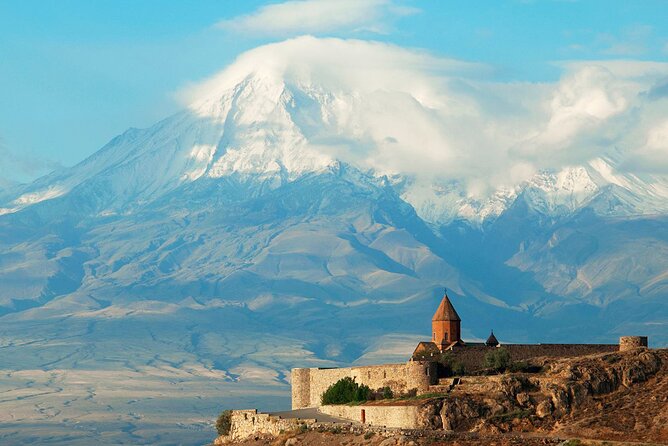
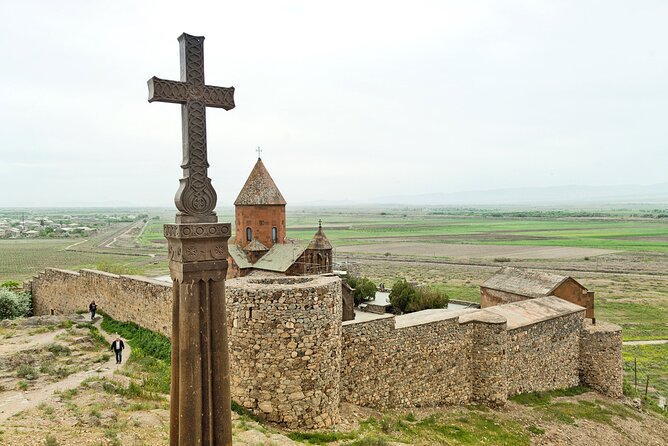
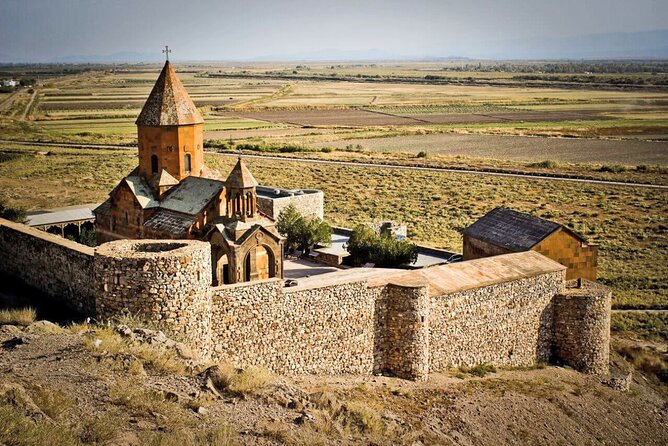
Khor Virap is the emotional beginning of the route. Armenia adopted Christianity as its state religion in 301, and this monastery is closely linked to Saint Gregory the Illuminator, the man credited with converting King Trdat III. Before that change, Gregory was imprisoned in the dungeon beneath the site.
The church you see today was built in the 17th century over that prison. The setting makes the story feel more than academic. You are looking across open country toward Mount Ararat, while standing at a place tied to the birth of Armenia’s Christian tradition.
You have about one hour here. That is enough time to hear the main story, visit the monastery, and take photographs. If the weather is clear, the view of Biblical Mount Ararat is the prize. Fog and low cloud can cover it, as happened on one reported outing, so do not book this day solely for a guaranteed mountain photograph.
Khor Virap is also a place where the group format can be useful. The guide gives you the historical frame, then you can take a quieter moment to look around. Wear sensible shoes and be ready for a religious site rather than a polished museum. The appeal is the setting, the story, and the sense of continuity.
The Azat Reservoir photo stop
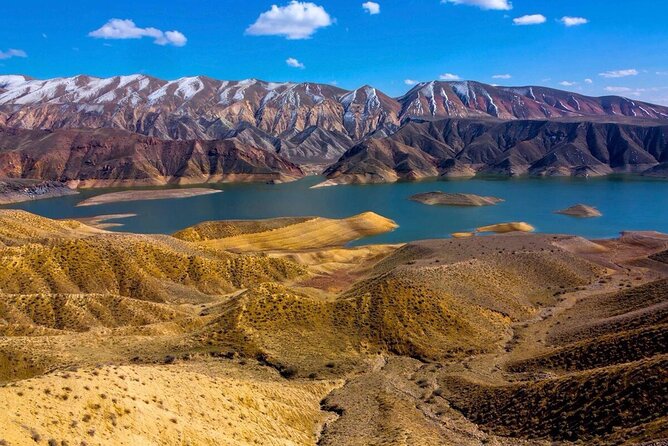
The short stop at Azat Reservoir lasts about 20 minutes. It is mainly for the view and photographs, not for a long visit or a separate attraction.
That brief pause helps break up the drive between the major sites. You can stretch your legs, take in the water and surrounding scenery, and get back on the vehicle before the schedule slips. Do not expect a full activity here. It is a scenic interlude, and its value depends heavily on the weather and visibility.
For photographers, this is a useful chance to keep your camera ready. For everyone else, it is simply a pleasant breather between the monastery and the food stop.
Lavash baking at Abelyan’s House
The lavash class brings the day down to a more personal scale. Lavash is a thin, soft Armenian flatbread baked in a tonir, a special ground oven. Its preparation was added to UNESCO’s Representative List of the Intangible Cultural Heritage of Humanity in 2014.
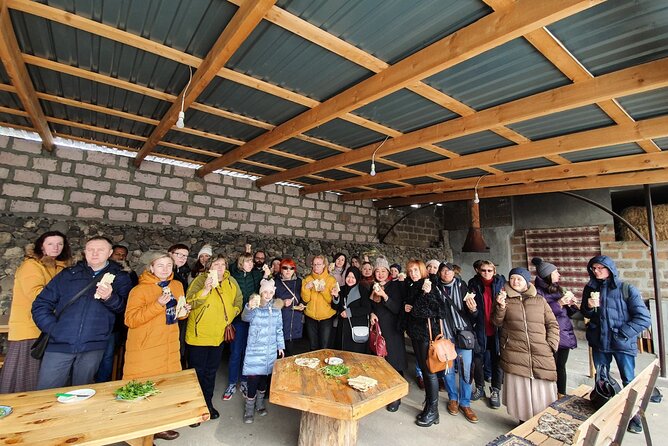
You watch the baking process and learn the old techniques before tasting the bread yourself. The serving includes fresh greens and local cheese, which turns the demonstration into a small meal rather than a quick look at a craft.
The stop lasts around 30 minutes, though the practical meal arrangements can make this part feel longer. A family-run restaurant provides lunch, and the cost is separate from the tour. The stated lunch price is about 3,900 to 4,900 AMD, or roughly $10 to $13.
One useful tip is to consider ordering one of the available lunch options. There are no other nearby lunch choices, so bringing the meal into your plans is sensible. The food is served family-style, making this one of the more social parts of the day.
The lavash stop is valuable because it shows culture as something people still do, not only something preserved behind glass. You smell the bread, see the tonir, and eat it with simple local ingredients. The visit is short, so do not expect a long cooking course. Think of it as a demonstration, tasting, and practical lunch stop.
Other Garni and Geghard days from Yerevan:
- Group Tour: Garni, Symphony of Stones, Geghard, Lavash Baking
★ 5.0 · 1,042 reviews - Yerevan: Garni, Geghard, Symphony of Stones & Lavash Baking
★ 4.8 · 758 reviews - From Yerevan: Garni, Geghard, & Symphony of Stones Day Trip
★ 4.8 · 687 reviews - Yerevan: Garni, Geghard, Symphony of Stones & Lavash Baking
★ 5.0 · 589 reviews
Geghard Monastery and its carved stone churches
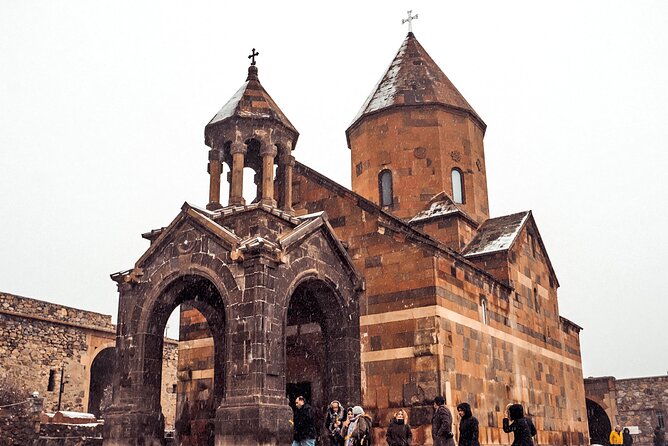
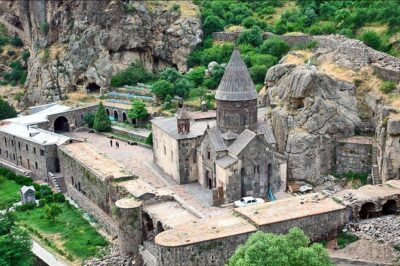
Geghard is one of the day’s strongest sights. Parts of the 13th-century monastery are cut directly into a huge rock, giving the complex a powerful sense of place. Its earlier name, Ayrivank, means cave monastery. It was later called Geghard, or lance, after the sacred lance said to have been kept there for centuries.
The site is included on the UNESCO World Cultural Heritage List. That label matters less than what you actually see: rock-cut rooms, detailed stone decoration, and khachkars, the carved Armenian cross-stones found throughout the country.
You have about an hour to explore. The guide can explain the architecture and religious background, while your unaccompanied time lets you notice the details at your own speed. Geghard is also known for its excellent acoustics, making it a fitting place for spiritual singing.
This is a stop where patience pays off. The stonework rewards close attention, and the setting feels more solemn than the open viewpoint at Khor Virap. If you like architecture, religious art, or unusual construction, Geghard may become your favorite stop.
The practical limitation is the same one found at many old Armenian monuments: the ground and stone surfaces are not presented as a modern attraction. Stay alert as you move through the complex, especially if the weather is wet.
Garni Temple, Armenia’s pagan survivor
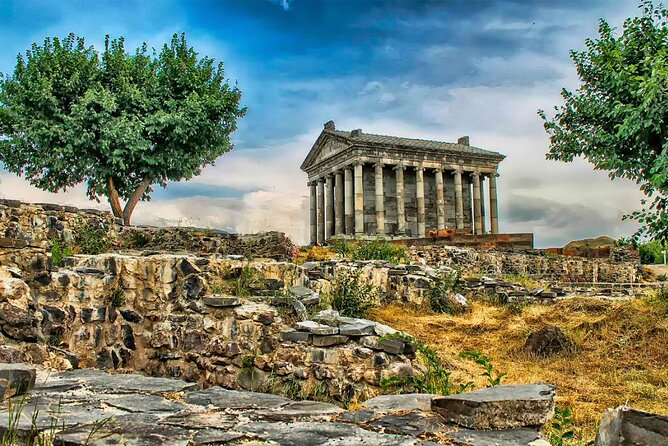
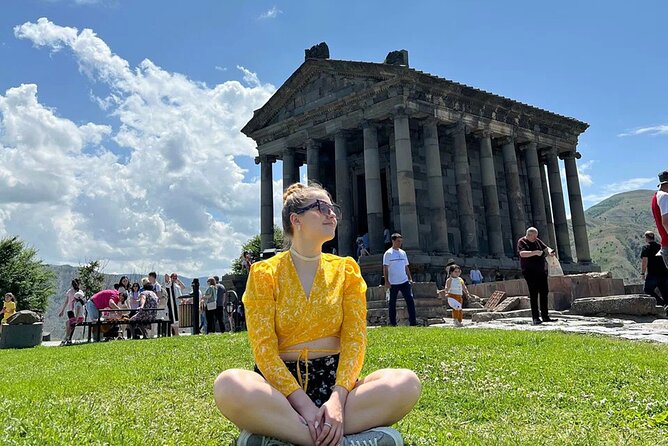
Garni gives you a sharp contrast to Geghard. It is the only surviving example in Armenia of a pagan temple, built in the first century AD on the orders of King Trdat I. Dedicated to the Sun God, it uses a Greco-Roman design alongside Armenian traditions.
After Armenia adopted Christianity in 301, the temple lost its religious role. The Garni fortress later served as a summer residence for the kings. Near the temple, you can also see remains of the royal palace and a bathhouse with mosaic work.
The visit lasts about an hour, and admission is included. That is enough time for the guide’s explanation, photographs, and a walk around the surviving structures. Garni is especially useful for understanding that Armenian history did not begin with medieval monasteries. The country’s past includes pagan worship, royal power, classical design, and later Christian transformation.
The temple sits on a triangular cape, giving the stop a dramatic setting. It is an excellent place for wide photographs, but the value is not only visual. The contrast between Garni and Geghard helps you understand how religious life changed over time.
Garni can feel more exposed than the monastery visits, so sun protection and weather-appropriate clothing are wise. The tour operates in all conditions, and there is no promise of perfect light or clear views.
A large group, bilingual guiding, and time to explore
The tour’s organization is one of its strongest points. English and Russian are offered consecutively, which means the guide repeats information in both languages. That can lengthen each explanation, but it also makes the tour accessible to a mixed group.
Tigran received particular praise for keeping bilingual commentary clear and patient. Marina was also noted for giving precise instructions and helping a large group stay on schedule. An intern guide named Jasmine was especially helpful with detailed history questions. Guide assignments can change, but these examples show the kind of support you may receive.
The group may be close to 50 people, so this is not the right choice if you want a quiet, private pace. Seats are not assigned or known in advance, another small inconvenience for anyone who likes to plan every part of a day.
Still, a big group does not automatically mean a bad experience. The time at each site is divided between explanation and independent exploration. That gives you some breathing room, and the guide’s instructions help prevent the usual problem of waiting for missing people.
The included vehicle insurance and passenger insurance add reassurance, while the air-conditioning matters during a long day on the road. The driver also matters more than you might expect. A careful driver, such as the highly praised Araik on one outing, can make a full day of driving feel much easier.
What the $38 price really includes
At $38 per person, the tour offers strong value. You are paying for an eight to nine-hour day with transport, a professional guide, admission tickets, bottled water, pastries, on-board Wi-Fi, and vehicle and passenger insurance.
The price becomes even more attractive if you compare it with arranging transport to four separate locations. Armenia’s major sights are spread beyond Yerevan, and independent planning would require more time and coordination. Here, the route, driver, and entry fees are handled together.
Lunch is the main extra cost. Plan for approximately $10 to $13 at the lavash stop. Since there are no other nearby lunch options, this is not an expense you can easily avoid without planning ahead.
You also pay in convenience rather than privacy. A private car would offer more control over timing, seating, and stops, but it would cost far more. For a first day outside Yerevan, the group price is a practical choice.
Who should book this Armenia tour?
I would recommend it most strongly to first-time visitors who want a broad introduction to Armenia. You get major religious sites, a pre-Christian monument, a scenic viewpoint, and a food tradition in one day.
It also suits solo visitors and anyone who prefers not to arrange regional transport alone. The guide provides context, the vehicle handles the distance, and the free time at each stop prevents the day from becoming a nonstop lecture.
The tour is less suitable if you want long visits at each site or a private guide. The bilingual format takes time, the group may be large, and the schedule is designed to cover several places rather than linger at one.
Families can participate, but children must be accompanied by an adult. Most people can join, and the tour runs in all weather, so your main responsibility is dressing appropriately and wearing comfortable shoes.
You can cancel for a full refund if you do so at least 24 hours before the start time. Changes or cancellations within 24 hours are not accepted for a refund, based on the local cutoff time.
Should you book it?
Book this tour if you want maximum sightseeing value for a modest price and you are happy to share the vehicle with a large, bilingual group. Khor Virap, Geghard, and Garni each offer something different, while the lavash stop gives the day a welcome taste of ordinary Armenian culture.
Skip it only if you need a private pace, guaranteed Mount Ararat views, or a long, unhurried visit at each monument. For most first-time visitors based in Yerevan, this is a well-rounded and sensibly priced introduction to the country beyond the capital.
FAQ
Where does the tour start and finish?
It starts and ends at Hyur Service, 96 Nalbandyan Street, Yerevan 0010, Armenia. Hotel pickup and drop-off are not included.
What time does the tour begin?
The tour starts at 10:00 am.
How long does the tour last?
The approximate duration is eight to nine hours.
Is lunch included in the tour price?
No. Lunch costs approximately 3,900 to 4,900 AMD, or about $10 to $13. Bottled water and pastries are included.
Is the tour offered in English?
Yes. The professional guide provides commentary in English and Russian consecutively.
Are admission tickets included?
Yes. Admission tickets for the included attractions are covered in the tour price.
What happens if I need to cancel?
You can receive a full refund if you cancel at least 24 hours before the experience start time. Cancellations or changes made less than 24 hours before the start time are not accepted for a refund.
Latest write-ups from Yerevan
- Yerevan to Tbilisi Day Tour: Unveiling Transcultural Wonders★ 4.8 · 2 reviews
- Yerevan: Museum of Illusions Entry Ticket★ 5.0 · 3 reviews
- Yerevan City Tour: Discover an Old and New Yerevan★ 5.0 · 2 reviews
- Tsaghkadzor & Lake Sevan։ Winter Day Tour from Yerevan★ 4.7 · 3 reviews
- Wine, Jazz and Magic: A Night at Malkhaz Jazz Club★ 5.0 · 2 reviews
- The Stalin car Yerevan city tour Armenia★ 5.0 · 2 reviews
- Private Yerevan City Tour with museums★ 5.0 · 5 reviews
- Wine Trip in Yerevan★ 5.0 · 3 reviews
Garni & Geghard Tours, compared.
Garni, Symphony of Stones, Geghard, Lavash Baking
Read our review →
Garni, Geghard, Symphony of Stones & Lavash Baking
Read our review →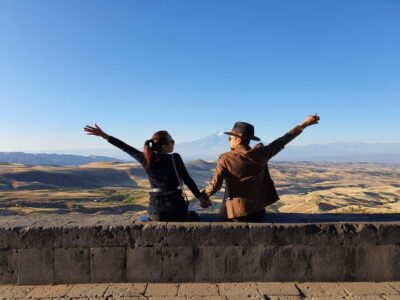
Garni, Geghard, Symphony of Stones & Lavash Baking
Read our review →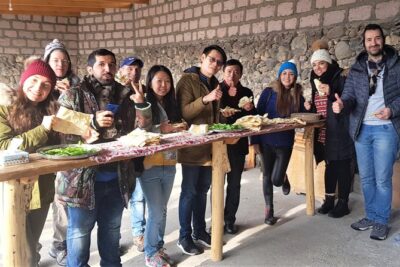
Garni pagan temple, Geghard monastery, Lake Sevan, Sevanavank
Read our review →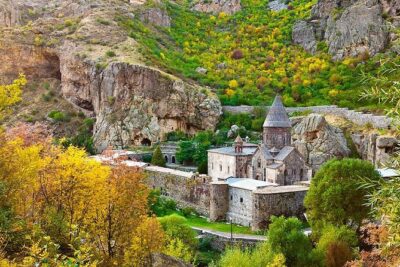
Private 7-8-hour Khor Virap, Garni temple & Geghard monastery trip from Yerevan
Read our review →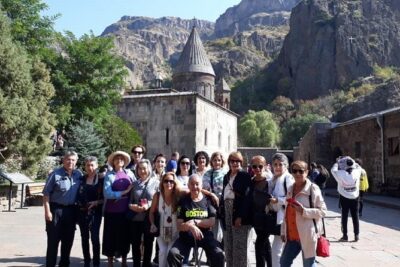
Garni, Geghard & Symphony Small-Group Day Trip with Lavash Baking
Read our review →
Private Half-Day Garni Temple and Geghard Monastery Tour from Yerevan
Read our review →Browse the lists this tour appears in