Reviewed · YEREVAN TOURS
Soviet Yerevan in Motion: Streets, Metro & Local Life
Yerevan’s Soviet past still runs beneath the surface. This four-hour experience shows you how the city worked in daily life, using streets, metro stations, residential districts, markets, and a Soviet-style vehicle rather than treating the era as a museum display. I like the mix of walking and public transport, and I like the small six-person format, which leaves room for real questions instead of a speech from the front of a crowd.
The perashki, ponchik, and market sweet add a nice local touch, especially since these are simple foods tied to everyday routines. The main consideration is focus: if you want a standard tour of Yerevan’s grand monuments, this may feel narrow. It is best for anyone curious about recent history, urban life, and the way Soviet systems shaped ordinary Armenian days.
In This Review
- Key points to know before booking
- Why this is not a standard Yerevan sightseeing tour
- Starting at the Ministry of Foreign Affairs
- Republic Square and the first layer of Soviet Yerevan
- Walking through residential districts and working neighborhoods
- Riding the Yerevan metro
- Traveling in a Soviet-style vehicle
- Tasting perashki, ponchik, and a market sweet
- The market and the city’s everyday rhythm
- What the small group changes
- Is the 49 dollar price fair?
- Practical details that affect your day
- Who should book this experience?
- Should you book Soviet Yerevan in Motion?
- FAQ
- Where does the experience begin?
- How do I find the guide?
- Where does the experience finish?
- How long does the experience last?
- What languages are offered?
- How many people can join?
- Which days does it run?
- Is food included?
- Is lunch included?
- Is the experience suitable for wheelchair users?
- Is hotel pickup included?
- Can I cancel for a refund?
Key points to know before booking
- Three ways to read the city: You walk, ride the metro, and travel in a Soviet-style vehicle, each revealing a different side of Yerevan.
- A small group of six or fewer: The format is built around conversation, questions, and a flexible pace.
- Everyday food, not a formal meal: You taste perashki, ponchik, and a sweet from a local market.
- A useful Monday option: The experience is designed for selected days, including Monday, when Yerevan museums are closed.
- A recent past with a personal feel: The tour connects Soviet planning and industry with modern Armenian life.
- Meet the flag, not a big sign: At the Ministry of Foreign Affairs, look for the guide holding the Soviet Armenia flag.
Why this is not a standard Yerevan sightseeing tour
Yerevan is often presented through its central squares, pink stone buildings, churches, and sweeping city views. Those sights matter, but they do not fully explain how people lived through the Soviet period. This experience takes a different route. It asks you to look at transport, housing, public spaces, work, food, and routine.
I find that approach useful because Soviet influence is often easiest to understand through ordinary systems. A metro ride can tell you more about a city’s daily rhythm than a formal monument. A residential district can raise better questions about planning and family life than a polished central avenue. A market snack can connect history to something you can actually taste.
The tone is intended to be conversational. With a maximum of six people, you should have a fair chance to ask about the parts of Soviet life that interest you most. That might include public transport, industrial ambition, neighborhood design, or how the past still affects modern Armenian life.
The tour is led in English. Gevorg is one guide associated with the experience, and his preparation and enthusiasm were singled out in a five-star account. Since the exact guide may vary, it is best to expect an English-speaking local expert rather than a particular person every time.
Other Yerevan outings people add on:
- Group Tour: Garni, Symphony of Stones, Geghard, Lavash Baking
★ 5.0 · 1,042 reviews - Group Tour: Lake Sevan (Sevanavank), Dilijan (Goshavank, Haghartsin)
★ 5.0 · 1,036 reviews - Khor Virap, Noravank and Birds’ Cave Trip with Wine Tasting
★ 4.8 · 845 reviews
Starting at the Ministry of Foreign Affairs
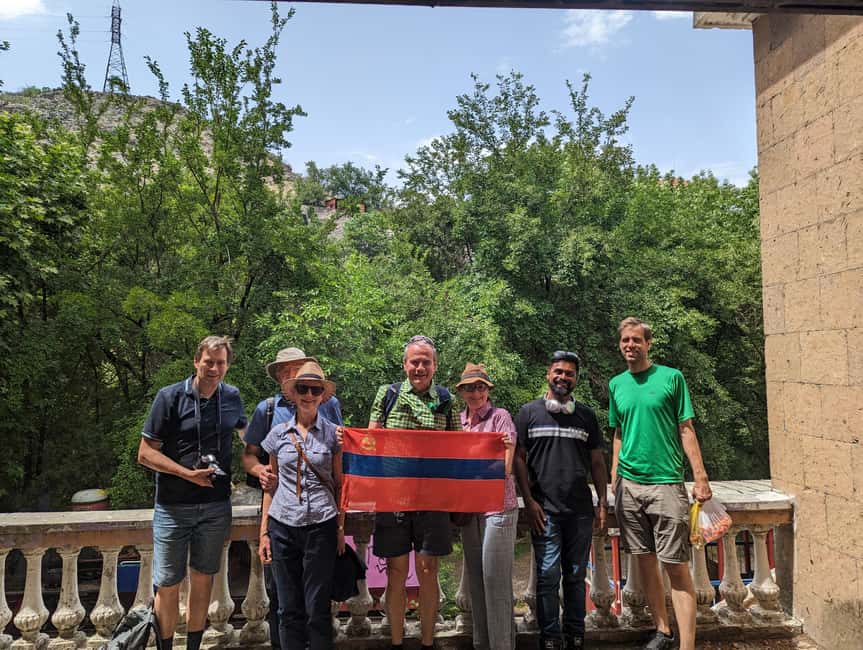
The meeting point is the Ministry of Foreign Affairs. This gives the experience a civic and political starting point, but the meeting instructions are simple: look for the guide holding the Soviet Armenia flag.
That flag is more than a practical marker. It sets the subject immediately. You are not meeting for a generic city walk. You are beginning a tour about a former political system that still has a visible presence in Yerevan.
Bring cash. The supplied information does not specify the exact amount needed, so you should not assume every small purchase is covered beyond the included tastings. Hotel pickup and drop-off are not included, so you will need to reach the Ministry of Foreign Affairs independently and make your own way from the final stop.
Republic Square and the first layer of Soviet Yerevan
The route begins in Yerevan, with Republic Square included as an early point of orientation. A review in Italian praised the opening explanation of the square, including its history and lesser-known details, before the group moved into less familiar parts of the city.
That sequence makes sense. Republic Square gives you a central reference point, then the tour shifts away from the most familiar postcard views. You can compare the formal public center with the more practical spaces where people traveled, shopped, lived, and waited.
The value here is not simply learning dates or names. You are encouraged to ask how a city presents itself publicly and how that differs from the spaces built for daily use. The Soviet idea of a planned city becomes easier to grasp when you move from a grand square toward ordinary neighborhoods and transport links.
Do not expect a long architectural lecture at every stop. The experience is designed to keep moving and to connect places through use. If you prefer detailed building-by-building commentary, a specialist architecture walk may serve you better.
Walking through residential districts and working neighborhoods
One of the strongest parts of the route is the shift into areas where Soviet influence remains visible in a more direct way. A five-star account described moving through popular residential districts in the style of the USSR, with the city’s Soviet character becoming clearer away from the main center.
This is where the tour earns its title. You are not only looking at Soviet monuments. You are seeing the spaces created for regular life: housing, public routes, practical services, and the connections between them. The tour frames Yerevan as a living city rather than a preserved exhibit.
I like this emphasis because it avoids a common problem with history tours. It is easy to admire large projects while forgetting the people who used them. Here, the industrial scale of Soviet Yerevan is part of the story, but so are the routines that made that scale useful.
The exact residential stops can vary, and the supplied details do not name every building or neighborhood. That is worth keeping in mind if you want a fixed architectural checklist. The experience is better understood as a guided reading of the city, with the route shaped around transport, local life, and conversation.
Swap the monasteries for something else entirely:
- Yerevan: Garni, Geghard, Symphony of Stones & Lavash Baking
★ 4.8 · 758 reviews - From Yerevan: Garni, Geghard, & Symphony of Stones Day Trip
★ 4.8 · 687 reviews - Group tour: Khor Virap, Noravank, Areni Winery and Cave
★ 5.0 · 651 reviews - Yerevan: Garni, Geghard, Symphony of Stones & Lavash Baking
★ 5.0 · 589 reviews
Riding the Yerevan metro
The metro ride is one of the clearest practical features. It is not included as a decorative extra. It helps you understand how people moved through the city and how public transport supported the wider Soviet urban system.
A metro station can feel very different from a central square or a market. It is a place of routine. People use it to get to work, connect districts, and cross the city without relying on private cars. Riding it gives you a physical sense of the distances and links being discussed.
The metro also changes the pace of the experience. You are not simply walking from one historic stop to another. You are using the infrastructure that helped shape the city. That makes the tour feel more like an urban study than a collection of unrelated sights.
You should be comfortable walking and using public transport. The experience is not suitable for wheelchair users, and the combination of walking, metro travel, and vehicle transfers may not suit anyone who needs step-free access. The tour information does not give a detailed distance or stair count, so ask the provider if mobility is a concern.
Traveling in a Soviet-style vehicle
The Soviet-style vehicle adds another layer to the route. After seeing the city on foot and by metro, you travel by car to view Yerevan through a different mode of movement.
This matters because transport shapes perception. Walking shows you details at street level. The metro shows you the city as a connected system. A car lets you cover more ground and consider how districts relate to one another.
The vehicle is included in the price, which strengthens the value of the experience. You are not paying only for a guide to point out buildings. You are paying for a carefully chosen way to move through the city.
The information does not identify the exact make, model, or condition of the car. Keep your expectations practical. Think of it as a Soviet-style transport element that supports the tour, not as a separate vintage-car rental or a long scenic drive.
Tasting perashki, ponchik, and a market sweet
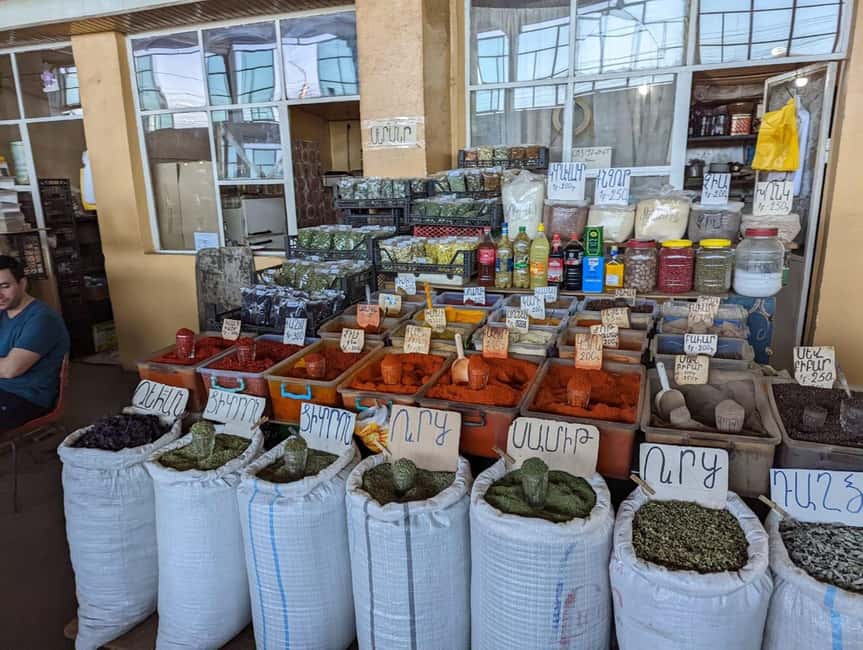
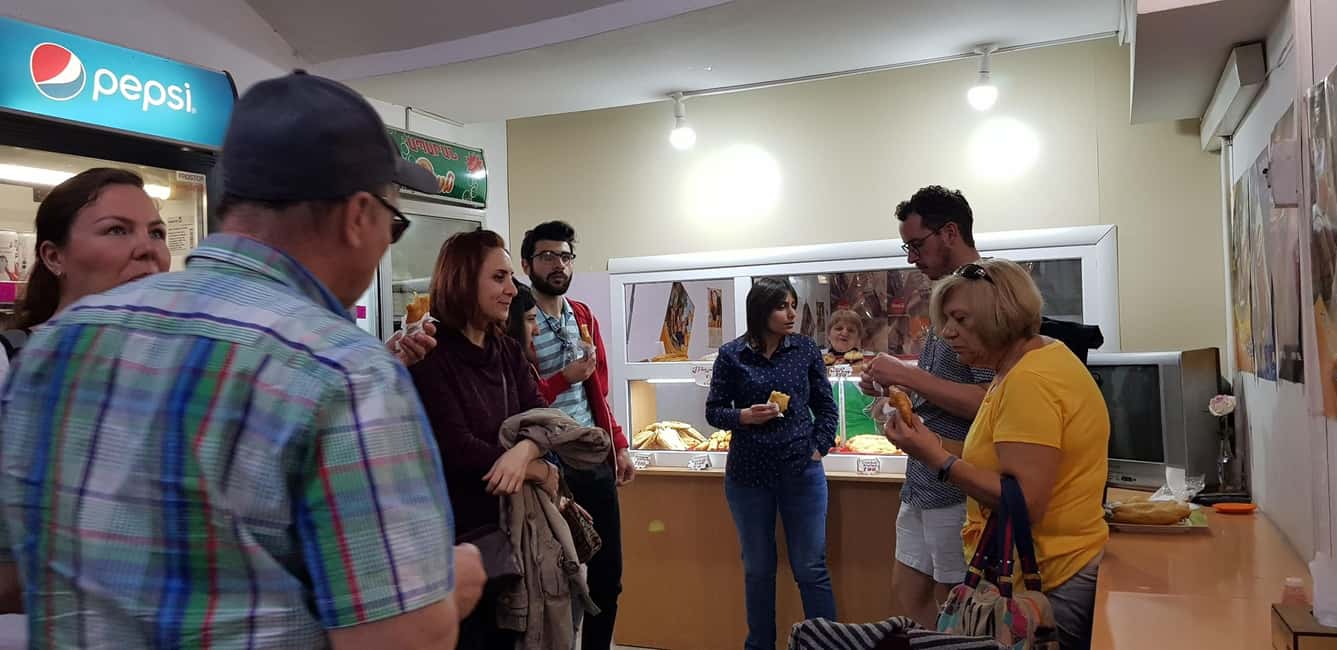
Food is used here as a link to memory. The included tasting features perashki, ponchik, and a sweet from a local market. These are modest snacks rather than a full lunch, and that is part of their appeal.
Perashki and ponchik are associated with familiar, inexpensive food rather than formal dining. Tasting them in places used by locals over many years gives the food a social and historical role. You are not being asked to judge a restaurant menu. You are being shown the small treats that can survive political change because people keep buying and sharing them.
The market sweet adds a useful contrast. Markets show another side of urban life, with shopping and informal habits replacing the monumental scale of government buildings and industrial projects.
Lunch is not included. I would treat the snacks as a taste of the city, not a meal replacement. If you tend to get hungry after several hours of walking and transport, plan lunch separately after the tour finishes at Diana Abgar Park.
The market and the city’s everyday rhythm
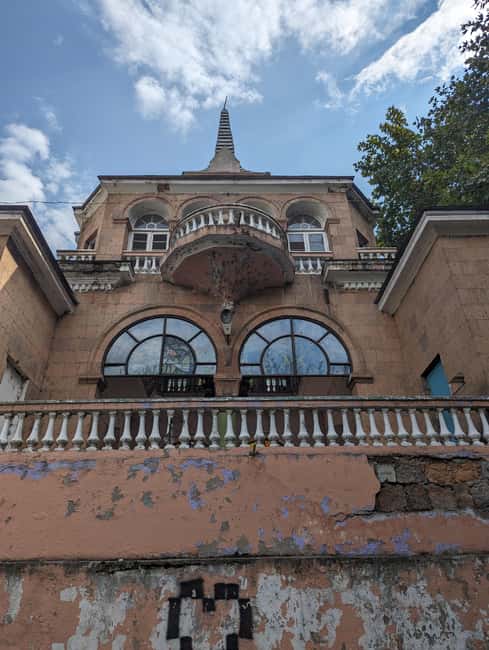
The food market visit is valuable because markets sit close to ordinary life. They reveal what people buy, how food is presented, and how older habits continue alongside newer ones.
The route does not promise a cooking class or a long market lunch. Instead, the market is one piece of a broader story about daily routines. You taste something, observe the setting, and connect it to the period being discussed.
I appreciate that the food stops are not separated from the history. They help show that the Soviet period was not only about politics, factories, and public buildings. It was also about what people ate on the go, where they shopped, and which tastes remained familiar across generations.
Market conditions can be active and crowded at times, but the supplied information does not guarantee a particular atmosphere or a specific market stall. Go for the context and the tasting, not for a carefully staged food tour.
What the small group changes
A maximum of six participants is a major part of the experience, not just a booking detail. A small group makes it easier to hear the guide in public spaces and easier to ask questions while walking or riding the metro.
It also suits a subject that benefits from discussion. Soviet history can become abstract when it is reduced to dates and buildings. In a small group, you can ask how a public system worked, why certain districts were built, or how the past affects present-day life.
The format is conversation-led and flexible. That does not mean the route is completely private or custom built. You will still follow the planned structure, but there should be more room for reflection than on a large coach tour.
The experience runs on Monday, Wednesday, and Saturday. Monday is especially useful if you have limited time in Yerevan because museums are closed that day. Instead of losing a morning to closed doors, you can use it to examine the city itself.
Is the 49 dollar price fair?
At $49 per person, the cost is reasonable if you value access, transport, and interpretation more than a long list of famous sights. The fee includes a local expert guide, entry fees, snack tastings, the Soviet-style vehicle, and the metro ride.
That package is stronger than a simple walking tour. You are paying for four different elements: explanation, movement, food, and access to a small-group format. The maximum of six also helps justify the price because you are not being folded into a large crowd.
Still, the value depends on your interests. One four-star account felt the tour was overpriced for its four-hour length, and the booking information has caused some confusion because one duration display showed eight hours while the actual experience was described as four hours. The detailed schedule gives 4.5 hours, so plan on roughly four hours, possibly a little longer, and check the start and end time before booking.
I would not choose this tour if your main goal is to see as many major monuments as possible. I would choose it if you want a focused city experience with transport and food included, especially on a Monday.
Practical details that affect your day
The experience finishes at Diana Abgar Park. This is useful when planning the rest of your day, but hotel return transport is not included. You should organize your own route onward.
Free cancellation is available up to 24 hours before the start for a full refund. You can also reserve and pay later, which helps if your Yerevan schedule is still changing.
The tour requires a minimum number of participants to run. In the rare event that this number is not reached, you will be contacted with the choice to reschedule or receive a full refund.
The published rating is 4.9 out of 5 from eight ratings. The strongest praise centers on the guide’s preparation, kindness, enthusiasm, and ability to connect recent history with present-day Armenian life. One account called it informative, fun, and engaging, while another described it as a melancholic and nostalgic look at Yerevan.
That emotional tone is worth noting. This is not a cheerful nostalgia ride for everyone. Soviet history remains recent, and people can hold very different views about it. The tour appears to treat the subject with interest and reflection rather than turning it into a simple celebration.
Who should book this experience?
I would recommend it to you if you enjoy:
- Recent political and social history
- Public transport and urban planning
- Residential districts and ordinary city spaces
- Small-group tours with plenty of questions
- Local snacks connected to daily life
- Experiences that go beyond the main sights
It is also a smart choice for a repeat visitor who has already seen Yerevan’s central landmarks. The route gives you another way to understand the capital without simply repeating the usual sightseeing circuit.
You may want to skip it if you need step-free access, dislike public transport, or want a full meal included. It may also disappoint you if you expect a grand Soviet monument at every stop. Its appeal is in the connections between systems, neighborhoods, food, and memory.
Should you book Soviet Yerevan in Motion?
Book it if you want to understand how Yerevan functioned, not just how it looked. The strongest features are the small group, the metro ride, the Soviet-style vehicle, and the food stops that connect history to ordinary habits.
The four-hour format gives you a focused introduction without taking over your whole day. I would especially consider it for a Monday, when museums are closed, or early in a Yerevan stay when you want a practical sense of how the city fits together.
The $49 price is fair for the guide, transport, entry fees, and tastings, but only if the subject genuinely interests you. For a standard highlights tour, choose something else. For a thoughtful look at modern Armenian life through Soviet Yerevan, this is a strong and unusual choice.
FAQ
Where does the experience begin?
It begins at the Ministry of Foreign Affairs in Yerevan.
How do I find the guide?
Look for the guide holding the Soviet Armenia flag.
Where does the experience finish?
It finishes at Diana Abgar Park.
How long does the experience last?
The main description gives a duration of four hours. The detailed schedule lists 4.5 hours, so allow roughly four hours and check the available start time when booking.
What languages are offered?
The experience is conducted in English with a live guide.
How many people can join?
The group is limited to six participants.
Which days does it run?
It runs on selected Mondays, Wednesdays, and Saturdays.
Is food included?
Local snack tastings are included. These feature perashki, ponchik, and a sweet from a market.
Is lunch included?
No. Lunch is not included.
Is the experience suitable for wheelchair users?
No. The experience is not suitable for wheelchair users.
Is hotel pickup included?
No. You must reach the Ministry of Foreign Affairs yourself, and hotel drop-off is not included.
Can I cancel for a refund?
You can cancel up to 24 hours in advance for a full refund.
Latest write-ups from Yerevan
- Yerevan to Tbilisi Day Tour: Unveiling Transcultural Wonders★ 4.8 · 2 reviews
- Yerevan City Tour: Discover an Old and New Yerevan★ 5.0 · 2 reviews
- Yerevan: Museum of Illusions Entry Ticket★ 5.0 · 3 reviews
- Tsaghkadzor & Lake Sevan։ Winter Day Tour from Yerevan★ 4.7 · 3 reviews
- Wine, Jazz and Magic: A Night at Malkhaz Jazz Club★ 5.0 · 2 reviews
- The Stalin car Yerevan city tour Armenia★ 5.0 · 2 reviews
- Private Yerevan City Tour with museums★ 5.0 · 5 reviews
- Wine Trip in Yerevan★ 5.0 · 3 reviews
Yerevan Tours, compared.
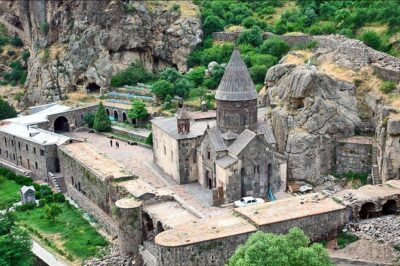
Garni, Symphony of Stones, Geghard, Lavash Baking
Read our review →
Lake Sevan (Sevanavank), Dilijan (Goshavank, Haghartsin)
Read our review →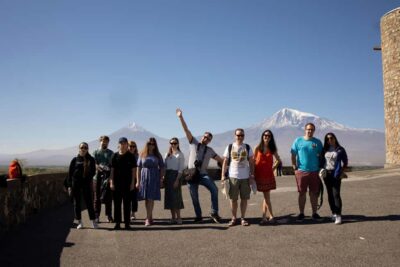
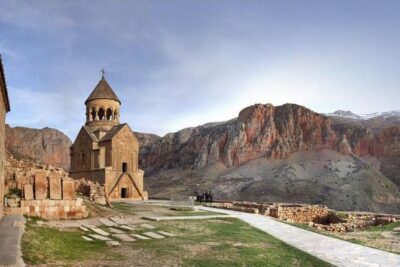
Khor Virap, Noravank and Birds’ Cave Trip with Wine Tasting
Read our review →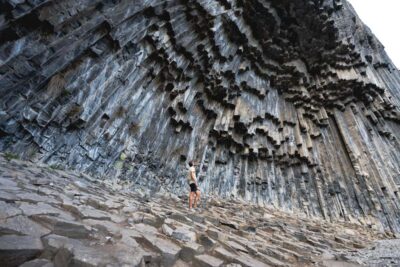
Garni, Geghard, Symphony of Stones & Lavash Baking
Read our review →
Garni, Geghard, Symphony of Stones & Lavash Baking
Read our review →