
Reviewed · GARNI & GEGHARD TOURS
6 days in Armenia: Garni, Tatev, Echmiadzin, Sanahin, Haghpat
Ancient stones, high roads, and big views. This six-day private tour gives you a strong first look at Armenia, linking pagan Garni, cliff-hung Tatev, sacred Echmiadzin, and the UNESCO monasteries of northern Armenia. I especially like the private transport for up to three people and the way the route mixes famous sights with quieter churches such as Odzun.
I also like that pickup and drop-off, fuel, and an air-conditioned vehicle are included. Guide Arman earned warm praise for his first four days, putting real effort into the experience. The main caution is pace: six days cover a lot of ground, and meals, some entrance tickets, and the Tatev cable car cost extra.
In This Review
- Key points worth knowing before you book
- Six days that reveal Armenia’s many faces
- Day 1: Garni and Geghard, pagan stone and Christian caves
- Day 2: Noravank and Tatev, the tour’s grandest road day
- Day 3: Mount Aragats, a cold lake and a fortress in the clouds
- Day 4: Sevanavank and Haghartsin around Lake Sevan and Dilijan
- Day 5: Echmiadzin, Armenia’s center of faith
- Day 6: Haghpat, Sanahin, and Odzun in Lori Province
- What the $855 group price really buys
- Who should book this Armenia tour?
- FAQ
- How long is the tour?
- Where does the tour begin and end?
- How many people can join the private tour?
- What transportation is provided?
- Is lunch included?
- Is the Wings of Tatev cable car included?
- Are admission tickets included at every stop?
- What level of fitness and clothing is required?
Key points worth knowing before you book
- Garni is Armenia’s rare pagan survivor: The first-day temple is the country’s only monument tied to its pagan and Hellenistic past.
- Tatev comes with a memorable ride: The Wings of Tatev cable car crosses 5.7 kilometers and is not included in the tour price.
- Mount Aragats adds altitude: Kari Lake sits at 3,190 meters, so Day 3 may feel cooler and more demanding than the monastery visits.
- Echmiadzin is the spiritual center: The cathedral, Saint Gayane, Saint Hripsime, and Zvartnots create a focused day of Armenian Christian history.
- Haghpat and Sanahin reward close looking: Their churches, academies, scriptoria, khachkars, and burial spaces reveal how much work once took place inside these walls.
- The price works best for a small group: At $855 per group of up to three, the cost is easier to justify when shared by two or three people.
Six days that reveal Armenia’s many faces
Armenia is a small country, but this route does not treat it as a quick city break. It moves from Yerevan into mountain regions, lake country, religious centers, and medieval monastic districts.
You will see pagan architecture, early Christian churches, fortress ruins, cable-car views, Armenian alphabet sculptures, and UNESCO-listed monasteries. That variety is the tour’s main strength. You are not spending six days looking at similar church interiors.
The format is private, so only your group takes part. That matters when the day includes several stops and you want to adjust your time at a site. The vehicle is air-conditioned and sized according to the number of participants. Pickup and drop-off are included, which keeps the practical side simple.
The trade-off is that the route is ambitious. Some stops receive only 30 or 40 minutes, while the longer days include several separate sites. I would book this for someone who wants a broad introduction to Armenia, not for someone who prefers one slow base with long meals and unplanned wandering.
More Tatev Trips in Yerevan:
- Group Tour: Khor Virap, Noravank, Tatev monasteries (wayback on Ropeway)
★ 5.0 · 506 reviews - Tatev & Shaki Waterfall Guided Group Tour with Wine Tasting
★ 5.0 · 266 reviews - Yerevan: Tatev Day Trip with Shaki Waterfall & Wine Tasting
★ 4.9 · 193 reviews
Day 1: Garni and Geghard, pagan stone and Christian caves
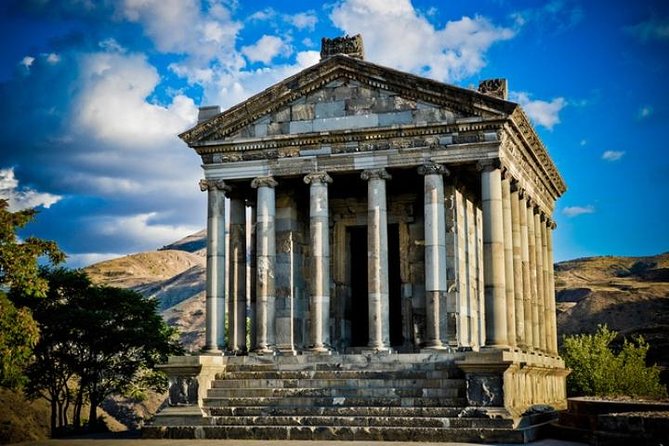
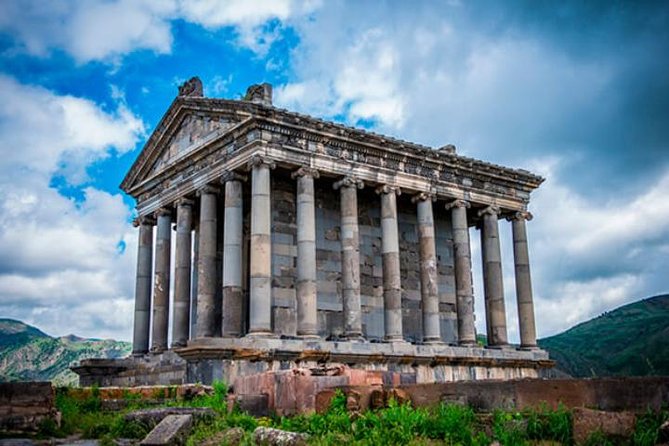
The opening day begins with Garni Temple, built in the first century AD by King Trdat. Dedicated to the sun god Mithra, it follows classical Greek architectural rules and looks strikingly unlike most Armenian churches.
Garni matters because it connects Armenia with a pre-Christian past. It is the only monument on this route tied directly to paganism and Hellenism. You have about an hour here, enough to examine the columns and form of the temple, though not enough for a leisurely visit if you want extensive photographs and quiet reflection.
Admission is not included at Garni, so budget for that separately. The tour does not include food or drinks either, making it sensible to plan your own refreshments each day.
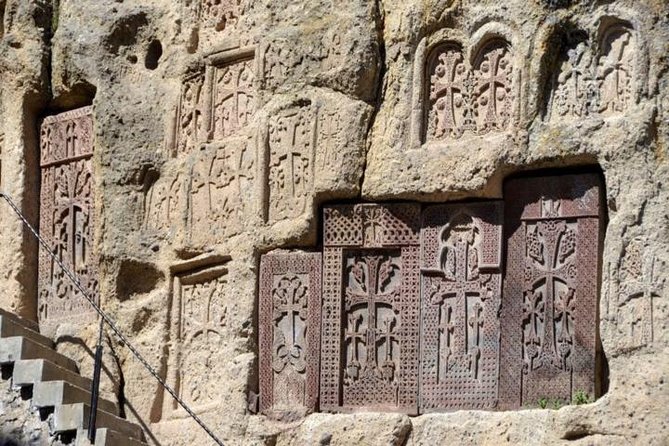
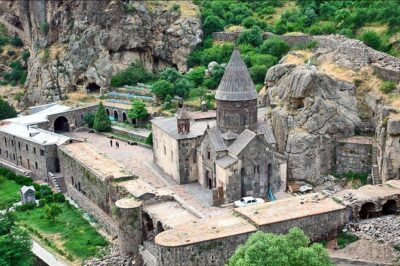
From Garni, the route continues to the Monastery of Geghard. The site began in the fourth century under Gregory the Illuminator and was first known as Airivank, meaning cave monastery. It later took the name Geghard, linked to the spear said to have pierced the body of Jesus.
The hour at Geghard gives you time to appreciate the way the monastery uses the rock. Its identity comes from more than freestanding walls and arches. The connection between carved chambers and natural stone gives this stop a different mood from Garni.
Admission to Geghard is free. The contrast between the two sites makes Day 1 especially effective: Garni shows the old religious world, while Geghard carries you into Armenia’s Christian tradition.
Day 2: Noravank and Tatev, the tour’s grandest road day
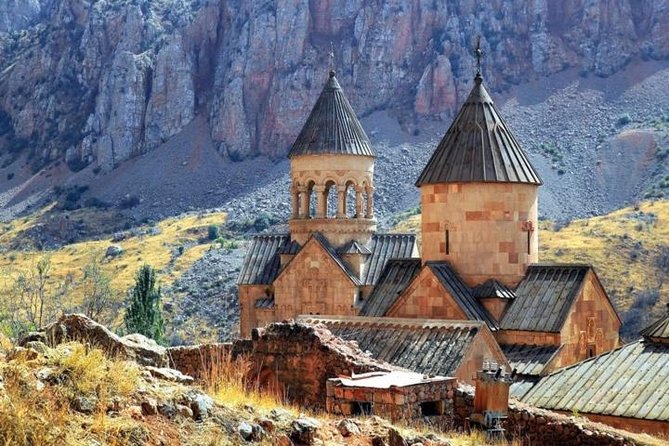
Day 2 brings two of the best-known monasteries in southern Armenia. Noravank dates from the 13th and 14th centuries and includes several churches, a gavit, burial chapels, medieval remains, and khachkars.
You have about an hour at Noravank. The complex is not just one church, so use your time to look at the separate buildings and carved details rather than rushing straight to the most recognizable façade. Admission is free.
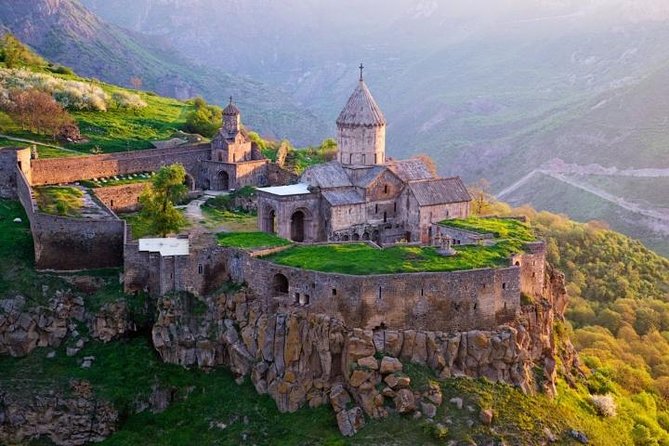
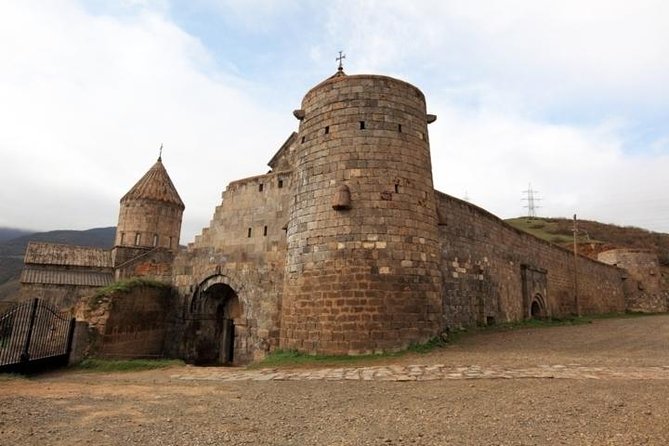
The main event is Tatev Monastery, built between the ninth and 13th centuries. The old Armenian meaning of Tatev is give wings, a fitting name for a monastery placed high above the surrounding terrain. The walls appear to grow from the rock, which gives the complex a powerful visual setting.
Two hours are assigned to Tatev, the longest site visit of the day. That extra time is useful. You can inspect the monastery, take in its position, and avoid reducing the stop to a quick photograph.
Then comes the Wings of Tatev cable car. At 5.7 kilometers, it is described as the longest cable car in the world, and the ride has become a major reason people add Tatev to an Armenian trip. The ropeway ticket is not included, so ask about the current price when planning your budget.
I would treat the cable car as an optional cost worth considering, especially if you enjoy large views and unusual transport. If you dislike heights or want to keep expenses down, the monastery itself remains the key cultural stop. Day 2 is likely one of the most demanding days because it combines several major places with road time, so keep your schedule light that evening.
Day 3: Mount Aragats, a cold lake and a fortress in the clouds
Day 3 shifts from monasteries to Mount Aragats. Kari Lake sits at 3,190 meters above sea level and formed from ice. Snow surrounds it much of the time, and the water remains cold.
The stop lasts about 40 minutes. That is enough to see the lake and absorb the high-altitude setting, but conditions can affect how comfortable you feel. The tour asks for a moderate level of physical fitness, and the elevation is the clearest reason to take that advice seriously.
Next comes the Armenian Alphabet Monument, built in 2005 for the 1,600th anniversary of the Armenian alphabet. Thirty-nine stone letter sculptures, made from Armenian tufa, form the complex.
This is a short 30-minute stop, but it gives useful cultural context. Mesrop Mashtots created the alphabet in 405 to make the Bible accessible to Armenians and help spread Christianity. The monument turns that story into something you can see and photograph, even if you cannot read the letters.
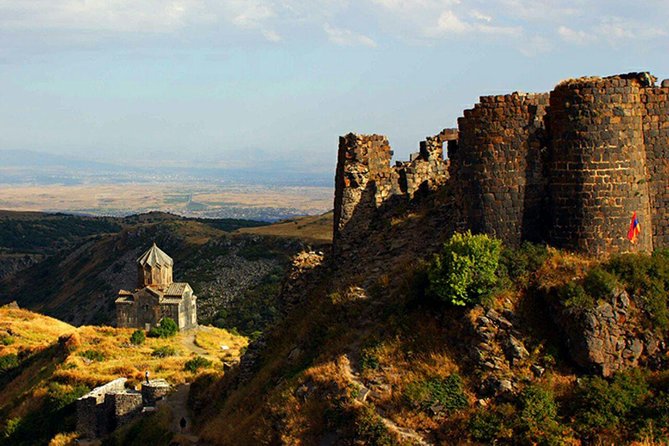
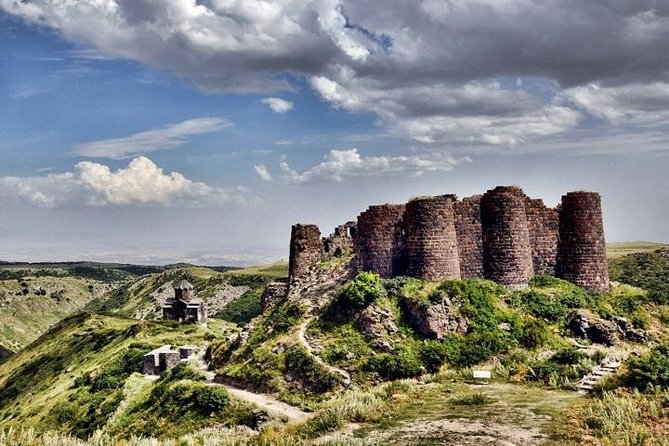
The final stop is Amberd Fortress, built in the seventh century at about 2,300 meters on the southern slopes of Mount Aragats. Its name means fortress in the clouds, and the setting explains the phrase.
The site includes walls, gates, a church, a chapel, baths, and other buildings. You have an hour to explore. Admission is not included, so this is another small extra expense.
I like the change of subject on Day 3. Instead of another series of religious buildings, you get altitude, military architecture, language, and natural scenery. Still, weather may shape this day more than the others, and the high elevation makes sturdy shoes and suitable clothing sensible choices.
More visits to Echmiadzin and Zvartnots:
- Group Tour: Echmiadzin Cathedral & churches, Zvartnots Temple
★ 5.0 · 352 reviews - Yerevan: Khor Virap, Garni, Geghard, Echmiadzin, & Zvartnots
★ 4.9 · 192 reviews - Private Half-day Echmiadzin Cathedral, Hripsime & Zvartnots Temple from Yerevan
★ 5.0 · 95 reviews - Private tour to Echmiadzin (st Cathedral), Zvartnots, Khor Virap, Garni, Geghard
★ 5.0 · 67 reviews
Day 4: Sevanavank and Haghartsin around Lake Sevan and Dilijan
Day 4 pairs a monastery on Lake Sevan with a forest-region monastery near Dilijan. Sevanavank occupies a narrow rocky peninsula in the northwest part of Lake Sevan. Princess Mariam founded it in 874.
The hour here gives you time to see the monastery’s position beside the lake. The setting is part of the appeal, but the visit is not only about the view. Sevanavank is also one of Armenia’s notable examples of medieval architecture.
Admission is free. As with the rest of the tour, lunch is not supplied, so you will need to handle meals yourself.
Haghartsin is about 13 kilometers northeast of Dilijan. Its name means Dance of the Eagles, and the complex dates from the 10th through 13th centuries.
Give special attention to the smaller details here. Haghartsin has khachkars, a sundial on the wall of Saint Gregory, a ruined gavit, and a refectory with an arched ceiling. These features show how a monastery functioned as a working religious and community center, not merely as a church for worship.
You have one hour at Haghartsin. The stop is free, and the moderate pace should allow you to see the major buildings without feeling hurried. I find this day easier to absorb than the southern route because the two main stops have different settings and a clear visual contrast.
Day 5: Echmiadzin, Armenia’s center of faith
Day 5 focuses on Vagharshapat, also known as Echmiadzin, the religious center of Armenia. Echmiadzin means a place where the only begotten son of God descended, referring to the tradition that Jesus Christ indicated where a church should be built.
Echmiadzin is the residence of the Supreme Catholicos of All Armenians and the center of the Armenian Apostolic Church. You have an hour at the monastery, enough to understand its importance as both a place of worship and a national religious center.
The next stop is Saint Gayane Church, a seventh-century church within walking distance of Echmiadzin Cathedral. Catholicos Ezra I built it in 630, and its design has remained largely unchanged despite later work on the dome and ceilings.
The visit lasts 30 minutes. That short stop works well because Saint Gayane is close to the cathedral and adds a second example of early Armenian church design without taking over the day.
Saint Hripsime Church receives another 30 minutes. The current structure was completed in 618, replacing an earlier mausoleum connected with the martyred Saint Hripsime. It is one of Armenia’s oldest surviving churches and is known for its classical Armenian architecture.
Saint Hripsime forms part of the UNESCO World Heritage designation that also includes nearby churches and Echmiadzin Cathedral. You will notice how much these buildings rely on proportion, heavy stone, and restrained decoration rather than lavish interiors.
The final stop is Zvartnots Temple, a seventh-century monument and one of the brightest examples of medieval Armenian architecture. Admission is not included here.
Day 5 is a strong choice for anyone who wants religious context rather than only scenic stops. It also asks you to pay attention to architectural differences among churches that may look similar at first glance. A guide can be especially useful here, and Arman was praised for his effort during the first four days of one guest’s trip.
Day 6: Haghpat, Sanahin, and Odzun in Lori Province
The final day heads north to three important sites. Haghpat Monastery was founded in 976 by Queen Khosrovanush, wife of King Ashot III. The complex includes a narthex, corridor sepulchers, a refectory, a scriptorium, the Chapel of Hamazasp, a belfry, chapel-tombs, and khachkars.
You have an hour at Haghpat, which is listed as a UNESCO World Heritage Site. The variety of rooms is what makes the visit rewarding. Look beyond the main church and imagine the monastery as a place of study, writing, burial, worship, and daily work.
Sanahin provides a natural companion stop. It served as an administrative center and family burial place for the Kyurikyan Bagratids in the 10th and 11th centuries. It also housed an episcopal residence until the 11th century.
The monastery contains three churches, a narthex, scriptorium, belfry, and academy. Haghpat and Sanahin share UNESCO status, but the value of visiting both is not simply collecting two sites for a list. Together they show the scale and organization of medieval Armenian religious and educational life.
The last stop is Odzun Church, a basilica built around the fifth to seventh centuries in Lori Province. Its northern and southern arched galleries are a rare feature in Armenian church architecture, and khachkars surround the building.
The 40-minute visit gives you a final, smaller site after the larger Haghpat and Sanahin complexes. That makes Odzun a fitting end: less famous, but architecturally distinct.
What the $855 group price really buys
The price is $855 per group of up to three people, not $855 per person. For three people, that works out to $285 each before meals, admission charges, and the Tatev ropeway. For two people, it is $427.50 each, while a solo participant carries the full group price.
Included are hotel pickup and drop-off, fuel, and transport in an air-conditioned vehicle. Those inclusions matter because the route covers six full touring days and reaches remote monasteries and high mountain sites. You are paying for a private structure and transport as much as for the sightseeing itself.
The value is strongest for a couple or small family that wants one arranged route without sharing the vehicle with strangers. It is less compelling for a solo visitor focused on saving money.
Remember the extra costs: food and drinks, lunch, admission at Garni, Amberd, and Zvartnots, plus the Wings of Tatev ticket. Confirmation arrives at booking, and free cancellation is available until 24 hours before the start time. Changes or cancellations inside that window are not refunded.
Who should book this Armenia tour?
I would choose this tour if you have roughly a week, want to see Armenia beyond Yerevan, and prefer a private vehicle with a fixed plan. It suits people who value historic churches, mountain settings, UNESCO sites, and a guide-led introduction more than a slow, independent schedule.
You should be comfortable with a moderate level of physical activity and with long sightseeing days. Smart casual clothing is requested, which is worth respecting when visiting active religious sites.
I would hesitate if you want guaranteed leisurely meals, extensive free time, or a low-cost solo trip. I would also check the practical plan for high-altitude Day 3 and confirm the extra ticket costs before departure.
For a small group, the route offers strong coverage and a useful mix of Armenia’s religious, cultural, and architectural past. Book it if you want the country’s major sights connected for you. Skip it if you would rather choose one region and explore it slowly.
FAQ
How long is the tour?
The tour lasts six days, approximately.
Where does the tour begin and end?
The tour is based in Yerevan and includes hotel pickup and drop-off.
How many people can join the private tour?
The price covers one private group of up to three people. Only your group participates.
What transportation is provided?
Transport is provided in an air-conditioned vehicle selected according to the number of participants. Fuel surcharge is included.
Is lunch included?
No. Food, drinks, and lunch are not included.
Is the Wings of Tatev cable car included?
No. The Tatev ropeway ticket must be paid for separately.
Are admission tickets included at every stop?
No. Admission is not included at Garni Temple, Amberd Fortress, and Zvartnots Temple. Admission is listed as free at the other stops.
What level of fitness and clothing is required?
A moderate level of physical fitness is recommended, and the dress code is smart casual. This is particularly relevant for the high-altitude visit to Kari Lake and the religious sites.
Latest write-ups from Yerevan
- Yerevan to Tbilisi Day Tour: Unveiling Transcultural Wonders★ 4.8 · 2 reviews
- Yerevan City Tour: Discover an Old and New Yerevan★ 5.0 · 2 reviews
- Yerevan: Museum of Illusions Entry Ticket★ 5.0 · 3 reviews
- Tsaghkadzor & Lake Sevan։ Winter Day Tour from Yerevan★ 4.7 · 3 reviews
- Wine, Jazz and Magic: A Night at Malkhaz Jazz Club★ 5.0 · 2 reviews
- Private Yerevan City Tour with museums★ 5.0 · 5 reviews
- Wine Trip in Yerevan★ 5.0 · 3 reviews
- The Stalin car Yerevan city tour Armenia★ 5.0 · 2 reviews
Garni & Geghard Tours, compared.
Garni, Symphony of Stones, Geghard, Lavash Baking
Read our review →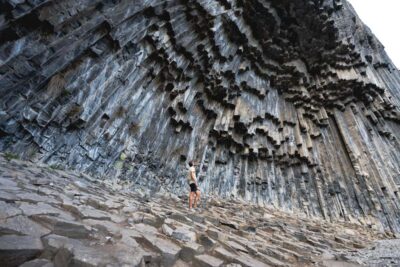
Garni, Geghard, Symphony of Stones & Lavash Baking
Read our review →
Garni, Geghard, Symphony of Stones & Lavash Baking
Read our review →
Garni pagan temple, Geghard monastery, Lake Sevan, Sevanavank
Read our review →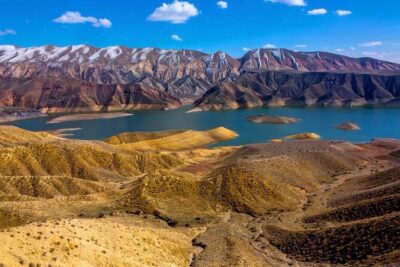
Khor Virap, Garni temple, Geghard, Lavash baking
Read our review →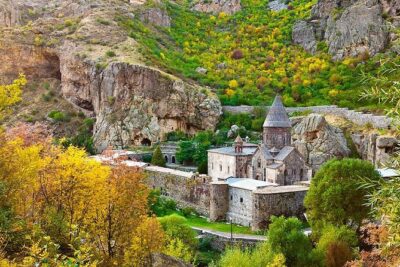
Private 7-8-hour Khor Virap, Garni temple & Geghard monastery trip from Yerevan
Read our review →
Garni, Geghard & Symphony Small-Group Day Trip with Lavash Baking
Read our review →Browse the lists this tour appears in