
Reviewed · GARNI & GEGHARD TOURS
Private 8-9-hour Echmiadzin, Zvartnots, Garni and Geghard trip from Yerevan
Ancient Armenia fits into one long day. This private trip links four major sights outside Yerevan, from Etchmiadzin’s cathedral complex to the rock-cut chambers of Geghard. I like the hotel pickup and private vehicle, which remove much of the day’s fuss, and I like the mix of Christian churches, a ruined cathedral, and Armenia’s best-preserved pagan temple. The main caution is time: traffic and rough roads can make the schedule feel slower than the map suggests.
I also like that you can choose a guide or a driver-only option, and that extra stops may be added on request. Guides such as Nelly, Gayane, and Artur have drawn warm praise for their care and flexibility, while drivers including Hamik and Gojur have been noted for professional service. Just remember that lunch is not included, and entrance fees at Garni and Zvartnots cost extra.
In This Review
- Key points to know before you book
- Why this makes a strong day trip from Yerevan
- Etchmiadzin: begin at Armenia’s spiritual center
- Saint Hripsime Church and a clearer look at Armenian design
- Zvartnots: ruins, reconstruction, and a bold seventh-century idea
- Garni Temple brings the pagan era into view
- Geghard: a monastery carved into the mountain
- A private vehicle makes the long route easier
- Guide or driver-only option?
- Lunch, extra costs, and the real value
- Who should book this day?
- Should you book it?
- FAQ
- How long does the tour last?
- Is hotel pickup included?
- Is this a private tour?
- Are the entrance fees included?
- Is lunch included?
- What happens if the weather is poor?
Key points to know before you book

- Four major sites in one private day: Visit Etchmiadzin, Saint Hripsime, Zvartnots, Garni, and Geghard in about 8 to 9 hours.
- The cathedral visit is currently exterior-only: Reconstruction work may prevent entry into Etchmiadzin’s Mother Cathedral.
- A rare pagan monument adds variety: Garni is Armenia’s surviving Greco-Roman temple, not another medieval church.
- The private format helps with pacing: Only your group participates, with pickup and drop-off within Yerevan.
- Budget for two admission charges: Garni and Zvartnots require fees of about 2,800 AMD, or roughly $7.30, per person.
- Road time matters: Heavy traffic and poor roads can reduce time at the sights, so start with realistic expectations.
Why this makes a strong day trip from Yerevan
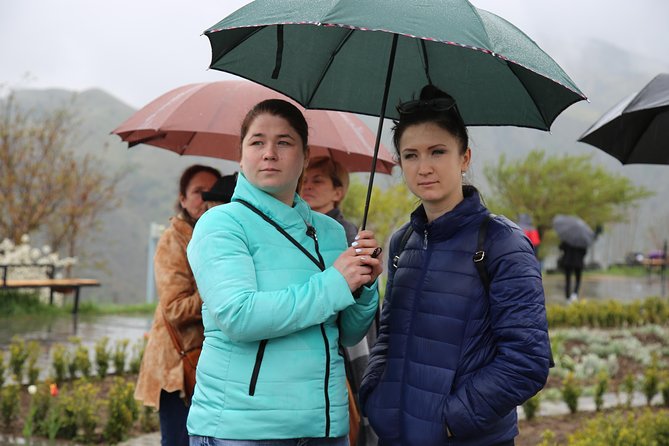
If you have one full day beyond Yerevan, this route gives you a useful introduction to Armenia’s religious and architectural story. The stops are not interchangeable. Etchmiadzin represents the center of Armenian Christianity, Zvartnots shows the ambition of early medieval builders, Garni reaches back to the pagan era, and Geghard combines worship with carved stone.
That range is the great strength of the day. You are not spending eight hours looking at versions of the same church. The scenery and road journey also give you a sense of the countryside around the capital, though the route is not a fast one.
The private arrangement matters here. You do not need to wait for a large group or follow a fixed social rhythm. You can ask for explanations, request an extra stop, or spend longer at a site that catches your interest, subject to the day’s timing.
The listed rate is $123.30 for a group of up to three people. For three people, that works out to about $41.10 each before admission fees and lunch, which is a fair price for a private vehicle, hotel pickup, driver, insurance, bottled water, and an optional English or Russian-speaking guide.
For one or two people, the per-person cost is higher than a shared excursion. In return, you get privacy and a simpler day. That trade-off is especially useful if you value hotel pickup, prefer not to manage several local connections, or want to ask questions along the way.
More visits to Echmiadzin and Zvartnots:
- Group Tour: Echmiadzin Cathedral & churches, Zvartnots Temple
★ 5.0 · 352 reviews - Yerevan: Khor Virap, Garni, Geghard, Echmiadzin, & Zvartnots
★ 4.9 · 192 reviews - Private Half-day Echmiadzin Cathedral, Hripsime & Zvartnots Temple from Yerevan
★ 5.0 · 95 reviews
Etchmiadzin: begin at Armenia’s spiritual center
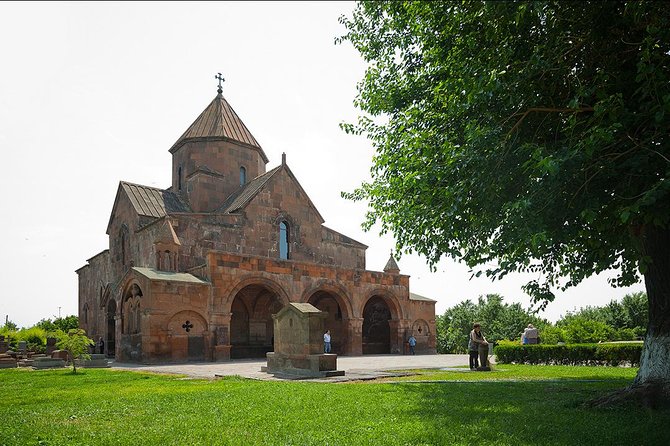
The first stop is Etchmiadzin Monastery, described as the first Christian church in the world. The site is also part of a UNESCO World Heritage listing, so it carries both religious importance and international recognition.
The practical detail is important: reconstruction work means you may see Mother Cathedral only from outside. Do not book this day expecting a full interior visit there. The exterior still gives you a sense of the complex and its role, but the current restriction changes the experience.
You have about an hour at Etchmiadzin. That is enough for a calm look at the grounds and for a guide to explain why this place matters to Armenian identity. If you choose the guide option, this is one of the stops where context can add real value. Without some explanation, a church complex can be beautiful but difficult to place in time.
Admission to Etchmiadzin is free. Since the tour begins with a major religious site, dress and behavior should be respectful, especially if services or local worship are taking place.
Saint Hripsime Church and a clearer look at Armenian design
Saint Hripsime Church follows Etchmiadzin and gives you a more focused architectural stop. You have about 40 minutes here, which is enough to see the building without turning the visit into a long technical study.
The church is known as a refined example of Armenia’s cross-cupola design. Its appeal is not excessive decoration. Instead, you see a combination of clean structure, height, and strong stone forms. The building’s simplicity is part of its character.
The tomb of Saint Hripsime, a Christian martyr, is in the church sacristy. This detail helps connect the building’s design to its religious purpose. You are not simply viewing an old structure. You are visiting a place tied to an early Christian story that remains important in Armenia.
Saint Hripsime is also part of the UNESCO-listed cultural heritage associated with Etchmiadzin. Admission is free, and the stop works well after the monastery because the two sites let you compare a major cathedral complex with a more concentrated church building.
Zvartnots: ruins, reconstruction, and a bold seventh-century idea
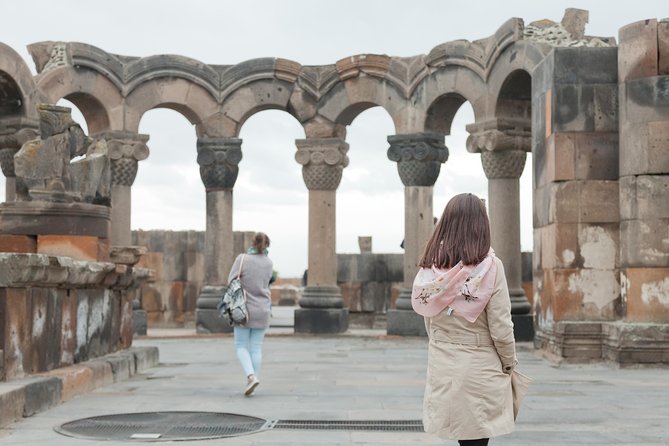
At Zvartnots Temple, you get one of the most memorable architectural stops of the day. The seventh-century temple was built on several columns and survived until roughly the tenth century before collapsing.
What you see now is an archaeological site and reconstructed model of a once-complicated building. The reconstruction was proposed by Armenian architect Toros Toramanyan in the early twentieth century. His design was so ambitious that specialists found it difficult to accept at first.
A relief at Saint-Chapelle in Paris helped support Toramanyan’s interpretation. It shows Zvartnots with Noah’s Ark and resembles the reconstruction model. That is an unusual piece of evidence, and it gives the stop more substance than a simple visit to a field of ruins.
You have about 40 minutes here. A guide can help you picture the original temple’s scale and explain why its design mattered. Without a guide, the columns and foundations still make a strong visual impression, but you may miss the story of how the site was understood and rebuilt.
Zvartnots is UNESCO-listed. An entrance fee of about 2,800 AMD, roughly $7.30, per person is not included. The fee is modest, but you should carry it in your day-trip budget along with the separate Garni admission.
Other Garni and Geghard days from Yerevan:
- Group Tour: Garni, Symphony of Stones, Geghard, Lavash Baking
★ 5.0 · 1,042 reviews - Yerevan: Garni, Geghard, Symphony of Stones & Lavash Baking
★ 4.8 · 758 reviews - From Yerevan: Garni, Geghard, & Symphony of Stones Day Trip
★ 4.8 · 687 reviews - Yerevan: Garni, Geghard, Symphony of Stones & Lavash Baking
★ 5.0 · 589 reviews
Garni Temple brings the pagan era into view
Garni changes the mood of the trip. Instead of entering another Christian complex, you arrive at Armenia’s only surviving example of pagan temple architecture. The temple rises on a triangular cape and combines Greco-Roman forms with local Armenian work.
King Trdat the First ordered its construction in the first century AD, dedicating it to the sun god. After Armenia adopted Christianity in 301, the temple lost its religious role. Garni later served as a summer residence for the kings, so the site reflects more than one chapter of Armenian history.
Give yourself the full hour here. The temple itself is the main attraction, but nearby ruins add useful detail. You can see remains of the royal palace and a bathhouse with striking mosaic work. Those traces help you picture Garni as a working royal complex rather than an isolated monument.
Garni requires an admission fee, listed at about 2,800 AMD, or $7.30, per person. That fee is separate from the tour cost. If you want the ancient architecture explained, choose the guide option, since the difference between pagan, royal, and later Christian use is central to understanding the place.
The site may appeal most to anyone who wants variety. After Etchmiadzin, Saint Hripsime, and Zvartnots, Garni prevents the day from becoming a church-only circuit. It also gives photographers and architecture fans a different set of shapes and proportions to study.
Geghard: a monastery carved into the mountain
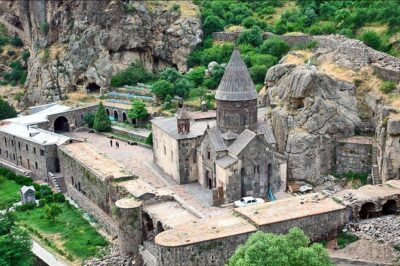
Geghard is the final major stop, and it is a strong finish. Parts of the monastery were cut directly into a huge rock, creating a setting unlike the open ruins at Zvartnots or the formal church at Saint Hripsime.
The complex began under the name Ayrivank, meaning cave monastery. It was later called Geghard, or lance, because the lance said to have pierced Christ’s side was kept there for many centuries. The story gives the monastery its name and adds another layer to its religious importance.
You have about an hour at Geghard. Use it to look closely at the carved interiors, stone decoration, and khachkars, the cross-stones found throughout Armenia. The workmanship is subtle rather than flashy. In the rock-cut rooms, the stone itself becomes part of the architecture.
Geghard is also UNESCO-listed, and admission is free. The monastery is known for its strong acoustics, making it a fitting place for spiritual singing. You may find the sound inside the carved spaces especially striking, even if no singing is taking place during your visit.
The final stop can also be the most atmospheric. That is not a reason to rush the earlier sights, but it does mean you should protect the scheduled hour at Geghard if traffic has eaten into the day.
A private vehicle makes the long route easier
Pickup and drop-off are offered within Yerevan, and you provide the pickup address when booking. This is a practical advantage for an 8 to 9-hour outing. You do not need to arrange separate transport to the first site or find your way back after a full day.
The vehicle is air-conditioned, and a professional driver is included. Bottled water and vehicle and passenger insurance are also part of the package. These are small details, but they matter on a long road day.
The route can be slowed by heavy traffic and poor roads. One direct account of the experience praised the sights and the staff but noted that the vehicle covered less ground than expected because of these conditions. You should treat the 8 to 9 hours as an approximate window, not a minute-by-minute promise.
The private format gives you some protection against that uncertainty. A guide and driver can adjust the day, and extra stops may be requested along the route. Still, you cannot remove traffic by paying for a private tour. The value is comfort and flexibility, not speed.
Guide or driver-only option?
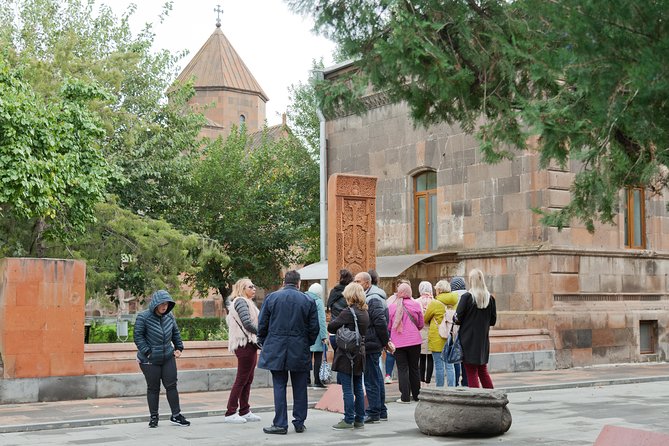
The English-speaking guide option is worth serious thought if you want the religious and architectural background explained as you go. The tour also offers Russian-speaking guide service. If you select a driver-only option, you will still have transport between the sites, but the experience may depend more on your own preparation.
Several staff members have been praised for being friendly, professional, flexible, and easy to communicate with. Nelly was described as an excellent guide, with Hamik praised as a capable driver. Gayane and Gojur were also singled out as a strong guide and driver team, while Artur was praised for flexible ideas and good driving.
One account noted that the driver did not speak English but still communicated effectively through other means. That suggests a warm and helpful attitude, but I would still choose the English-speaking guide option if detailed explanations are important to you. Clear communication is especially useful when you want to adjust timing or ask about Armenian religious traditions.
A guide can also help you connect the sites. Etchmiadzin and Saint Hripsime make more sense together. Zvartnots shows architectural ambition and later archaeological reconstruction. Garni marks the pagan past, while Geghard brings you back to a Christian monastery shaped by the rock.
Lunch, extra costs, and the real value
Lunch is not included, so plan to pay separately. The exact restaurant is not fixed in the supplied details, but the day can include a local meal, and extra stops may be requested. One especially memorable meal was arranged in the garden of a private home, while another meal stop was described as an excellent local restaurant.
Those details point to one useful tip: tell the guide what kind of lunch you want. You may prefer a quick meal to protect sightseeing time, or you may want a slower local experience. Since lunch is outside the tour price, confirm the plan and budget before setting off.
Your known additional cost is admission to Garni and Zvartnots, about 2,800 AMD each per person according to the supplied pricing. Etchmiadzin, Saint Hripsime, and Geghard are listed as free. The price information uses an approximate US dollar conversion, so the amount in Armenian dram may be the more useful figure on the day.
At $123.30 for up to three people, the trip offers good value for a small group that wants a full private day. It is less compelling if you are alone and happy to use shared transport, but the convenience of pickup, air conditioning, and a dedicated vehicle may still justify the difference.
Who should book this day?
I would recommend this trip to first-time visitors based in Yerevan who want to see the major sights beyond the capital without arranging several separate journeys. It also suits couples, families, and small groups who prefer a private vehicle and can share the fixed group cost.
History and architecture fans will get the most from it, especially with a guide. The route covers early Christian sites, medieval church design, archaeology, a pagan temple, royal remains, and rock-cut monastic spaces in one day.
You should think twice if you dislike long road days, want to explore each site at a very slow pace, or require a guaranteed interior visit at Mother Cathedral. Reconstruction work may limit that part of Etchmiadzin, and traffic can compress the schedule.
The day also demands some stamina. There are five stops, several transfers, and a full 8 to 9 hours away from your hotel. It is rewarding, but it is not a light stroll through one compact town.
Free cancellation is available if you cancel at least 24 hours before the local start time. Changes made inside that window are not accepted, and poor weather may lead to a new date or a full refund. Confirmation is provided at booking, and most people can participate.
Should you book it?
Book this tour if you want the efficient, private version of Armenia’s best-known sights around Yerevan. The combination of Etchmiadzin’s religious importance, Zvartnots’ unusual reconstruction story, Garni’s pagan temple, and Geghard’s carved chambers gives you a broad and memorable day.
Choose the guide option if you care about meaning as much as photographs. Share the fixed price with two companions when possible, budget for lunch and the two admission fees, and allow for traffic. If you can accept an approximate schedule and an exterior-only view of Mother Cathedral, this is a well-balanced day trip with strong value.
FAQ
How long does the tour last?
The experience lasts approximately 8 to 9 hours, including visits to Etchmiadzin, Saint Hripsime Church, Zvartnots Temple, Garni Temple, and Geghard Monastery.
Is hotel pickup included?
Yes. Free pickup and drop-off are offered within Yerevan. You need to provide your pickup address when booking.
Is this a private tour?
Yes. Only your group participates, and the price covers a group of up to three people.
Are the entrance fees included?
Admission to Etchmiadzin, Saint Hripsime Church, and Geghard is listed as free. Garni and Zvartnots charge about 2,800 AMD, or approximately $7.30, per person, and those fees are not included.
Is lunch included?
No. Lunch is not included in the tour price, so you should budget for it separately.
What happens if the weather is poor?
The experience requires good weather. If it is canceled because of poor weather, you will be offered another date or a full refund.
Latest write-ups from Yerevan
- Yerevan to Tbilisi Day Tour: Unveiling Transcultural Wonders★ 4.8 · 2 reviews
- Yerevan: Museum of Illusions Entry Ticket★ 5.0 · 3 reviews
- Yerevan City Tour: Discover an Old and New Yerevan★ 5.0 · 2 reviews
- Tsaghkadzor & Lake Sevan։ Winter Day Tour from Yerevan★ 4.7 · 3 reviews
- Wine, Jazz and Magic: A Night at Malkhaz Jazz Club★ 5.0 · 2 reviews
- Wine Trip in Yerevan★ 5.0 · 3 reviews
- The Stalin car Yerevan city tour Armenia★ 5.0 · 2 reviews
- Private Yerevan City Tour with museums★ 5.0 · 5 reviews
Garni & Geghard Tours, compared.
Garni, Symphony of Stones, Geghard, Lavash Baking
Read our review →
Garni, Geghard, Symphony of Stones & Lavash Baking
Read our review →
Garni, Geghard, Symphony of Stones & Lavash Baking
Read our review →
Garni pagan temple, Geghard monastery, Lake Sevan, Sevanavank
Read our review →
Khor Virap, Garni temple, Geghard, Lavash baking
Read our review →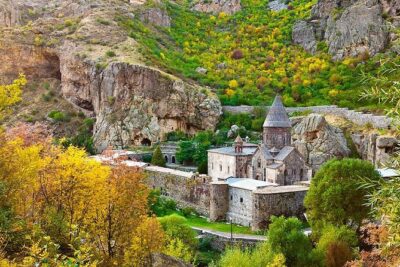
Private 7-8-hour Khor Virap, Garni temple & Geghard monastery trip from Yerevan
Read our review →
Garni, Geghard & Symphony Small-Group Day Trip with Lavash Baking
Read our review →Browse the lists this tour appears in