
Reviewed · ETCHMIADZIN TOURS
Private Tour to Echmiadzin,St.Hripsime & Gayane Churches, Zvartnots Temple
Armenia’s sacred heart is close to Yerevan. This private seven-hour outing links four major religious sites in one tidy route, with hotel pickup, a private air-conditioned vehicle, and bottled water included. I like the small-group format for up to three people, and I like the chance to visit both working churches and the striking ruins of Zvartnots. The main drawback is that the guide service is optional, so the quality of the historical explanation depends on what you arrange.
The schedule gives you enough time to see the main features without turning the day into a race. I especially like the contrast between Etchmiadzin’s living cathedral complex and Zvartnots’ open archaeological remains. Still, remember that lunch is not included, and admission to the Etchmiadzin treasury and Zvartnots must be paid separately.
In This Review
- Key points to know before booking
- Why this Yerevan day trip works
- Etchmiadzin Monastery and the cathedral complex
- Saint Hripsime Church and its compact visit
- Saint Gayane Church and the story of matah
- Zvartnots Temple and its earthquake ruins
- What the private vehicle adds
- Price, meals, and extra costs
- The human side of the experience
- Who should book this private church tour?
- Should you book this Echmiadzin and Zvartnots tour?
- FAQ
- Where does the tour begin?
- How long does the tour last?
- How many people can join the private tour?
- Is transportation included?
- Is a guide included?
- Are entrance tickets included?
- Is lunch included?
- Is the tour offered in English?
- Can I cancel for a full refund?
Key points to know before booking
- Four major Armenian sites in one day: Visit Etchmiadzin Monastery, Saint Hripsime Church, Saint Gayane Church, and Zvartnots Temple.
- Private transport for up to three people: The $70 price is per group, not per person, which can make this a strong value for a small party.
- Hotel pickup and drop-off: Pickup is arranged from a hotel, hostel, or apartment in Yerevan.
- Guide service is optional: A professional driver is included, but you should confirm whether a guide will accompany you if detailed interpretation matters.
- Two paid admissions: The Etchmiadzin treasury and Zvartnots Temple are not included in the tour price.
- A highly praised experience: The tour has a five-star rating from 17 reviews, with particular praise for the historical insight and the courteous service from guides including Marianna, Arias, and Arak.
Why this Yerevan day trip works
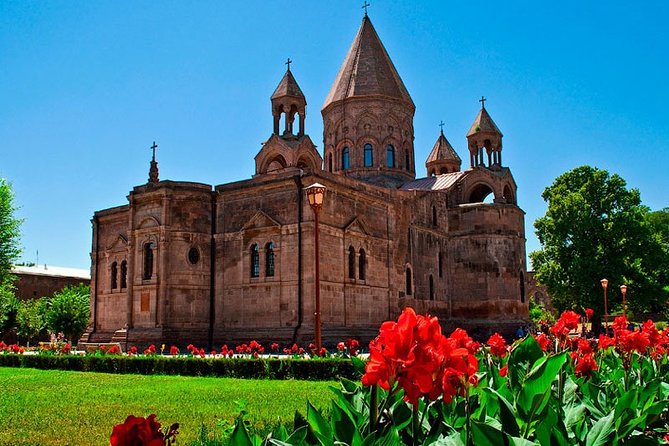
Etchmiadzin, also written Echmiadzin, lies close enough to Yerevan for an easy day outing. The tour focuses on the religious center of Armenian Christianity, then adds two important churches and the remains of a remarkable seventh-century cathedral.
That mix gives the day a useful rhythm. You begin with a functioning monastery and cathedral complex, move to two compact churches, and finish among the broad stone remains of Zvartnots. You are not looking at four versions of the same building. Each stop shows a different side of Armenian sacred architecture.
The private setup matters. With space for only your group of up to three, you avoid being tied to a large coach schedule. You can ask for clarification, spend longer at a feature that interests you, or keep the visit moving if you prefer a quicker look. The listed duration is about seven hours, including transport between sites.
At $70 per group, the arithmetic is favorable for two or three people. Three people would pay roughly $23 each before the separate entrance fees and lunch. For one person, the price is less of a bargain, but private pickup and transport still remove the need to arrange your own route.
More visits to Echmiadzin and Zvartnots:
- Group Tour: Echmiadzin Cathedral & churches, Zvartnots Temple
★ 5.0 · 352 reviews - Yerevan: Khor Virap, Garni, Geghard, Echmiadzin, & Zvartnots
★ 4.9 · 192 reviews - Private Half-day Echmiadzin Cathedral, Hripsime & Zvartnots Temple from Yerevan
★ 5.0 · 95 reviews
Etchmiadzin Monastery and the cathedral complex
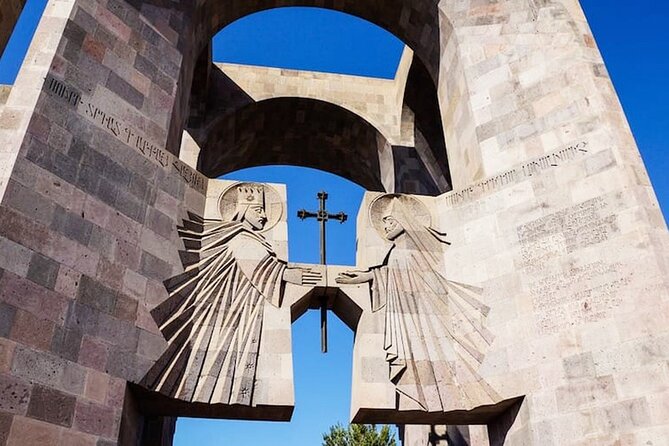
The first stop receives about an hour, and it deserves that opening position. Etchmiadzin is the spiritual center of the Armenian Apostolic Church and includes the cathedral, a treasury museum, the Catholicos’ residence, and a collection of cross-stones.
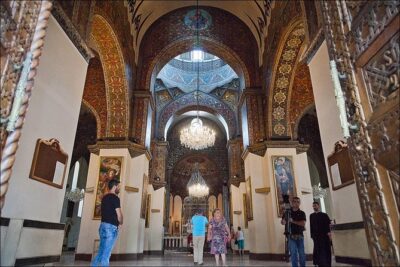
The name Etchmiadzin means place of the descent of the Only Begotten. The cathedral’s unusual feature is a second altar in the middle of the building, in addition to the main altar at the eastern end. This central altar marks the place associated with Christ’s descent, giving the interior a focus beyond the standard east-facing arrangement.
The original cathedral is described as dating to the fourth century BC in the supplied tour information. You may want to confirm the dates with your guide, since Armenian church chronology can be presented in different ways. The important point for your visit is that Etchmiadzin belongs to the earliest period of Armenian Christianity and remains an active religious center.
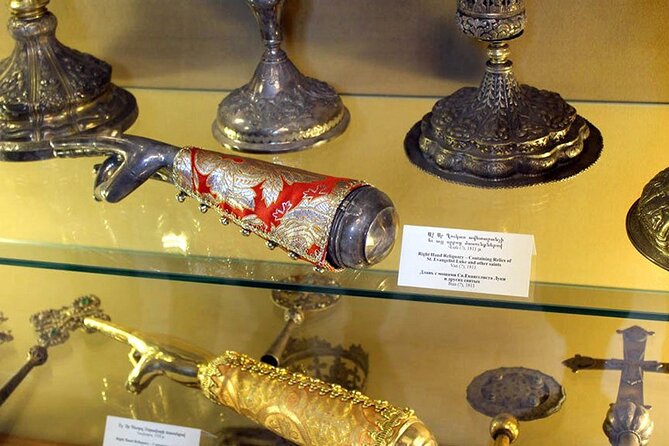
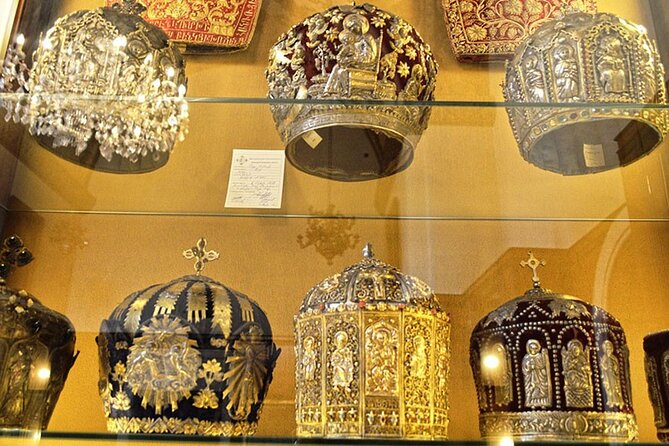
The Treasury Museum is the paid extra here. Inside, you can see relics, church clothing decorated with gold and pearls, staffs and crosses used by Catholicoi, and ritual objects made from gold, silver, and ivory. This is the place to allow extra time if you care about sacred objects and church art rather than architecture alone.
The tour allocates one hour and lists admission to the monastery itself as free, but the treasury entrance is not included. Ask about the current fee before you enter. If the treasury is a priority, make sure your schedule allows enough time for it rather than treating the whole complex as a quick photo stop.
Outside, look for the many khachkars, or Armenian cross-stones. Two are singled out in the tour details: the Amenaprakich cross-stone from 1279 and a cross-stone dedicated to the victims of the 1915 genocide. These carved stones are not just decorative markers. Their detailed surfaces and inscriptions connect religious devotion with memory and mourning.
Etchmiadzin also contains the residence of the Catholicos of All Armenians, the head of the Armenian Apostolic Church. Because this is a religious center rather than a museum set built only for visitors, dress and behavior should be respectful. The exact access to interiors and religious areas can vary, so listen to your guide or driver on site.
Saint Hripsime Church and its compact visit
Saint Hripsime Church is scheduled for about 30 minutes. That may sound brief, but the church is compact, and the stop works well after the larger Etchmiadzin complex.
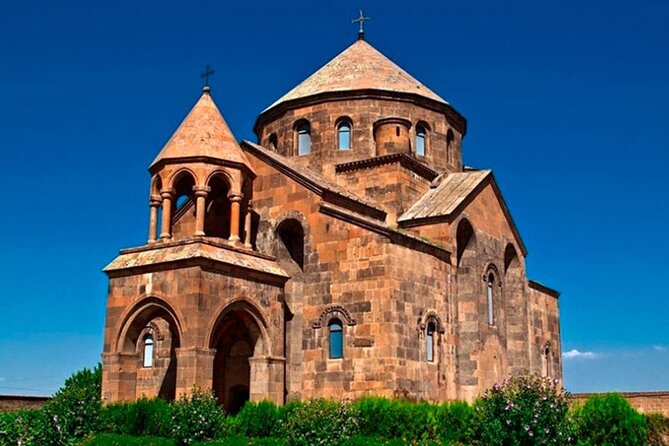
The church was founded in the seventh century by Catholicos Komitas I Aghtsetsi at the burial place of Saint Hripsime. Its setting links the structure directly to the saint’s story, rather than presenting it as an isolated monument with no connection to the ground beneath it.
Saint Hripsime has been part of the UNESCO World Heritage listing since 2000. That designation helps explain why this modest-looking church deserves attention. Its importance comes from its age, design, religious role, and place within the group of early Armenian churches around Etchmiadzin.
Two Armenian Catholicoi are buried in the churchyard: Astvatsatur, who served from 1715 to 1725, and Garaped II Oolnetzi, who served from 1725 to 1729. If you have a guide, ask for help locating the graves and understanding the inscriptions.
Thirty minutes is enough for a focused visit, but not for lingering over every detail. I would use the time to examine the exterior shape, enter quietly if permitted, and look around the courtyard before moving on. If photography or church interiors matter greatly to you, confirm how much time the driver plans to allow.
Saint Gayane Church and the story of matah
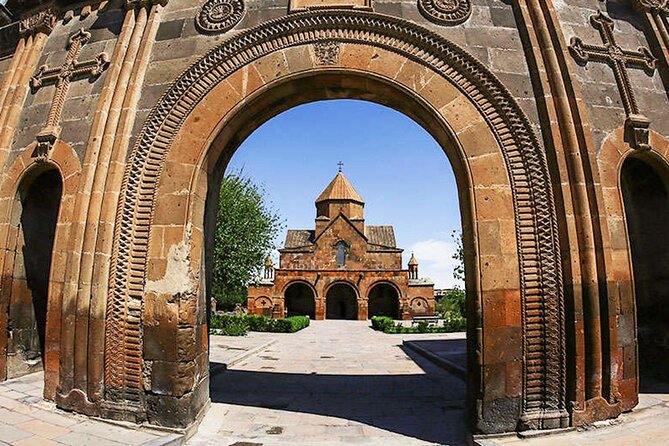
Saint Gayane Church is another 30-minute stop. It was built in the seventh century on the site of a fourth-century chapel and honors Saint Gayane. The church is described as one of the best monuments of Armenian architecture, making it more than a quick companion stop to Saint Hripsime.
The relics of Saint Gayane are kept in the southern wall near the altar niche. Inside, look above the western entrance for surviving seventeenth-century murals depicting the birth of Christ. This gives the visit a useful visual detail to seek out, especially if your time inside is short.
Near the church is a special room connected with matah, a traditional animal sacrifice associated with the time of Saint Gregory the Illuminator. The rite may be performed for occasions such as a wedding or the birth of a child. The detail can surprise visitors, but it is part of understanding how Armenian religious practice includes both formal church worship and older communal customs.
The two half-hour church visits are similar in length, so you should expect a selective look rather than a full architectural study. The value lies in seeing both churches in their actual religious setting and comparing their forms, burial grounds, relics, and surviving artwork.
Other Yerevan outings people add on:
- Group Tour: Garni, Symphony of Stones, Geghard, Lavash Baking
★ 5.0 · 1,042 reviews - Group Tour: Lake Sevan (Sevanavank), Dilijan (Goshavank, Haghartsin)
★ 5.0 · 1,036 reviews - Khor Virap, Noravank and Birds’ Cave Trip with Wine Tasting
★ 4.8 · 845 reviews - Yerevan: Garni, Geghard, Symphony of Stones & Lavash Baking
★ 4.8 · 758 reviews
Zvartnots Temple and its earthquake ruins
Zvartnots is the final major stop and receives about an hour. Admission is not included, so plan for a separate entrance fee. Of the four sites, this is the one where the remains themselves do much of the explaining.
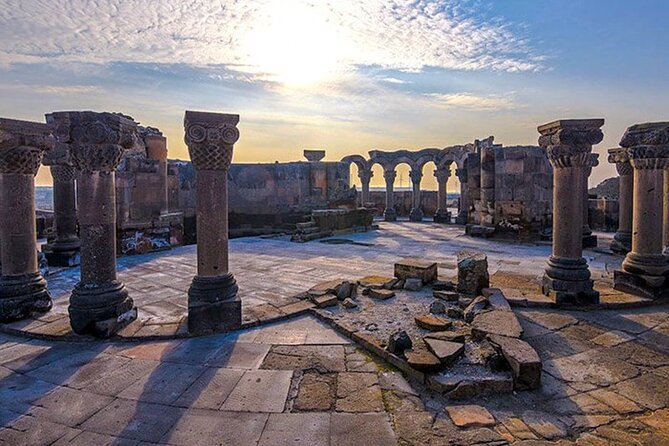
The name Zvartnots means Temple of Vigil Forces. Built in the seventh century, the temple took 20 years to complete. It was later destroyed by a powerful earthquake, leaving ruins rather than a complete church.
Those ruins still communicate the scale and ambition of the original building. You can see large sculptural fragments and the surviving architectural pieces spread across the archaeological reserve. The site also includes a museum founded in 1937, with model reconstructions that help you picture the full temple.
This is where a guide can add real value. Ruins can be difficult to read without help, especially when the original building is known mainly through fragments and models. Ask your guide to point out which pieces belonged to the structure and how the reconstruction model relates to what remains on the ground.
Zvartnots is included on the UNESCO World Heritage list. The open setting makes it a different experience from the enclosed churches earlier in the day. Allow time to look at the stonework, compare the model with the ruins, and take in the broad view around the archaeological reserve.
The hour should be comfortable for the principal features. If you are especially interested in sculpture or ancient construction, you may want every minute. If you mainly want the famous outline and a few photographs, you may finish sooner.
What the private vehicle adds
The tour includes hotel pickup and drop-off, private transportation, an air-conditioned vehicle, bottled water, and WiFi on board. Pickup can be arranged from a hotel, hostel, or apartment in Yerevan, which makes the morning simpler than finding a meeting point.
The driver is described as professional, but the guide service is optional. That distinction is important. A driver can handle the route and practical details, while a guide can explain the saints, church traditions, inscriptions, UNESCO status, and architectural features.
If you want a history-focused day, ask at booking how the optional guide service works and whether it changes the cost. Do not assume that the driver will provide a full guided tour unless that has been confirmed.
A private vehicle also helps with the day’s sequence. You can leave your accommodation, visit the four sites, and return without changing buses or managing separate fares. Public transportation is available near the area, but this experience is designed around direct private transport.
The seven-hour length is a useful middle ground. It is long enough to give Etchmiadzin proper attention and include Zvartnots, yet short enough to fit into a wider Yerevan visit. The exact time at each stop may shift, so keep a little flexibility if your group has strong priorities.
Price, meals, and extra costs
The listed price is $70 per group of up to three people. That is the central value point. A couple or a trio gets a private vehicle, pickup and return, bottled water, WiFi, and the route’s transport for one group price.
Lunch is not included. The supplied details do not specify a restaurant or meal stop, so you should ask how lunch fits into the seven-hour schedule. You might prefer to eat before departure or confirm whether there will be time to buy food along the way.
The Etchmiadzin treasury fee and Zvartnots entrance fee are also extra. The main Etchmiadzin admission is listed as free, as are the visits to Saint Hripsime and Saint Gayane. Bring some flexibility in your budget for the two paid sites.
The private format is less useful for a solo visitor focused only on low cost. It becomes much more attractive for friends or family sharing the vehicle. The optional guide is another point to weigh: the base package covers transport well, but detailed interpretation may require an additional arrangement.
The human side of the experience
The tour has received a five-star rating from 17 reviews, with 100 percent recommending it. The strongest praise centers on two things: the religious sites themselves and the historical explanation provided during the outing.
Marianna and Arias are specifically associated with a highly praised visit, described as both wonderful and a privilege because of the chance to understand Armenia through its religious places. Arak is also praised for an insightful historic tour that helped explain the importance of Armenia.
That gives you a useful clue about what to value when booking. This is not simply a transfer service to four old buildings. The experience works best when the person accompanying you adds context and helps connect the places to Armenia’s religious identity.
Because guide service is optional, service can vary depending on the arrangement you choose. If the names of particular guides matter to you, ask Jan Armenia Tours if Marianna, Arias, or Arak is available for your date. Availability is not guaranteed by the supplied information, but asking is sensible.
Who should book this private church tour?
I would recommend it to a first-time visitor based in Yerevan who wants a clear introduction to Armenian Christianity without arranging transport independently. It also suits couples, families, or friends who can share the $70 group price.
You will get the most from it if you care about architecture, religious traditions, UNESCO sites, and the difference between an active church and an archaeological ruin. The tour is also a good choice for anyone with only one free day outside Yerevan.
It may be less suitable if you want a slow photographic study of each building, a guaranteed full-time guide, or a restaurant-focused food tour. The two 30-minute church visits are efficient, not leisurely. You should also be comfortable with the fact that two admission fees and lunch are separate.
Free cancellation is available if you cancel at least 24 hours before the local start time. Cancellations or changes made later are not accepted for a refund. The booking confirmation is received at the time of booking.
Should you book this Echmiadzin and Zvartnots tour?
Book it if you want four important Armenian religious sites in one private day and can share the cost with up to two companions. The strongest reasons are the direct hotel pickup, the compact route, the contrast between Etchmiadzin and Zvartnots, and the praised historical guidance associated with Marianna, Arias, and Arak.
Before paying, confirm the optional guide arrangement, ask about current entrance fees, and clarify how lunch fits into the schedule. If those details suit you, this is a practical and culturally focused outing from Yerevan, with enough structure to make the day easy and enough variety to keep it interesting.
FAQ
Where does the tour begin?
Pickup is organized from your hotel, hostel, or apartment in Yerevan.
How long does the tour last?
The tour lasts approximately seven hours.
How many people can join the private tour?
The price covers one private group of up to three people.
Is transportation included?
Yes. Private transportation in an air-conditioned vehicle is included, along with hotel pickup and drop-off.
Is a guide included?
Guide service is listed as optional. A professional driver is included, so confirm the guide arrangement when booking if you want detailed explanations.
Are entrance tickets included?
Admission to Etchmiadzin Monastery, Saint Hripsime Church, and Saint Gayane Church is listed as free. The Etchmiadzin treasury museum and Zvartnots Temple require separate entrance fees.
Is lunch included?
No. Lunch is not included in the tour price.
Is the tour offered in English?
Yes. The experience is offered in English.
Can I cancel for a full refund?
Yes, if you cancel at least 24 hours before the experience start time. Cancellations or changes made less than 24 hours before the start time are not accepted for a refund.
Latest write-ups from Yerevan
- Yerevan to Tbilisi Day Tour: Unveiling Transcultural Wonders★ 4.8 · 2 reviews
- Yerevan: Museum of Illusions Entry Ticket★ 5.0 · 3 reviews
- Yerevan City Tour: Discover an Old and New Yerevan★ 5.0 · 2 reviews
- Tsaghkadzor & Lake Sevan։ Winter Day Tour from Yerevan★ 4.7 · 3 reviews
- Wine, Jazz and Magic: A Night at Malkhaz Jazz Club★ 5.0 · 2 reviews
- Wine Trip in Yerevan★ 5.0 · 3 reviews
- The Stalin car Yerevan city tour Armenia★ 5.0 · 2 reviews
- Private Yerevan City Tour with museums★ 5.0 · 5 reviews
Etchmiadzin Tours, compared.
Echmiadzin Cathedral & churches, Zvartnots Temple
Read our review →
Khor Virap, Garni, Geghard, Echmiadzin, & Zvartnots
Read our review →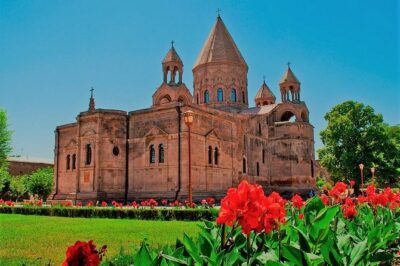
Private Half-day Echmiadzin Cathedral, Hripsime & Zvartnots Temple from Yerevan
Read our review →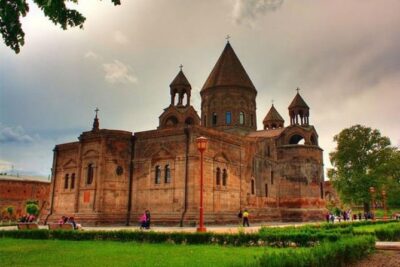
Private tour to Echmiadzin (st Cathedral), Zvartnots, Khor Virap, Garni, Geghard
Read our review →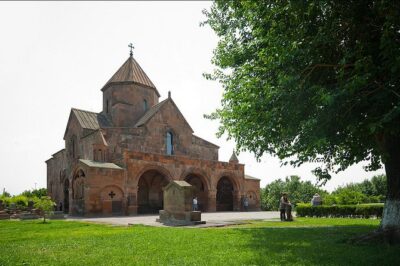
Private 8-9-hour Echmiadzin, Zvartnots, Garni and Geghard trip from Yerevan
Read our review →
Day trip: Yerevan Sightseeing, St. Echmiadzin, Zvartnots
Read our review →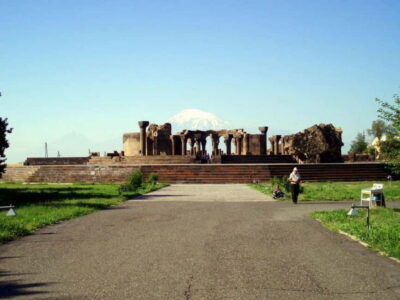
Echmiadzin, Hripsime, Gayane, Zvartnots Temple Tour
Read our review →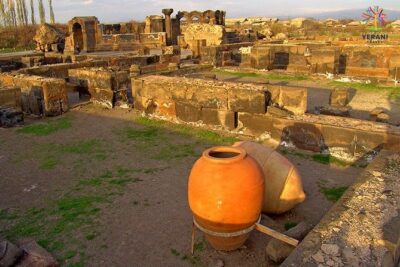
Khor Virap, Echmiadzin & Zvartnots UNESCO Small-Group Guided Tour
Read our review →Browse the lists this tour appears in